



Iran war latest: US suspends Strait of Hormuz levy
The Times
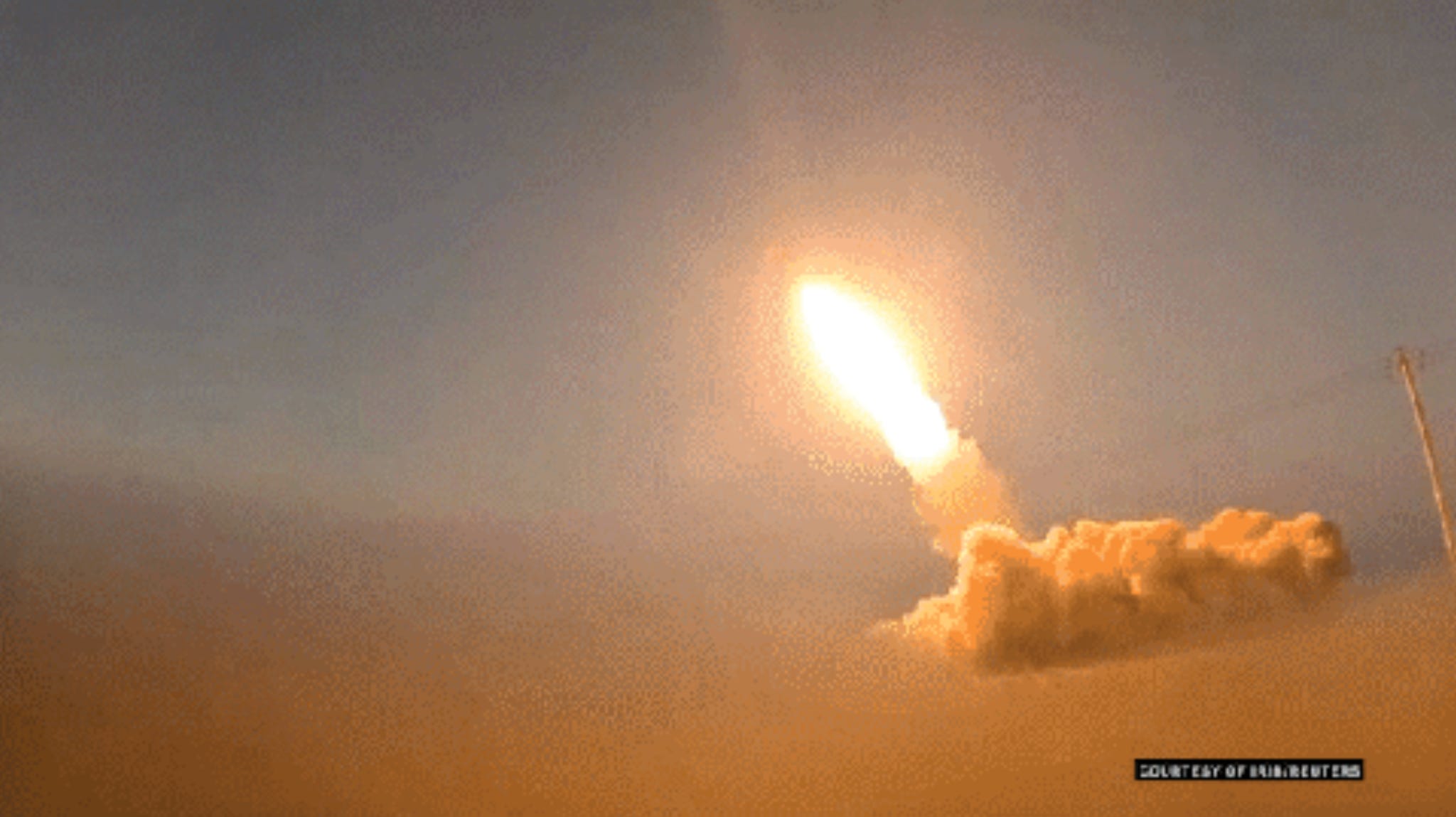
Iranian forces launching missiles from unknown location earlier today. Source: IRIB/Reuters
Scott: One of Iran’s chief complaints about negotiating with Trump is irrationality, unpredictability and inconsistency—it’s hard to understand what he wants, he articulates his object unclearly, and he’s prone to change his negotiating position frequently without explanation. These factors do indeed make it very difficult to negotiate. And Trump’s conduct in the last hours provides an excellent demonstration of the Iranian premise. Three times in the last 24 hours, Trump has dramatically changed his position on what he expects to achieve in the Strait of Hormuz, as today he steps back from all of his demands from yesterday. In the midst of all of this, observers around the world continue to puzzle over the beginner’s mistakes the American team keeps making, and ask how talks of this sort can be conducted without professional diplomats, lawyers and atomic scientists? But in their absence, what has happened is perhaps not so surprising.
President Trump has suspended the 20 per cent fee on ships through the Strait of Hormuz but would be replaced by investments into the US
The US has struck port cities after a wave of strikes on Iran for a third night, its state agency said, while Tehran continued its attacks on Gulf countries
An Indian seafarer was killed and several injured after two tankers were hit by Iran in the Strait of Hormuz, the UAE said. India’s foreign ministry protested against the strikes
President Trump sent Congress a formal notification that hostilities against Iran resumed last week
The president vowed to hit Iran “very hard” on Tuesday, identifying specific targets that would be hit and when, despite claiming a new deal was still “possible”
Trump’s stewardship of the Iran war is highly personalized, prone to exaggeration, with objectives rarely made clear or transparent either to US leaders, allies or to Iran. In consequence, the likelihood that this war is going to end anytime soon is drawing ever more remote.
Trump Corruption Watch
Uday’s and Qusay’s Excellent Adventure to
The Heart of the Military-Industrial Complex
The Washington Post
Charles: To anyone still wondering why the top Trump administration budget priority of 2026 is to increase the size of an already bloated Defense budget by a staggering 50 percent, a new blockbuster investigation by The Washington Post may provide the answer.
This week Post reporters Elizabeth Dwoskin, Andrew Ba Tran, Luis Melgarand Peter Jamison have produced the latest example of why–even in its deeply diminished state–the Post remains an indispensable player in the Washington journalism scene.
In the latest episode of the never-ending saga of the most successful crime family in American history, the Post’s 3,500 takeout revealed that Eric and Donald Trump Jr. have invested in more than a dozen defense firms seeking business from the Pentagon and federal agencies. The companies have collectively generated at least $3.2 billion in direct government business since the sons invested and an additional $3.1 billion in future contract options. Some are on shortlists of preapproved contractors that can bid exclusively on up to nearly $200 billion in future work.
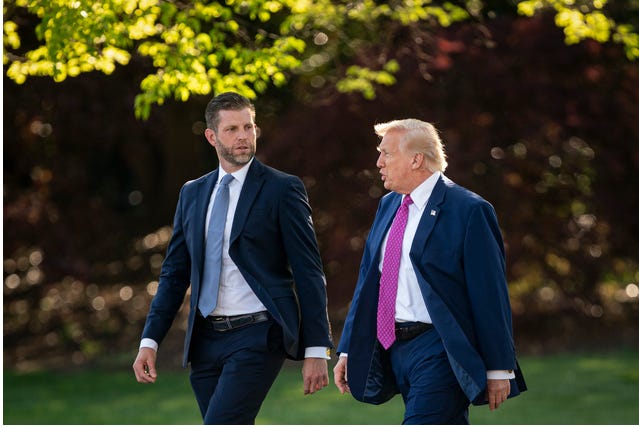
Eric and his father on the South Lawn of the White House.
Some highlights of the Post story:
The Trump sons are part of investment groups that have poured money into established government contractors, such as SpaceX and Anduril, as well as lesser-known start-ups aspiring to build a new generation of nimble, tech-forward weaponry — from drones to humanoid robots that can either mow a lawn or use deadly force. Most of the firms are in the defense industry, but some focus on products not meant for the battlefield: One company is partnering with the luxury fashion label Prada to design spacesuits, and another is trying to build quantum computers.
Together, SpaceX and Anduril account for 97 percent of the direct government cash in The Post’s tally and 42 percent of the guaranteed future contract options. Excluding those behemoths from the analysis, 13 other start-ups tied to the Trump brothers still have captured nearly $1.8 billion in long-term federal commitments and $103 million in direct cash under the Trump administration after the brothers invested.
Trump Jr. is invested in defense tech and in companies seeking Pentagon business through 1789 Capital, a venture firm dedicated to what its partners have called “patriotic capitalism.” 1789 has invested in 11 of the 15 defense, robotics and AI companies that have Pentagon business, according to the Post analysis.
Eric Trump’s primary dealmaker is American Ventures, a branch of a boutique investment bank called Dominari Holdings. Located in Trump Tower in New York, Dominari has become a key firm for the sons’ cryptocurrency, mining and defense deals, according to public records and statements by Dominari.
The brothers have invested in or advised at least four drone makers — all of which have been awarded government business during the second Trump administration, according to the Post analysis. Two of those did business with the government before the Trump brothers invested.
At an investment conference last year, Trump Jr. described his involvement in Defense Department decisions, saying he “helped craft some of [the department’s] messaging.” On his podcast, he said that in assisting Defense Secretary Pete Hegseth with personnel decisions, he was looking for candidates who wanted to spend more money on drones.
In addition to their holdings in marquee defense tech firms, the Trump brothers have also invested in smaller defense start-ups that are ascending within the Pentagon.
Evans, the Unusual Machines CEO, said that when he was introduced to Trump Jr. in 2024, after Dominari had taken his company public, it wasn’t at all clear that Trump would become president. But as the head of a little-known drone company, Evans said he was happy when Dominari CEO Kyle Wool encouraged Trump Jr. to invest. The Trump scion’s celebrity and public views on topics such as bringing manufacturing jobs back to the U.S. were an appealing way to drive attention and find retail investors “that would really believe in what we did,” he said.
“Donald Trump Jr. had a very strong on-shoring, made-in-America audience and brand,” Evans said. “He just had this really strong audience.”
When Trump Jr. announced he was becoming an investor and adviser to the company within days of his father’s election, the company’s stock price doubled. The following year, the Army placed a $12.8 million order for drone component purchases, and the Trump administration banned imports of new Chinese drones, helping the entire market. Evans has said the company is now in talks for a fast-tracked loan with the Pentagon’s Office of Strategic Capital.
The Iran War and the War Powers Resolution
Brookings Institution
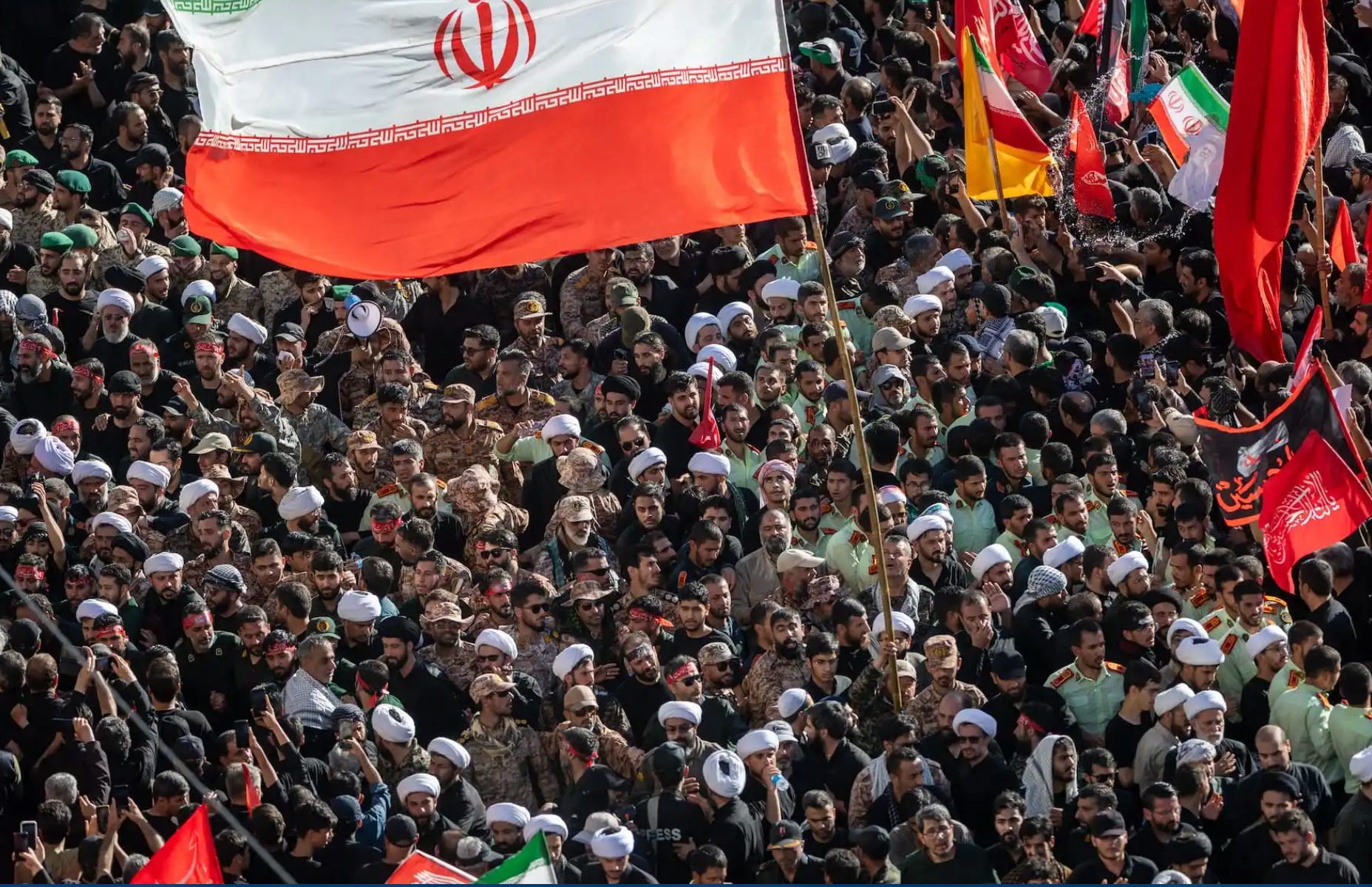
The coffin of Iran’s slain Supreme Leader Ayatollah Ali Khamenei on July 9, 2026, in Mashhad, Iran. Photo by John Moore/Getty Images
Scott: You can scour American media today for any coherent discussion of the War Powers Resolution and the legality of US military operations in the Gulf and over Iran. What you will find is simply “Trump says the clock has now been reset with a new notification Trump has sent to Congress.” But this is nonsense. The facts are these: Trump launched the Iran War on February 28, 2026. Sixty days later, on April 29, 2026, the interim authorization expired. Since that time Congress has not voted any further authorization, meaning that all military action (other than that needed to defend US military from attacks or to support a withdrawal from the theater of operations) is unlawful. Major US media appear too timid to report on or observe any of this.
You can read a recapitulation of what appears to be the administration position as of the end of May, and what’s obviously wrong with it, in this discussion panel summary from the Brookings here.
Trump Corruption Watch (2)
Trump Paid $2 Million by South Korean Company Facing Trade Investigation
New York Times
Scott: A modern kleptocrat instinctively uses all the levers of government as tools for rent seeking from those who interact with government, whether they are seeking contracts, concessions, the right to do business, or relief from regulatory enforcement or criminal inquiries. Trump has proven himself the most voracious kleptocrat of modern history, and his dealings are increasingly audacious as time passes. As we see in this NYT report.
The lead investor in a South Korean aluminum company that has challenged Commerce Department penalties on certain exports from South Korea to the United States made a $2 million payment last year to President Trump’s holding company.
The payment by the parent company, Base Group, was revealed for the first time in Mr. Trump’s annual financial disclosure form released in late June.
The document offered only a cryptic explanation for the payment, stating that it was part of a “letter of intent” and a “nonrefundable development fee.” In statements to The New York Times, the company and the Trump family said the payment relates to a still-unannounced golf course project.
Base Group has spent nearly a decade courting the Trump family, exclusively selling Trump-branded wine in South Korea and, more recently, hosting Mr. Trump’s son Eric at its Seoul headquarters.
The topic at the February gathering, according to a company executive: ways to increase trade between South Korea and the United States.
The efforts by Base Group to build ties with Mr. Trump and his family come as its corporate affiliate, Korea Aluminium, has curbed exports to the United States after the Commerce Department concluded that a group of South Korean companies circumvented trade duties on Chinese-made aluminum.
Justice In America
ABC News
Charles: Writer E. Jean Carroll, who sued President Donald Trump over claims of sexual abuse and defamation, has received $5.62 million from a civil judgment paid by Trump.
