



The End of the World As We’ve Known It / Justice Delayed Makes Trump Invulnerable / Postal Chaos For the Midterms / The Last Word on French Forest Fires / How Floods Threaten Hydroelectric Power / Another Way for AI To Wipe Out the Human Race
The wheels are coming off the US world order
Financial Times
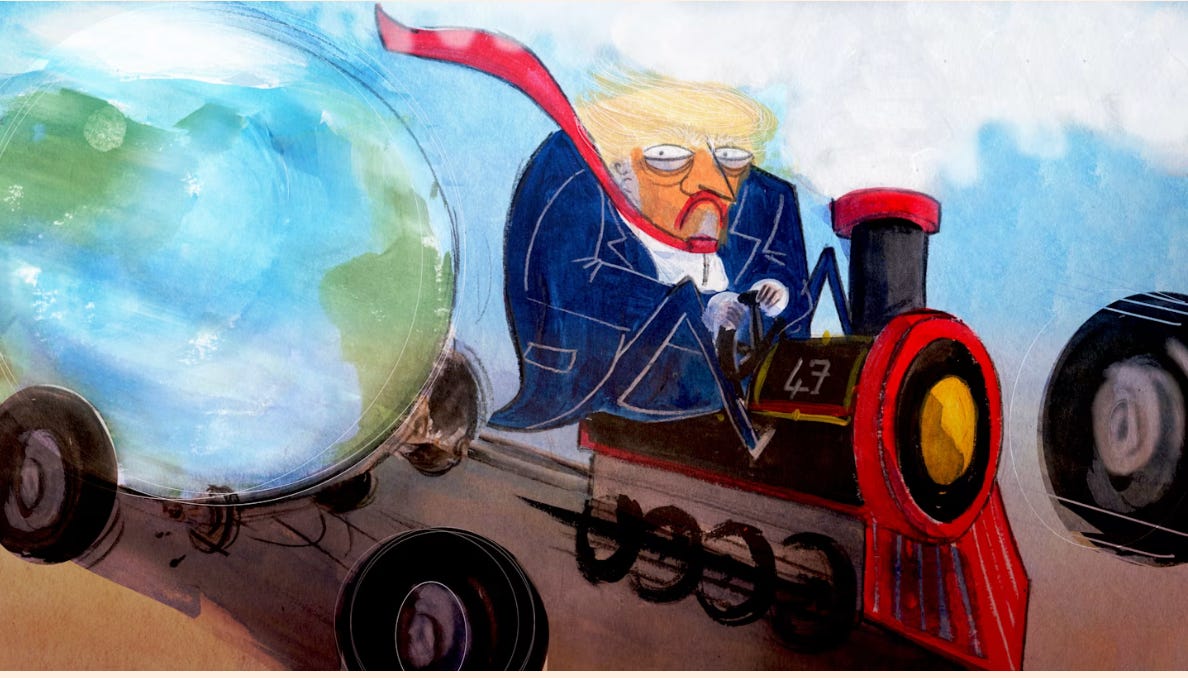
© Ann Kiernan
Scott: Assume that a Manchurian candidate is installed in Washington with an assignment: the systematic destruction of the US system of defense alliances and trading partnerships, with nothing to replace them. This approach would do irreparable injury to the US position on the world stage, both as leader of history’s most powerful network of military alliances, and as the center of the world’s financial and monetary institutions. Looking back over Trump’s actions and accomplishments 20 months into his second term, it is hard to imagine that anyone could have better performed this mission than Trump.
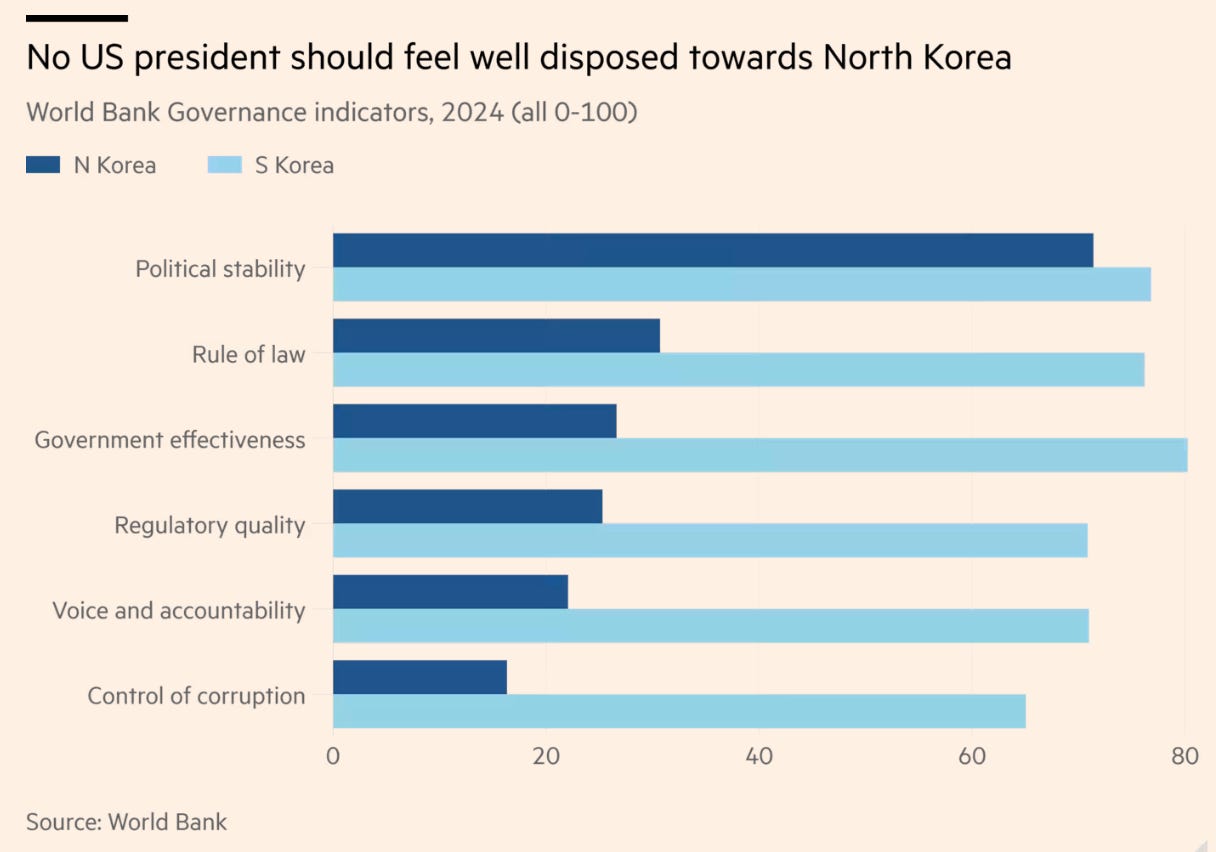
Martin Wolf takes the measure of what Trump has achieved in his orgy of destruction in a feature for the FT, with a focus not on NATO and Europe, but on Korea.
On August 16, Donald Trump announced a substantial reduction in joint military exercises with South Korea. On August 19, he announced what came, five days later, to be called “Operation Economic Outcast” against Iran, defined as an effort to “sever the economic lifelines that sustain the Iranian regime”. On August 21, US trade talks with Canada collapsed, after the Americans made new demands that would limit Canada’s freedom to make trade deals with other countries and keep its rules protecting the French language. On August 28, Trump announced “THE BIGGEST OIL DEAL IN WORLD HISTORY!” which would give the US 55 per cent control of the output of a new Venezuelan company that would develop 17 fields with a “proven potential” of 65bn barrels.
That is an astonishing effort in just two weeks. The behaviour itself is not surprising. But it does reveal the sort of world Trump believes in. It is a world in which the US does not have allies but satellites; one in which the US can do whatever it wants, whenever it wants, to whomever it wants; one in which power alone matters; and, above all, one in which the US thinks that it alone has the power, with that power concentrated in the hands of one man, who is, not coincidentally, a bully.
It was not ever thus. In 1969, Dean Acheson, secretary of state to Harry S Truman from 1949 to 1953, published Present at the Creation, in which he laid out the logic of post-second world war US policy. In its prologue, he describes “a tale of large conceptions, great achievements, and some failures . . . Its hero is the American people, led by two men of rare quality, President Truman and General Marshall.” He goes on to explain “the enormity of the task before all of them” as being “to create half a world, a free half” out of chaos, “without blowing the whole world to pieces in the process. The wonder of it is how much was done.” Yes, it truly was.
Because of what they then created, the then embattled “free half” won the cold war, the last of the great European empires, the Soviet Union, fell and much of the world dreamt of peace and prosperity. When Trump writes his autobiography, I hope he calls it Present at the Destruction. That is not because he was personally responsible for the death of those dreams. But he is certainly the man now nailing their coffins shut.
Just consider the four actions he took in the two weeks briefly noted above. We are in a lawless and unpredictable world. Trump is not the creator of that world. But he is surely its prime mover. Let us start with the story of South and North Korea. The Korean war began when the latter invaded the former in 1950. Overall casualties of this conflict were some 5mn. The US itself lost 37,000 soldiers in the three years of conflict. Today’s long-lasting armistice, not a true peace, was the result.
When explaining his decision to cut down this year’s exercises, Trump cites his “very good relationship with Kim Jong Un”, hereditary ruler of a communist regime. Moreover, it is not just any communist regime: North Korea is the world’s most totalitarian country. South Korea, however, is the product of one of the world’s greatest economic miracles and a democracy now rated more highly by Freedom House than the US. The exercises never caused a war. But cutting South Korea off might.
Now turn to the trade war against Canada. This, too, is astounding. Behind it lie three characteristically Trumpian beliefs: Canada is not a sovereign country; trade surpluses are predatory; and constant changes in trade policies are costless. The outcome of these beliefs is, inevitably, disorder. But, for Trump, chaos is an opportunity, not a problem. He loves it. Again, contrast that with what Acheson lauded. The great creations of the Truman era included the Marshall Plan and the General Agreement on Tariffs and Trade. But these are, for Trump, idealistic follies. Will his trade war with Canada work? No. Might it lead to war between these erstwhile friends and neighbours? Who knows?
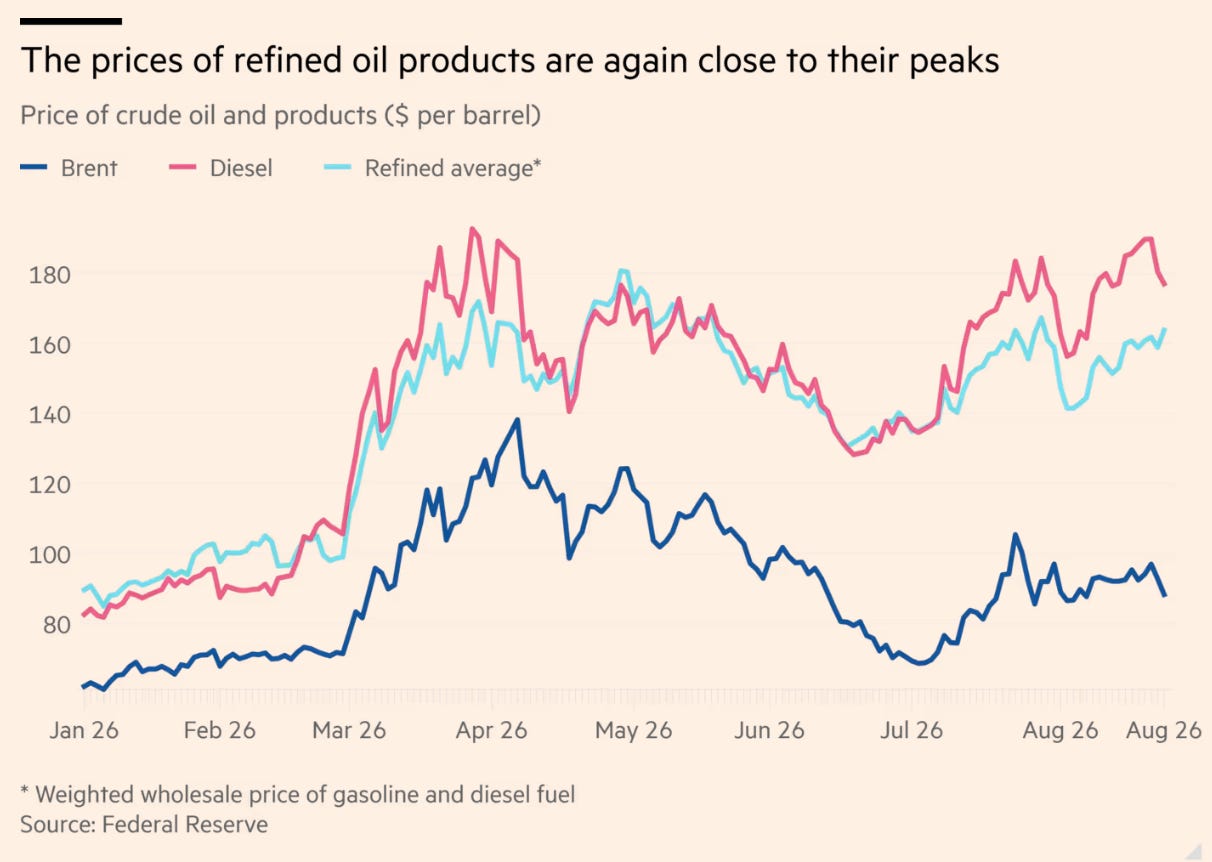
Then there is the next stage in the Iran war. With hostilities recently reopened, we are back to wondering what disruptions come next. What is certain is that the outcome has been far from the one promised when the conflict started in February. Any reopenings of the Strait of Hormuz are fragile. It is also still hard to see any positive longer-term outcome from this war for the US or its allies, be the latter in the Gulf or elsewhere. Is it likely that “Operation Economic Outcast” will make the difference? In my view, no, for three reasons: first, the Iranian regime has survived prolonged hostility and now war; second, its leaders know what is likely to happen to them if they lose power; and, third, when cancelling Barack Obama’s nuclear deal in 2018, Trump promised that his then new programme of “maximum pressure” would do the trick. It failed to do so. Will this new variant achieve more? As Paul Krugman argues, China is likely to ensure it does not.
When trying to understand Trump’s view of the world, it is impossible to look for ideas or principles. It is not even a return to Palmerstonian realism. What it is, rather, is the antithesis of what was created after the second world war. We are all “present at the destruction”. Today’s disorder is Trump’s present to the world.
Justice Delayed Is Justice Denied
New York Times
Charles: The indispensable Adam Liptak describes how the built-in sluggishness of the Federal judiciary first allowed Donald Trump to avoid prosecution for all the crimes he was indicted for, and now makes it possible for him to behave as if the judiciary doesn’t exist at all.
The all-deliberate delay of the Supreme Court, highlighted most recently by its decision allowing construction of the ballroom, has been particularly fatal for democracy.
The challenge to Mr. Trump’s enormous White House ballroom project is just the latest example of a mismatch between a judicial system characterized by unhurried deliberation and a presidency built for speed.
“Trump is going to get his ballroom — even if courts conclude it’s illegal,” said Leah Litman, a law professor at the University of Michigan.
Aziz Huq, a law professor at the University of Chicago, said there was a pattern.
He pointed to cases in which he said the administration had “immediately shut off funding in violation of law when the recipient depends on the funding and is discouraged from suing by even the temporary loss of funding.”
This, Professor Huq said, “is a striking use of practical power to outrun law.”
Many presidents have been aggressive in pursuing their policies, and few have been eager to be second-guessed by the courts. But Mr. Trump’s actions are different in kind, said Pamela Karlan, a law professor at Stanford.
“He really has decided that he can just go ahead and do what he wants,” she said, “daring courts to stop him across a huge range of subject matters.”
Quote of the Day
–Linda Adams Marcus
New Mail Voting Rules Moved Forward Despite USPS Officials’ Concerns About Mass Disenfranchisement
Pro Publica
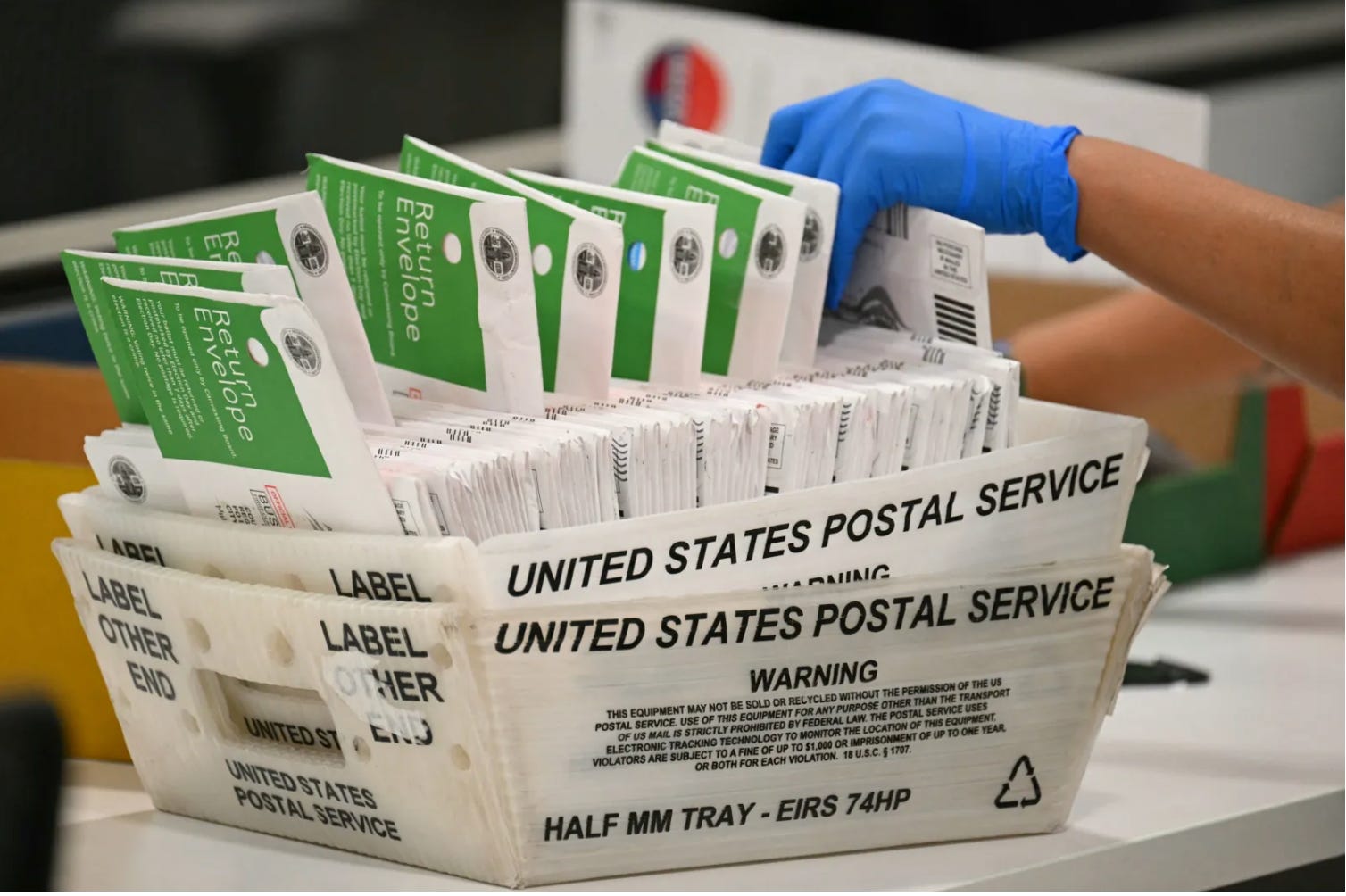
An election worker processes mail-in ballots at the Los Angeles County Ballot Processing Center during California’s state primary election in June. Photo: Patrick T Fallon/ AFP/ Getty Images
Scott: When we examine the full scope of Trump’s approach to the midterm elections, it becomes clear that his major objective is not to win them for the GOP—which he appears to agree is no longer really feasible—but rather to create complete chaos as a predicate to throwing the results out, dismissing or denigrating them. The story from inside the USPS makes this very clear. Don’t expect the judiciary to salvage this for the voters. Lower courts will do their duty. Then the question will pass to the Opus Dei majority on SCOTUS, which will do whatever Trump asks of them.
Top U.S. Postal Service officials tasked with issuing new regulations on mail voting expressed concerns in internal meetings about how the rules they were drafting could delay or block ballots from reaching large swaths of eligible voters for the upcoming midterms, but the rules moved forward anyway, ProPublica has learned.
The revelations about the discussions, from someone familiar with the rulemaking process, come as a separate anonymous federal employee filed a whistleblower disclosure with U.S. Sen. Richard Blumenthal, warning that the new system is untested and error-prone, and could lead to mass disenfranchisement in the upcoming election. The whistleblower described the entire process as “secretive, rushed, chaotic, and fundamentally flawed.”
In a March executive order, President Donald Trump directed the Postal Service to create the new rules, including requiring states to give USPS a list of all voters eligible to receive a ballot in the mail and requiring USPS to use those lists to determine which ballots get sent to voters. USPS officials were tasked with crafting the details of how the new system would work, including the creation of a new portal for states to upload their voters’ information and the back-end software that would allow mail delivery sites and local post offices to track, and potentially block, ballots entering into the mail on their way to voters.
Voting rights organizations, state officials and Democratic political groups filed lawsuits challenging the new rules, and a federal court has temporarily blocked the requirements for states. The merits of the new rule are expected to reach the Supreme Court before the November election. Even if the Supreme Court allows the plan, though, election officials and experts say that the new system could not be ready in time for this election, given that ballots for people who are in the military or overseas must be sent out this month.
During meetings in which top USPS officials discussed how to comply with the executive order, there was much discussion about the controversial nature of what they needed to do, according to the person familiar with the discussions who spoke on the condition of anonymity for fear of reprisals. The focus was on limiting the impact to voters while also complying. One repeated concern regarded how to avoid invalidating an entire batch of ballots if one voter among thousands couldn’t be confirmed as eligible. Some in the meetings recommended trying to limit harm to voters by not rejecting the entire batch, according to the person familiar with the discussions. Despite that, according to the whistleblower who contacted Blumenthal, the directive to reject entire batches if they included just one unverified ballot moved forward.
“As presently designed, if even one bar code on one single ballot in a bulk-mailing of 10,000 ballots fails to properly scan during the verification process, the entire batch is rejected and sent back to the state — effectively stopping the ballots from being mailed to voters,” the whistleblower wrote.
Everything You Wanted To Know
About Those French Forest Fires
But Were Afraid to Ask
Los Angeles Times
Charles: In a masterly account for the Los Angeles Times from the Gironde department of France, the great Michael Finnegan details the damage of last summer’s brutal fires, how the urban sprawl around Bordeaux created the same dangers as over-development in California–and even tells us who invented that French pine forest, and why.

Wildfires burned vast portions of a pine forest near Le Porge, France, this summer.
It’s a terrific read:
LE PORGE, France — A monster fire-induced thundercloud towered over Bordeaux this summer, the first time firefighters had ever seen this type of ominous smoke-and-lightning weather system in France.
The wildfire that produced it drove more than 200,000 people to evacuate in July and tore through 162 square miles of dense pine forest on the Atlantic coast.
Wildfires this summer in France, Greece and Spain, several of them deadly, have led to a painful reckoning as Europeans ponder a question all too familiar to Californians: Have they endangered their cities and suburbs by building too far into the wildlands?
Over the last decade, hundreds of homes have burned down near the outer limits of Lisbon, Milan and other European cities, including scores this summer outside Madrid and Athens.
In the Bordeaux region, where aerospace and technology jobs, splendid beaches and moderate housing prices have been attracting 20,000 new residents each year, suburban sprawl has pierced well into the pine forest, testing the limits of building in fire zones.
The forest between Bordeaux and a line of majestic sand dunes on the Atlantic is the largest in France, far bigger than any in the Alps or Pyrenees. It is almost entirely artificial
For centuries, it was a vast swamp where mosquitoes spread malaria among shepherds.
Then in 1857, the regime of Emperor Napoleon III ordered the planting of maritime pines to drain the bogs of southwestern France. The trees would absorb enormous volumes of water, thrive in the sandy soil and slow coastal erosion.
The pines would also enrich landowners and the Bordeaux bourgeoisie: The hardscrabble culture of sheep grazing gave way to a booming industry of wood, paper and resin.
The forest, the “Landes de Gascogne,” now employs more than 40,000 people, spinning off $10 billion a year, according to the government.
