



Inside Deutsche Bank: Special Edition /AOC Moves Jeffries / These Are New Times!
Deutsche Bank Leaks: A Special Round Up
Scott: Donald Trump’s history as a businessman was marked consistently by failures followed by the appearance of a miraculous, even inexplicable bailout. The biggest of these came following his seven bankruptcies regarding his highly touted Atlantic City resort and casino businesses, which were an amazing failure. Out of the shadows stepped Deutsche Bank, to make everything right. No other lenders would touch Trump—they deemed him a high credit risk. But over more than two decades, Deutsche Bank lent Donald Trump more than $2 billion. This included, for instance, the $198 million loaned to him to buy 40 Wall Street from the Marcoses. And a highly irregular $48 million loan from the Bank to restructure a $640 million loan, on which Trump defaulted.
Justin Kennedy, the son of Supreme Court justice Anthony Kennedy, was Trump’s bank account officer through most of this time.
And over time it became apparent that the strong interest in Trump within Deutsche Bank lodged not it its New York branch, not in its Frankfurt headquarters, but in its prospering office in Moscow, which had evolved into the financial institution of choice for Russia’s oligarchs, and particularly those who aimed to launder their money and expand their operations into the established capital markets of the west. Trump obviously had plenty of friends there, though their identities were always a bit murky. At length it also became clear that Deutsche Bank’s decision to take on Trump as a client and to lend to him rested very heavily on things that were said and done in Moscow which are still rather opaque.
Now with the leak of 15 million documents to a major consortium of newspapers and magazines around the world, we have perhaps still no clear answers about the Trump relationship with the world of finance centered on Moscow, but we have a great deal more precision on what the questions are.
Trump was a significant beneficiary of money laundering of Russian money through the Estonian affiliate of Danske Bank
Berlingske

Danske Bank’s Estonian branch was closed in 2019 over concerns about laundering dirtyRussian Money. Photo:. Asger Ladefoged
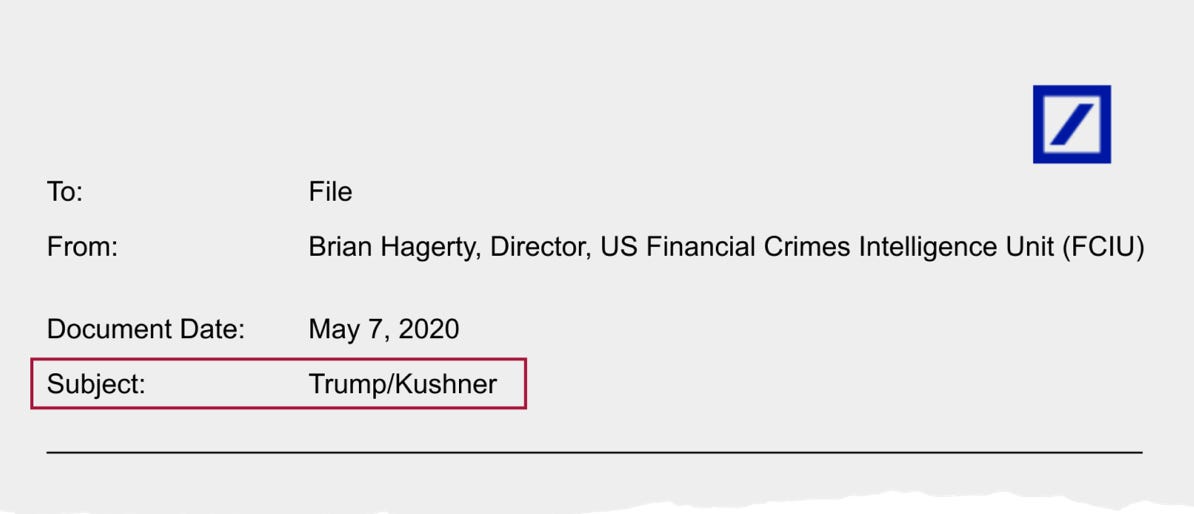
A major German bank detected suspicious transactions from Danske Bank’s money-laundering-plagued branch to Donald J. Trump and reported them to the authorities on an ongoing basis, according to an extensive leak of banking documents. One particularly striking transaction occurred just weeks before Trump officially announced his first presidential candidacy.
On the surface, the payment was not particularly dramatic. The $141,261.82 was lost among the billions upon billions of dollars flowing daily through the payment systems of Germany’s largest bank, Deutsche Bank.
Yet, there was something fundamentally wrong with the transfer, as Deutsche Bank’s anti-money laundering experts concluded when they scrutinized this specific transaction—dating back to April 2015—several years later.
Partly because of the sender: a mysterious company with ties to money laundering, tax havens, and corruption. But, above all, because of the recipient: a wealthy American real estate mogul and television personality who, shortly after the payment, was elected to the world’s most powerful office:
Donald J. Trump. The transaction in question is one of the striking details within a massive leak of more than 15 million files from the major German bank, Deutsche Bank. Berlingske has gained access to these documents as part of an international journalistic collaboration titled “Inside Deutsche Bank.”
The material reveals, among other things, how Deutsche Bank spent several years attempting to determine whether suspicious financial flows from abroad—specifically from Russia—had been directed to the Trump empire.
This inquiry was prompted by the 2016 presidential election, in which Trump was elected for the first time.
Deutsche Bank knew it had acted as an intermediary for a huge Russia-based money-laundering network
Le Monde
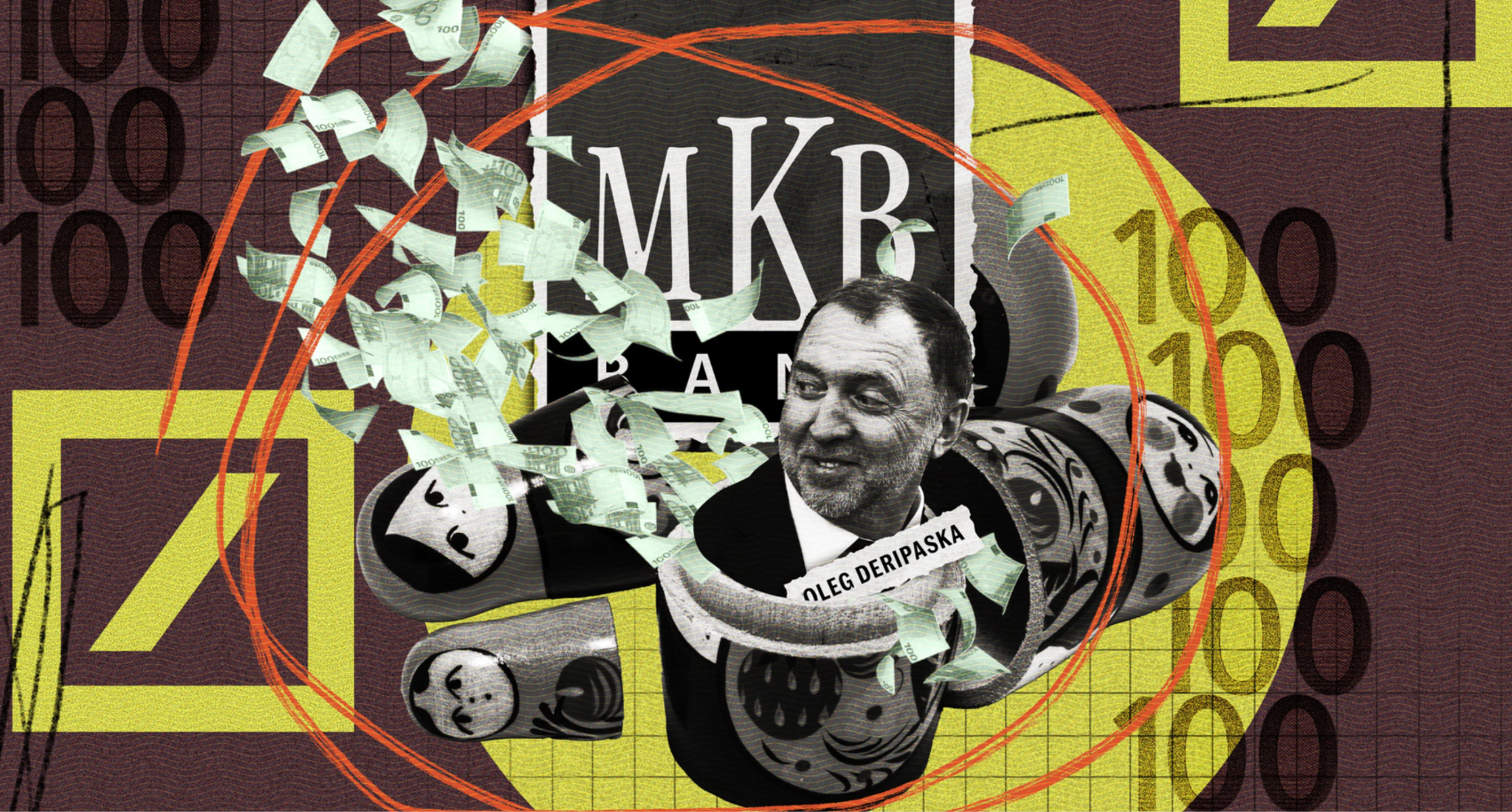
The scheme, which was discovered in 2020 by an analyst at the German bank, has moved more than €1.7 billion and was linked to Russian oligarch Oleg Deripaska. It siphoned funds out of the Hungarian bank MKB, allegedly with the help of a French intermediary. These opaque arrangements are at the heart of the confidential documents revealed by Le Monde.
“I have a bad feeling about this and the legal department feels the same way.” In the highly regulated world of banking compliance, having your own teams summoned by the courts is rarely a good sign. So, on May 11, 2020, when a member of his unit received a request to testify from the German Federal Criminal Police Office (Bundeskriminalamt), Heinrich Völcker, head of financial crime operations at Deutsche Bank, quickly wrote to his deputy.
The investigation was coordinated and managed by Barracuda Media NPC, a South African nonprofit organization, with technical support from the Data and Research Center, in Germany.
Implicitly, these documents also bear witness to years of willful blindness on the part of the German bank in its provision of services to other financial institutions, which proved to be the weak links in the money laundering chain, due to a lack of rigorous checks on the origin of funds.
Three months before Völcker’s email, an analyst hired less than a year earlier accidentally uncovered a major money laundering scheme. The analyst’s investigation initially began with two companies registered in Hong Kong with no apparent connection, whose transactions “were potentially linked to money laundering.” As the analyst made further discoveries, they observed that “several payment flows looped back or passed through needlessly complex routes” via multiple intermediary accounts before being concentrated in a small number of accounts.
The employee had just uncovered what the Deutsche Bank itself described as “a live and growing laundromat scheme,” displaying “numerous indications for a criminal network.” It was a true financial labyrinth, designed to conceal the origin of the funds by mixing, within the same circuit, fake invoices sent to shell companies created out of thin air and tangible investments injected into the legal economy. The real aim was to hide the identities of the true beneficiaries of this money sent across the globe.
Deutsche Bank, eager to put an end to this “growing” money-laundering operation, launched what it internally called “Project Wingman.” By reviewing the financial flows within this network, the bank calculated that at least €1.7 billion in capital had moved, with complete impunity and unimpeded for years, through a complex web of offshore entities, made up mainly of suspected shell companies based in Hong Kong, Cyprus and several Caribbean countries.
Among the nearly 800 companies involved, sometimes without their knowledge, 15 – 10 of which had already triggered suspicious activity reports by the bank – appeared to have played a central role, having sent or received the largest volumes of funds. The “Inside Deutsche Bank” investigation revealed that some of these entities were linked to the activities of Russian businessman Deripaska, as well as to his business partners or family members. When contacted, they did not respond to our questions.
How Donald Trump Became a Toxic Client for Deutsche Bank
Der Spiegel
Donald Trump’s request arrives in early December 2016. It’s a few weeks after his election victory, and he needs cash. A lot of it. And some of the money is to come from Frankfurt in Germany – from Deutsche Bank. From the same institution that has repeatedly helped him out in the preceding years.
Trump wants to increase an existing loan by $35 million. He wants access to a reserve of $50 million set aside for a luxury hotel in the heart of Washington. The US president-elect also asks for the terms on three other loans to be extended.
By now – the end of 2016 – Trump already owes Deutsche Bank around $331 million, according to an internal memo. The bankers, however, are unconcerned. Trump’s interest payments “are consistently made when required” and “all our collateral properties have been renovated in a first class manner and substantially improved.” So, everything’s fine?
Of course not. Because since his election victory, Trump is no longer just “The Donald,” the TV entertainer and real estate developer from New York City. Now Donald J. Trump is the president-elect of the United States, likely the most controversial and most heavily indebted one in a long time. During the campaign, a video surfaced in which he boasted that as a star you could do anything with women – including “grab them by the pussy.” Should someone like him really be given millions more, especially at such a delicate moment?
The request moves through the bank’s hierarchy and finally lands, on December 12, before the institution’s senior-most risk committee. According to a confidential record, the decisive meeting begins at 5:33 p.m. German time. Among the participants from Frankfurt, London and New York are several board members as well as Christian Sewing and Fabrizio Campelli, who are today the chief executive officer and deputy chief executive officer of Deutsche Bank, respectively. The high-powered group weighs the pros and cons of Trump’s request. How would the public view the payments? What effect might the move have on potential billion-dollar penalties the bank is negotiating with the US government at the same time? At some point, someone asks whether Trump could announce the loan extensions as part of a package of financial moves that includes other changes to his business dealings. That, though, likely wouldn’t change things. Deutsche Bank is probably “the only bank thought to be in this situation,” replies Campelli – who at that time was head of the division that served wealthy clients, including Trump. The group continues deliberating.
Deutsche Bank had only itself to blame for the delicate situation in which it found itself in December 2016. For several years, it had been the only major bank still willing to lend Trump money for his US real estate projects. As a businessman, Trump had been just one business risk among many for the bank. As a politician, he became a problem. Suddenly, prosecutors and special investigators took an interest in his dealings, as did international media and the US Congress. In 2019, Trump sued Deutsche Bank to prevent details of his business from becoming public. The legal battle went all the way to the Supreme Court. It was not until 2024 that the bank finally rid itself of the loans to its arguably most prominent client.
Internal documents from the “Inside Deutsche Bank” leak – combined with court testimony, land registry records and documents from the Trump Organization – now offer new insight into the years-long drama between the bank and one of the most powerful men in the world. A drama in which Trump inflated his wealth to such a degree – including in his interactions with Deutsche Bank – that a New York court later convicted him of fraud. The documents show what happened behind the scenes as Trump moved into the White House – and how Trump, the real estate developer, went from golden goose to toxic client.
Deutsche Bank hired a Qatari royal. Why?
Financial Times
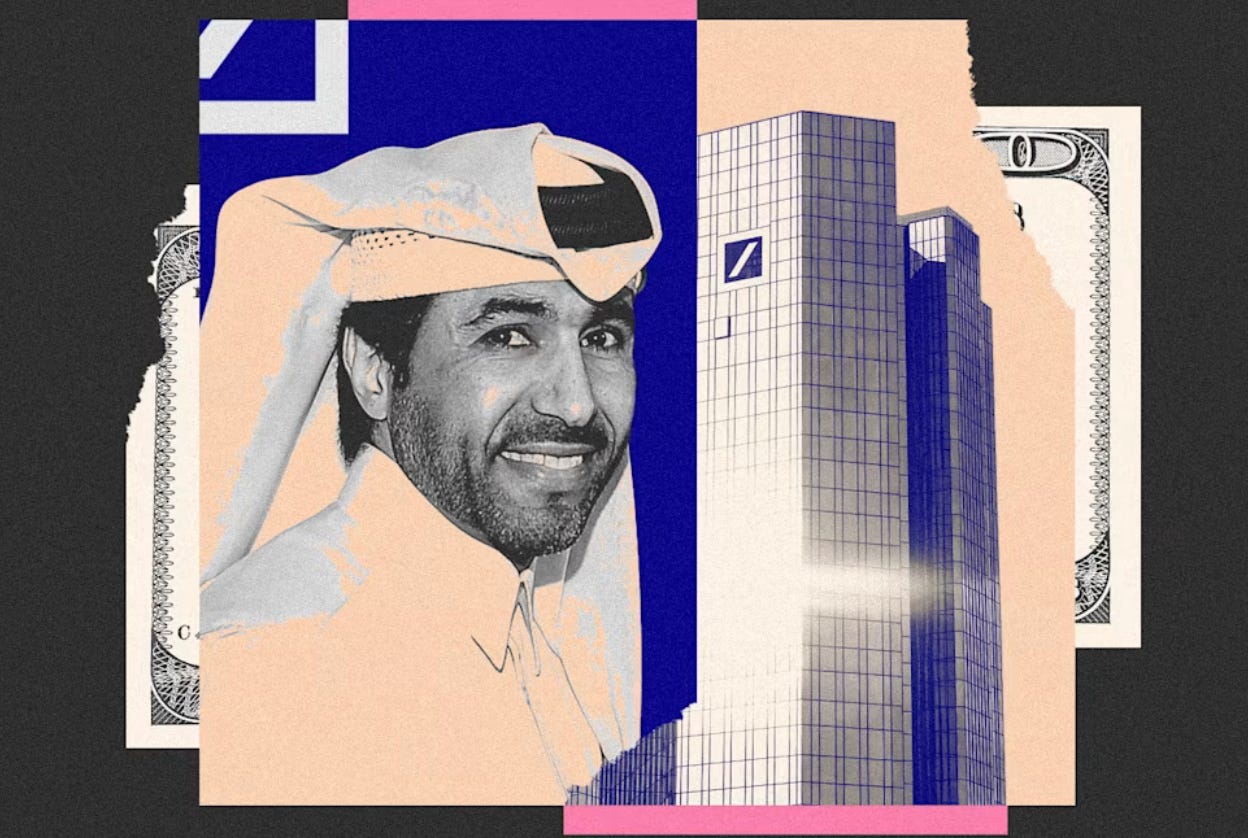
In 2010, Deutsche Bank made an unusual hire: a prominent member of the Qatari royal family who ran state-owned media company Qatar News Agency. Sheikh Jabor bin Yousef bin Jassim al-Thani joined the German bank as a “business development consultant” and was asked to “assist with obtaining business from Qatari [state-owned enterprises]”.
The arrangement, not publicly known until now, was highly lucrative for the sheikh: $80,000 a month, plus success fees, paid into a Swiss bank account. Over the years Deutsche paid him millions of dollars.
The lender’s relationship with Sheikh Jabor is just one part of the German lender’s dealings in Qatar uncovered by an enormous leak of records from inside the bank, which were reviewed by the FT and a consortium of global media outlets including Daraj, Der Spiegel, Le Monde and Paper Trail Media.
The documents show the depth of the relationship between one of the world’s richest dynasties and one of Europe’s biggest banks, and detail how Deutsche’s dealings with the al-Thani family blurred traditional boundaries between investor, client and counterparty.
Since 2014, members of the Qatari royal family have been among the biggest shareholders in Deutsche. Now, the files reveal that leading Qatari royals were also among the bank’s biggest wealth management clients, sold Deutsche insurance against the risk of European countries going bankrupt, and borrowed hundreds of millions of euros.
The Good News About Jeffries Becoming Speaker
Notice News
Charles: Some progressives are up in arms about the new speaker, but AOC is already moving him significantly in the right direction:
YES: AOC is playing the long game, and it’s working. Hakeem Jeffries put her in charge of House Democrats’ healthcare working group alongside Rep. Terri Sewell, where she’s working to lower medical costs, expand access, and protect Medicare and Medicaid.
Over the summer, Jeffries said he didn’t support Medicare for All.
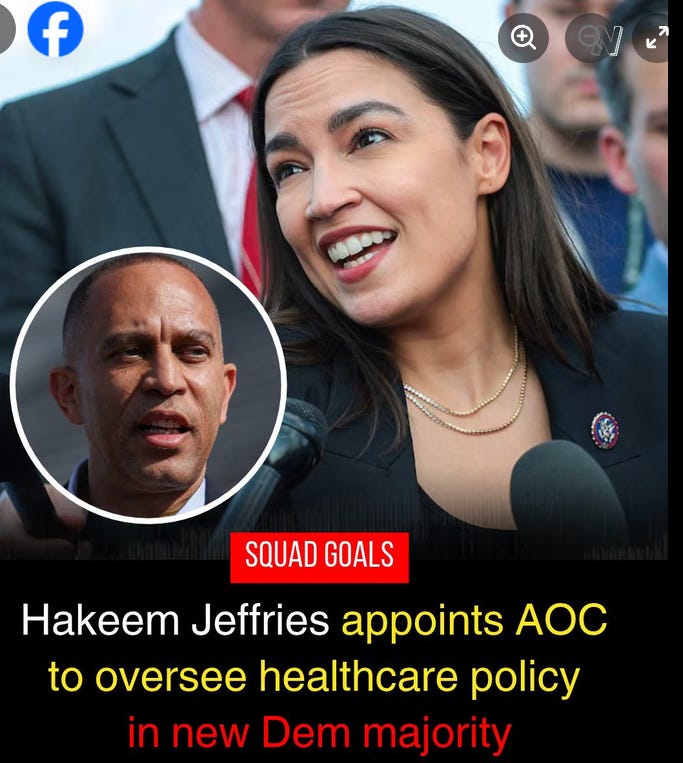
This week he came out for lowering the Medicare age, covering every child in America, and guaranteeing vision, hearing, and dental care.
It isn’t Medicare for All, but it’s a real step toward it. AOC praised what she called “very real movement and commitment to guaranteeing health care to all Americans.”
Hakeem Jeffries is moving toward the healthcare agenda she’s been fighting for, and she got him there from inside the room.
She’s backed Medicare for All since day one and co-sponsored the latest bill to guarantee coverage for every American with no premiums, no deductibles, and no copays.
Some on the left have questioned her anyway. Too cozy with leadership, they say. Seven incoming progressives voted against Jeffries in the caucus vote for Speaker, saying they still want firm commitments on Medicare for All. That frustration is real.
But real power doesn’t get built in one news cycle. It gets built by doing the work and dragging the party forward one commitment at a time.
Republicans used to mock her as a bartender. Now she’s helping shape the healthcare plan for the next House majority.
That’s how you win.
These Are New Times
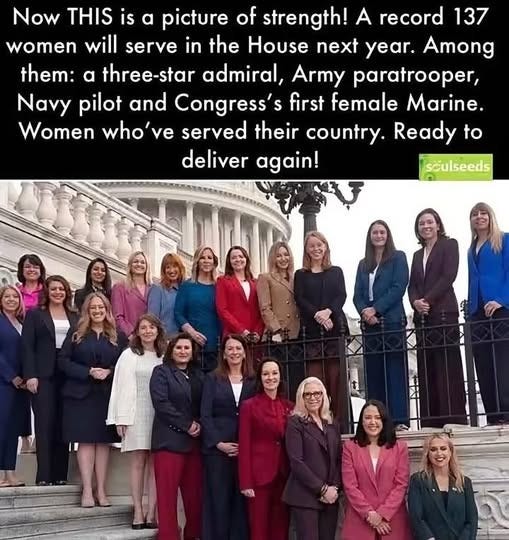
Empire State Building Goes Gold for Voyager
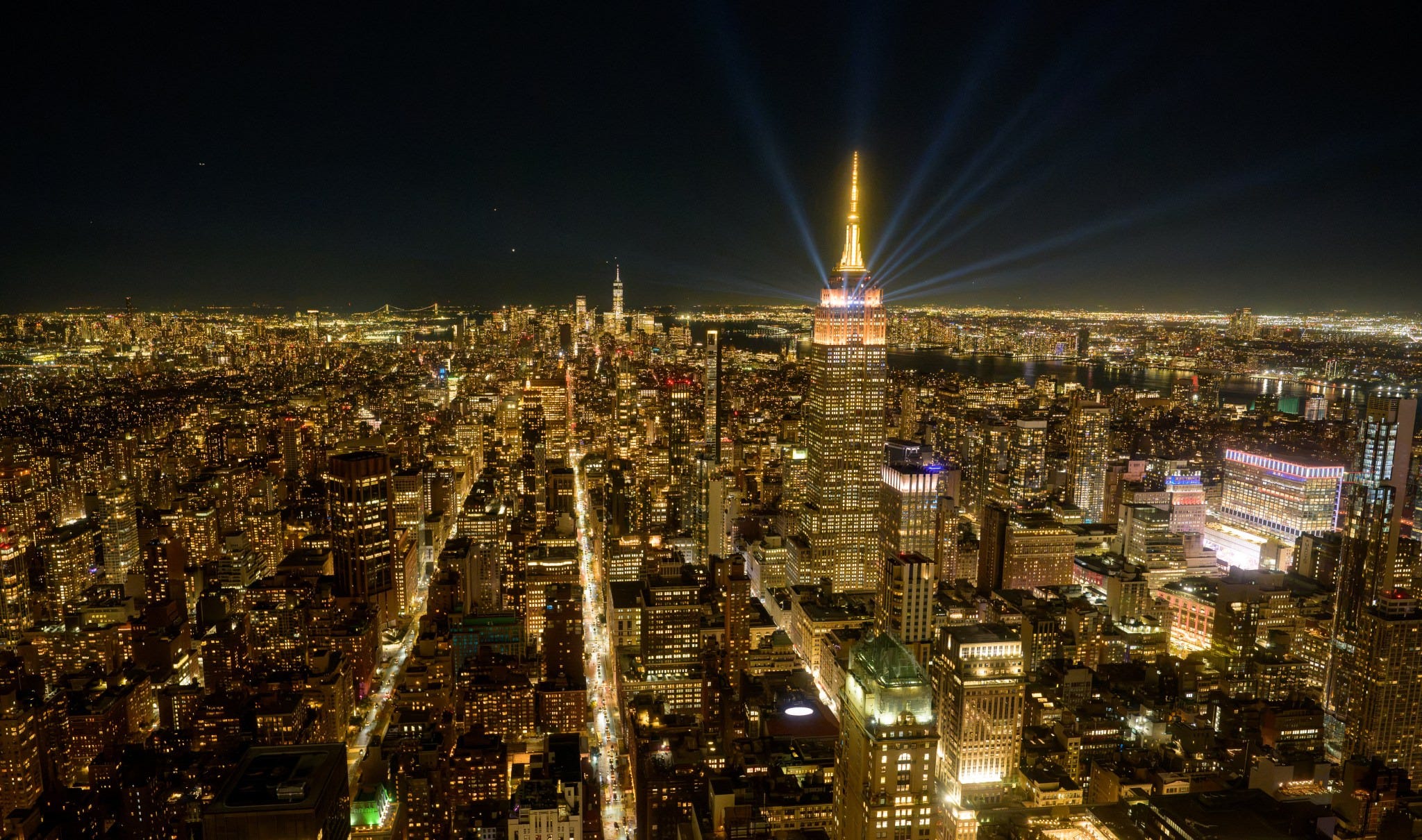
NASA/Bill Ingalls
The Empire State Building is seen illuminated in gold to celebrate NASA’s Voyager 1 spacecraft as it was about to pass one light-day away from Earth, a distance reached by no other human-made object, Nov. 17, 2026. The color gold represents the gold-plated copper phonograph record that is flying on Voyager; the Golden Record contains sounds and images selected to portray the diversity of life and culture on Earth.
Your Online Moment of Zen
Anything Goes
Music and Lyrics by Cole Porter
Performed by Mary Martin
1950
The Depression was five years old when Anything Goes opened on November 21, 1934 at the Alvin Theatre. Brooks Atkinson raved about it in The Times, calling it “hilarious and dynamic entertainment.”
Mary Martin never played Reno Sweeney, the evangelist-turned-nightclub singer star of the show. (Ethel Merman created the role.) But Goddard Lieberson, the god of musical recordings and later the president of Columbia Records, had the brilliant idea of bringing Martin into the studio in 1950 to record Anything Goes and The Bandwagon.
It was one of the 62 essential LPs I grew up with–and it was one of the records that always stimulated my father’s joie de vivre.
My mother’s too.
Its lyrics put Cole in a class by himself.
In olden days, a glimpse of stocking
Was looked on as something shocking
But now, God knows
Anything goes
Good authors, too, who once knew better words
Now only use four-letter words
Writing prose
Anything goes