



The beginning of the end? / The gorgeous new faces of the Democratic Party / Why the AI Bubble Is Most Like Slavery / Musk Wastes Half a Billion / LBJ Is Smiling down on Texas
Is the Trumpensturz the Beginning of the End?
Financial Times
Trump had urged voters to act as though his name were on the ballot. They did just that. Photo: Pablo Martinez Monsivais/AP
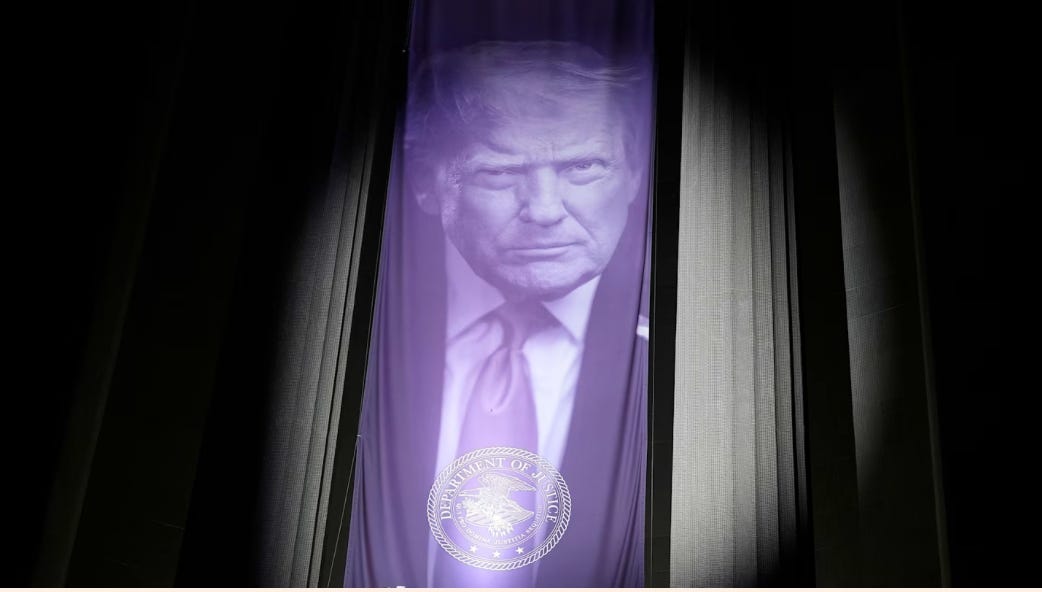
Scott: Most commentators fall into the trap of analyzing the 2026 midterms much as they would any nationwide election—as a product placement test between the Democrats and Republicans. But such analysis has extremely limited utility. In fact the midterms in 2026 were a test of whether the public wanted to embrace the transition to a new form of state: a plutocracy in which the plutocrats were largely freed from the constraints of law imposed on others. On this choice, the judgment of the public was unequivocal. Ed Luce captures this very well and focuses on the new risks that a post-election Trump will present.
Not only did Trump thrust himself into the centre of each news cycle; he went out of his way to belittle the electorate’s chief concerns. Affordability was a “Dumocrat [sic] hoax”, Trump insisted. Though the Iran war and its inflationary effects was a dominant theme, Trump told voters he had kept every promise. One of those was to avoid wars in the Middle East. Some believe that he showed clear signs of cognitive decline. “I’ve actually kept far more promises than I made,” Trump cryptically suggested the day before the election.
Perhaps his most psychologically wayward choice was to deliver his big campaign closing speech in front of Washington’s Lincoln Memorial reflecting pool — a Trump obsession that few Americans seem to share. In the annals of US political campaigning, no more bizarre closing argument can have been tried. The majority of Trump’s one-hour election eve peroration was about the pool.
“The reflecting pool right now looks better than it ever looked,” Trump said, having claimed that both Barack Obama and Joe Biden tried and failed to upgrade the water feature. “We’re replacing all of the grass and all of the parks. Because like the human being, grass has a life also.” Some members of Trump’s White House staff watching it on television reportedly buried their faces in their hands as he spoke.
Democrats will now control both chambers of the US Congress in a result that even Trump might find “too big to rig”. There are two immediate consequences. The first is that the Republican campaign to replace him as the 2028 nominee will begin straightaway. Indeed, Ron DeSantis, the outgoing governor of Florida, arguably kicked that off before the polls had even closed. Without naming Trump, he said no public official should make money from holding office. That suggests an anti-corruption backlash following an election where that theme topped many recent polls.
The second consequence is that Trump’s unpredictability is likely to become an even larger feature of his presidency. To those who oppose him, Tuesday night was a lightning strike. But Trump is rarely outbid in the drama stakes. Whichever way he reacts, the 2026 result will change America’s course. The 2018 Republican midterm defeat was the end of Trump’s beginning, to borrow Churchill’s phrase. This week’s high turnout a decade after Trump descended that escalator spells the beginning of his end.
Overnight Is a Long Time In Politics.
A Week Is Forever.
Charles:
There is discrimination in this world, and slavery and slaughter and starvation. Governments repress their people; millions are trapped in poverty while the nations grow rich; and wealth is lavished on armaments everywhere…. The answer is to rely on youth—not a time of life but a state of mind, a temper of the will, a quality of imagination, a predominance of courage over timidity.
—Bobby Kennedy, 1966
Democrats won more votes in this election than any party in midterm history: 66 million and counting.
Democrats are on track to hold the governorship and both legislative chambers in 22 states next year — the most since 1984.
In deep red Mississippi, Democrats are close to pulling off another almighty upset. Democrat Scott Colom is leading his Republican incumbent Cindy Hyde-Smith by 1,138 votes with almost 96% of the vote counted.
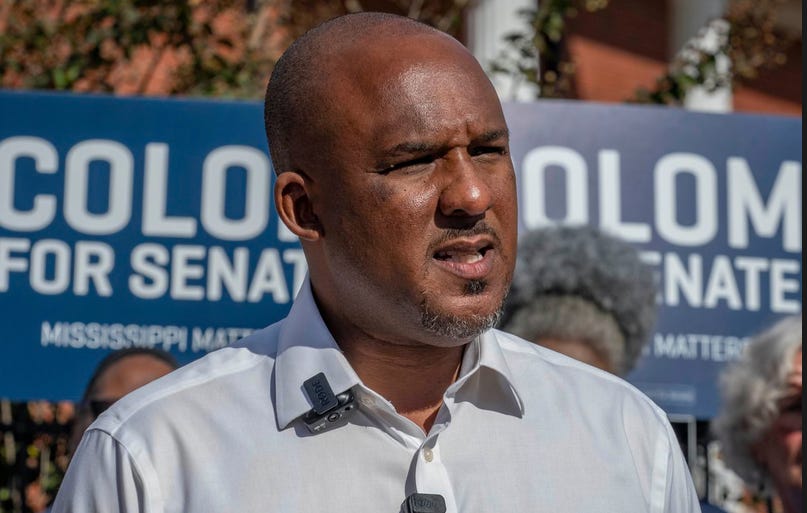
Scott Colom. Democratic Senator from Mississippi?
A trans Democrat flipped an Alabama House seat Republicans won by 16 points in 2022, in a county Trump carried three straight times. Allison Montgomery unseated Republican state Rep. Phillip Rigsby in House District 25, 12,456 votes to 10,929. The 32-year-old software engineer, Eagle Scout and devout Episcopalian from Huntsville is now Alabama’s first transgender legislator.
This election is as close to an extinction-level event for Republicans in many parts of the country as we have seen probably in the last 100 years.
—Florida Governor Ron DeSantis
Welcome the new faces of the Democratic Party.
Our blue dreams have become flesh!
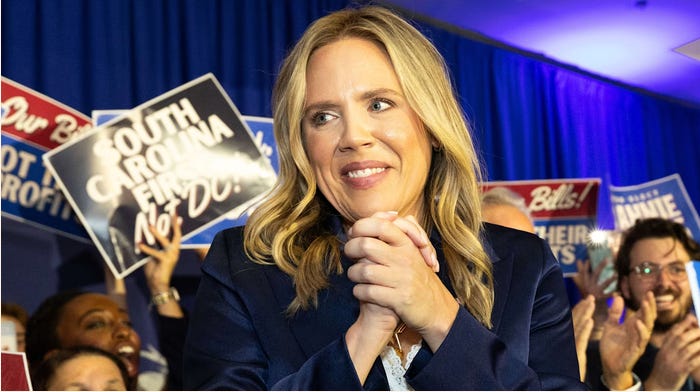
Annie Andrews won in South Carolina © Mic Smith/AP
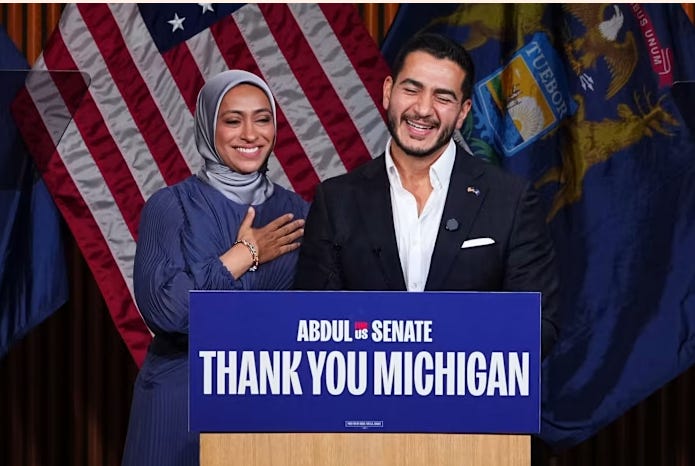
Abdul El-Sayed triumphed in Michigan

Adam Hamilton became the first Democratic Senator from Kansas since 1932
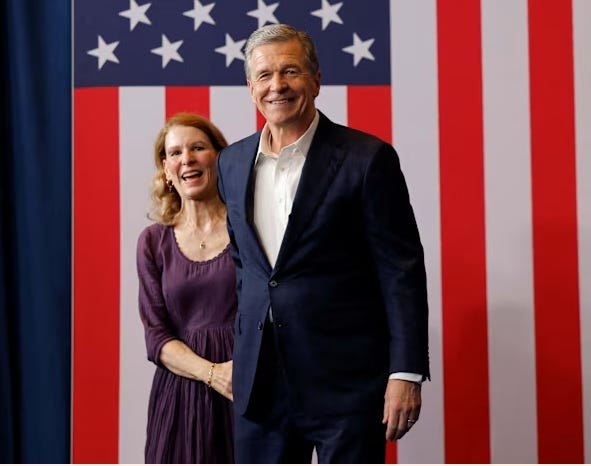
Roy Cooper won in North Carolina

Josh Turek, Senator-elect from Iowa
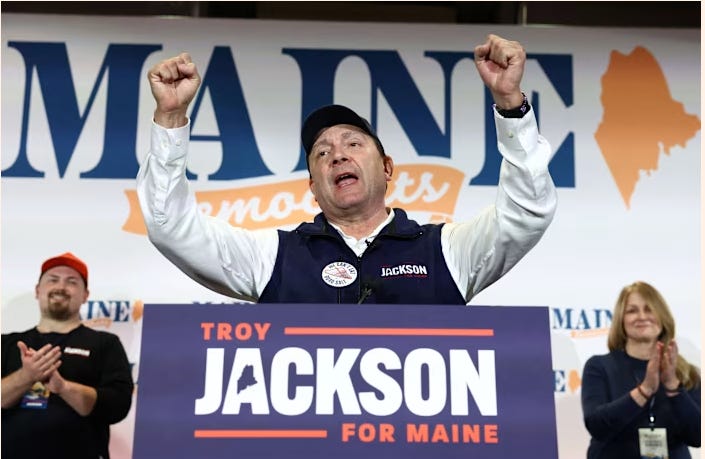
Troy Jackson bid a final farewell to Susan Collins in Maine.
What are the Economic-Historical Reference Points for the AI Bubble Which We Now Face?
Financial Times
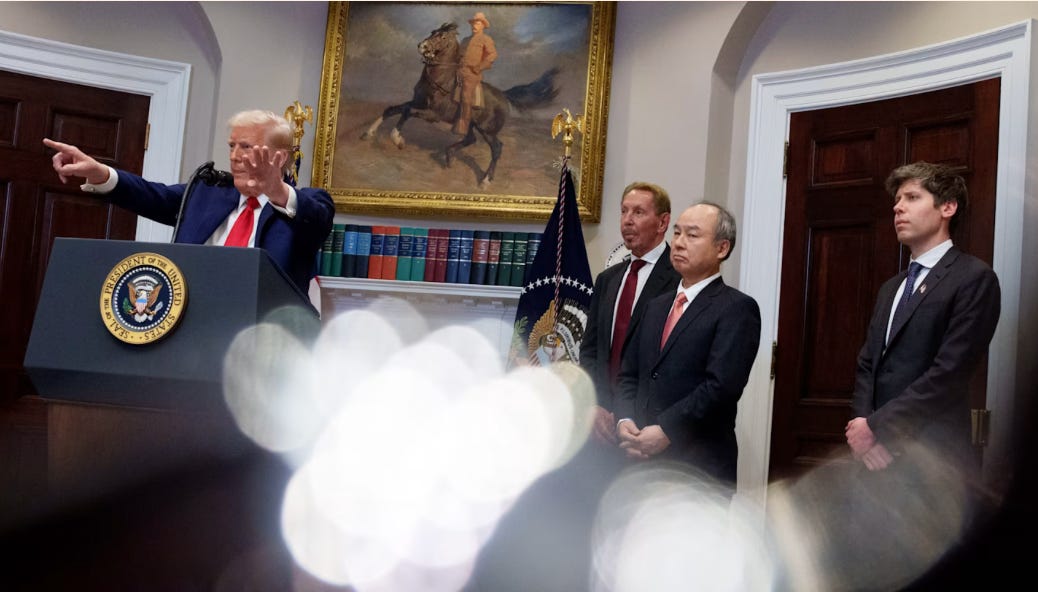
Donald Trump answers questions from the press at the start of his second term in January 2025, accompanied by Oracle’s Larry Ellison, SoftBank’s Masayoshi Son and OpenAI’s Sam Altman Photo: Andrew Harnik/Getty Images
Scott: The midterm elections have passed and they may present a course adjustment with respect to many of the calamities facing the US right now, but it is not clear that they will. But one crisis America faces is of a particularly transformational nature and the reality of it has hardly been grasped by the American political process, up to this point, at least. And that is the rise of AI, which in other terms is the rise of the tech bros—presenting a new kind of government for the country, which Trump appreciates more or less, but which the Democratic leaders manifestly do not. With that in mind, Adam Tooze takes us on a very important exercise: let us identify the world-historical precedents that offer some insight into our current predicament. It’s more than just an exercise in economic history, but it is worthwhile simply as that. The Manhattan Project is just too quaint, but the blooming of the Atlantic slave trade seems right on point.
“American berserk”, “speedball capitalism” — thanks to the malign coincidence of Donald Trump and AI hyperscaling we are living through a conjuncture that defies conventional thinking and challenges us to coin new terms. We need new conceptions that allow us to grasp both the dynamism of America’s political economy and its transgressive character.
For our current situation, the Manhattan Project is far too quaint to serve as a useful reference point. The dot.com bubble of the 1990s was an altogether sunnier time. In terms of sheer spending, even the epic railway booms of the late 19th century are being eclipsed. As the full scale of the AI boom becomes clear, these familiar reference points all fall short.
What if we turn to the darker moments of modern history? The most dramatic and violent programmes of modernisation in the 20th century were state-led — Stalinist industrialisation, for instance. Our moment is one in which the US government plays a supportive role. But private business is in charge. So perhaps the Industrial Revolution is the obvious precursor. Although this is closer to the mark, the accompanying ideology of the Industrial Revolution was classical liberalism — not so today.
As you work your way down the list of possible histories to reference, before long you arrive at a jaw-dropping conclusion. If you are looking for moments of capitalist resource mobilisation that transformed societies and threatened to deliver nothing short of the end of the world for those who stood in their way, it is empire and colonialism that we have to consider, and chattel slavery in particular.
The point, of course, is not to suggest any moral equivalence between our current moment and the horror of the Atlantic slave trade. But what histories of slave societies and the slave trade remind us of is how little room there is for complacency with regard to the guardrails that supposedly constrain the reasonable or the possible in modern society.
The latest histories to perform this service are the Register of British Slave Traders and William Pettigrew’s book of the same name. They show us how the uprooting and enslaving of over 12mn African people involved financial innovation and new logistical systems; state power not just mobilised in support of the trade but reinvented around it; cultural production and the media touting a new national myth of innovation and empowerment; economic argument energised by the question of licensed monopoly or free trade, in enslaved people.
As Pettigrew shows us, Atlantic slavery sucked in a substantial part of the British elite. Britons who celebrated their own freedom hitched their national development to the enslaving of others. If Britain, in its rise from second-tier European player to global hegemon, pioneered a new form of Anglo-globalisation, then a modernised slave supply chain was among its first projects.
The very idea of a project as a globe-spanning “venture” was a product of this early modern period. The vision of remaking the future by collective corporate mobilisation, the obsession that echoes down to 21st-century Silicon Valley, took root in Britain in the Tudor and Stuart age. The aim was profit. But the logic was not that of careful maximisation of rate of return. As today, speculation was fundamental to the spirit of venture capital.
When a businessperson tells you they are embarked on a vastly lucrative project that will change the future of humanity, but which comes with a risk of ending the world as we know it, take them at their word.
The South Sea Bubble of 1720 is commonly remembered as the world’s first Ponzi scheme. But in focusing on the financial aspects, we obscure its real underpinnings. The South Sea Company did not deal in tulips. It was a gigantic human-trafficking operation, licensed by a monopoly contract with the Spanish Crown to supply tens of thousands of enslaved Africans to Spanish plantations.
If you truly want reference points from the past to enhance your situational awareness of the present, don’t flinch from what histories of slavery have to tell us. There is nothing in the combination of finance, enterprise, unfettered technological innovation, radical modernist thinking about the category of the human and state power that should reassure us.
Voters Make a Bonfire of Musk’s Half Billion
Wired

Scott: In American electoral history, no individual has spent as audaciously and profligately as Elon Musk. And on election day, the voters gave their unequivocal judgment—any candidate who took Musk’s money was viewed as having received the kiss of death. Voters do not view Musk as a philanthropist. They do not even view him as sane or rational. They view him as a man consumed with a drive for power and wealth and as their enemy.
Elon Musk’s X account went unusually dark Tuesday evening as US election results rolled in, each new count deepening a reckoning for the world’s richest man, who poured hundreds of millions of dollars into Republican campaigns this year.
Shortly after 1 am, Musk posted twice: “Data centers in space looking pretty appealing right now,” he wrote first. About a minute later, he added, “Guess my election-interfering space lasers didn’t work this time” with a shrug emoji.
By Wednesday morning, candidates backed by Musk’s America PAC had lost 20 races and won only one, with 21 uncalled, according to a WIRED analysis of election data. Tesla and SpaceX stocks have plunged in value.
Musk and his PAC spent more than $400 million since Trump retook office backing Republican candidates—nearly $87 million of it on ads targeting 42 midterm races. He also funneled more than $229 million into other political groups, chiefly the main Republican super PACs for the House and Senate, along with smaller ones formed to fight single races in Kentucky and Texas.
Of every traceable dollar Musk put into a race that has now been decided, more than 99 cents went to a race he lost.
America PAC ran ads in seven Senate races this cycle; six have been called, and Musk’s side lost all six. Sherrod Brown took back Ohio, Abdul El-Sayed won Michigan (where the PAC spent $9.2 million on ads), Josh Turek flipped Iowa, and in Maine, Troy Jackson unseated Susan Collins, a feat Democrats had long thought impossible, ending Collins’ 30-year career in the senate. As of publication time, only Alaska remains uncalled.
Democrats seize power in Texas, ending decades of GOP dominance
Texas Tribune
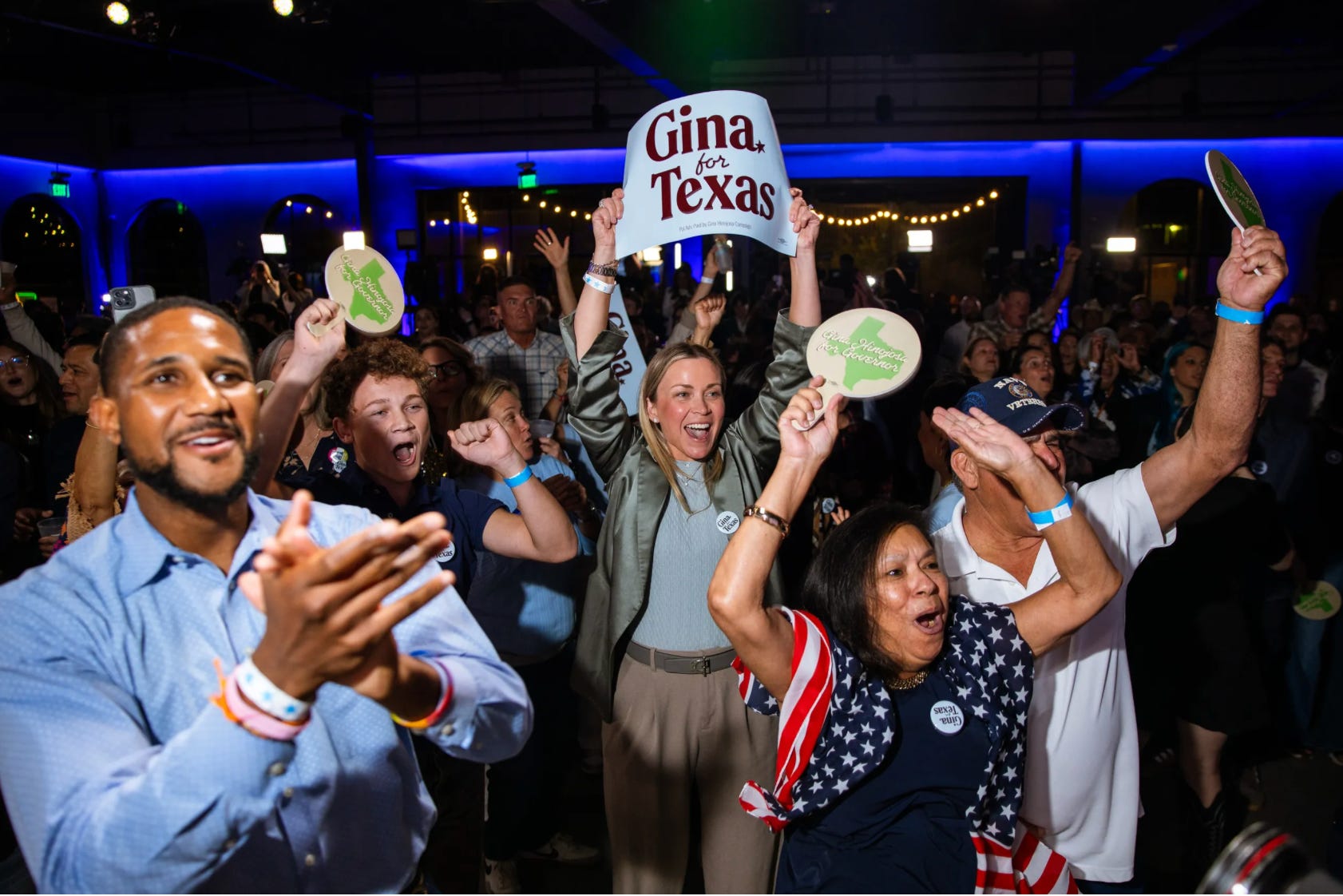
Texans celebrate nationwide Democratic wins at gubernatorial nominee Gina Hinojosa’s watch party in Austin on Nov. 3, 2026. Leila Saidane for The Texas Tribune
Scott: The American pundit class was prepared for the election of James Talarico to the US Senate on Tuesday, and saw just the outside chance of a win for Gina Hinojosa over the incumbent Greg Abbott. But what transpired in Texas was something different: it was a systematic dismantling of all the levers of power held by the Texas GOP, and a decision to give them all to the party’s most tenacious critics. Rarely has a political party ever faced such an acid repudiation.
Everything has changed. Texas’ governor, lieutenant governor, attorney general and every other statewide candidate fell, upending the state’s political power structure in one night.
A blue tsunami of epic proportions swept through Texas Tuesday night, decimating the largest, most influential red state and ending the longest statewide shutout of any political party in the country. Democrats up and down the ticket, buoyed by national anger toward President Donald Trump, won seats they haven’t been viable contenders for in decades despite historic spending from their opponents.
Gov. Greg Abbott, the most powerful and well-resourced governor in modern Texas history, was unseated by Gina Hinojosa. Attorney General Ken Paxton, who in past elections cast off impeachment, indictment and infidelities, fell to James Talarico in his bid for the U.S. Senate. Lt. Gov. Dan Patrick, the iron-fisted ruler of the Texas Senate, went down to a little known state representative. Republicans lost the attorney general’s office, one of the most influential conservative legal positions in the country. The new congressional map Republicans drew yielded them no gains — in fact, they lost one seat overall.
The only question remaining in the wee hours of Wednesday morning was whether Democrats would take control of the Texas House, and by what margins.
As the floodwaters recede, Texas’ first divided government in decades is left in its wake. Democrats will have to learn how to govern a state that has become the eighth largest economy in the world since they last held this much power in the 1990s. Texas Republicans will be left to sort through the wreckage and chart a new path back to power.
Hubble Reveals Cosmic Mystery

This is an image from NASA’s Hubble Space Telescope of NGC 4449, one of the dwarf galaxies in the Galaxies Losing Oxygen via Winds (GLOW) study. Researchers found that dwarf galaxies can hold onto only a small fraction of the oxygen made by their stars.
This photo released on Nov. 2, 2026, showcases NGC 4449, a dwarf irregular. Researchers using NASA’s Hubble Space Telescope studied 37 nearby dwarf galaxies — small galaxies containing a few thousand to hundreds of millions of stars — including NGC 4449 and found that much of the oxygen they expected to see is missing.
Image credit: NASA, ESA, Hubble Heritage–ESA/Hubble Collaboration, Alessandra Aloisi (STScI, ESA)
Your Online Moment of Zen
This Land Is Your Land
By Woody Guthrie
Performed by Pete Seeger, Bruce Springsteen et al on the eve of Barack Obama’s first inauguration in 2009.
Three days ago, any repetition of this scene in our lifetimes seemed completely out of reach. After Tuesday’s blue miracle, another celebration could be just around the corner.
<iframe width=”560” height=”315” src=”
title=”YouTube video player” frameborder=”0” allow=”accelerometer; autoplay; clipboard-write; encrypted-media; gyroscope; picture-in-picture; web-share” referrerpolicy=”strict-origin-when-cross-origin” allowfullscreen></iframe>