



AG Sulzberger on Saving Journalism from the AI Monsters
Wired
Charles: In a tremendously smart and trenchant interview with Wired magazine, New York Times publisher AG Sulzberger praised his competitors while excoriating the AI oligarchs who have asserted the right to steal everything his newspaper has ever published.
Speaking with Wired’s global editorial director, Katie Drummond, Sulzberger was modest about the astonishing growth he has presided over in his eight-plus years as publisher. The number of Times journalists has “basically doubled” to 2400 during his tenure, even as 80 percent of the local journalism jobs in America have disappeared over the last two decades.
When AG (as everyone calls him) inherited his job from his father, Arthur Sulzberger, Jr., the paper had 3.5 million subscribers, of whom 2.5 million were digital only.
Much of the rest of the news business in America disappeared during Arthur Sulzberger Jr. ‘s years as publisher. After the properties of almost every other newspaper family in America had been decimated, it was Sulzberger’s extraordinary achievement to turn over a healthy paper to his son. The single biggest reason for that was something that many considered a perilous decision in 2011 when Sulzberger père made it: the institution of a pay wall for readers. It risked pushing readers away–and advertisers along with them. But it soon became the centerpiece of the company’s model for growth.
This year The Times has 13.1 million paid subscribers, and it’s aiming for 15 million.
“That sounds like a big number;” said AG Sulzberger, “until you remember that Netflix is over 300 million, and you have another half dozen with a hundred, 200 million subscribers.”
But the Times does have the largest number of paid subscribers of any news organization in the world.

New York Times Publisher and Chairman AG Sulzberger
In the same breath the current publisher praised his competitors: “There are other success stories. I think The Journal has been doing extraordinarily well and doing great work. The Post had an amazing decade and before a couple of really tough years. The Atlantic, The New Yorker. Bloomberg may still be the largest newsroom in America..”
As I have frequently pointed out here, even after firing 30 percent of its news people last February, AG said The Washington Post continues to do amazing work. “To this day, there are so many good journalists at The Washington Post,” said Sulzberger, ”and not a week goes by without them publishing something that I’m just salivating with envy over them having gotten first.”
Much of his interview was devoted to the suit the Times filed two and and a half years ago against Open AI and Microsoft, accusing them of stealing millions of its articles without permission.
Sulzberger said his company has already spent “well over $20 million on this lawsuit, and we are not yet through discovery.”
Then he explained why the lawsuit is one of the most important things he has ever done:
Now you get to data, and they’ve just taken it. They’ve just taken it all. Without permission and without any compensation, because they thought they could. They think they can get away with it. And if they can get away with that, then that boosts the profit margins of the richest and most valuable companies in the history of humanity. And if the casualty is that it completely guts what remains of our already financially beleaguered industry of journalism, so be it.
If it completely undermines the financial models for professions like book writing and music making and movies and TV and academic research, then so be it.
That is objectively the wrong thing to do. It is also not allowed under US law. Protections for what is called intellectual property date back all the way to the Constitution, so it is not legal to come in and take all this work.
Why does this all matter? Why do I feel some degree of alarm about this? You know it has already been challenging to compete with the giant platforms that basically exercise a monopoly over human attention, right?
That’s a little overstated, but if you added up all the minutes of a day, a handful of platforms and a handful of companies occupy the vast majority of those, right? But now you’re not just competing with companies that are controlling the vast majority of human attention, right? Companies that are actually designed to be maximally intermediating. Companies that feel that AI will work best if it sits in between the user and the content creator.
Google is one sort of really salient example here.
It’s hard to overstate the degree to which publishers relied on traffic from Google referral links and the degree to which that traffic has disappeared in the last year, year-and-a-half, as Google has introduced AI. So now when you search, you get an AI Overview.
It’s reasonably helpful, usually helpful enough that you don’t need to click through. Even just that change has been crushing…

So when you think about this original sin, this theft of every creative work ever created, it amounts to this immense wealth transfer, right? From creators and researchers around the world to the biggest tech companies in the history of humanity. That sense of impunity that they can just take our stuff is happening in part because of how expensive it is to enforce your rights. The Times, thankfully, we’ve worked really hard to put ourselves in a financial position where we can enforce our rights.
Can you imagine being a small-town newspaper and being able to take on Google or OpenAI or Microsoft or Perplexity.
They say explicitly they’re going to use it regardless, and then sometimes they’ll throw a little bit of money your way. What do you do? Do you try to spend what may end up being $40 million on a lawsuit? Or do you accept the pennies on every dollar you spent to create your work just to recoup something?
We think it’s really important to enforce our rights and say “absolutely not.” Like, you want to use our stuff, that requires permission, and that requires fair compensation.
Someone needs to fight that fight. Thankfully, we’re not the only ones filing a lawsuit like this. A number of other publishers in the industry have filed similar lawsuits.
It is not anti-tech. It is anti-theft, and anytime you hear the anti-tech line, I just want you to picture Jensen Huang coming down onto the floor of his Nvidia factory, discovering that Sam Altman has snuck in and has arms full of chips and he’s running out of the building.
What a visual! said Wired’s Katie Drummond.
And Jensen says, “Hey, you’re not allowed to take that.” And Sam Altman says, “If you tell me that I can’t take this, you’re anti-tech, Jensen. You’re gonna make China win.”
We are not anti-tech. We are anti-theft. This is not about money. This is about the ability to sustain essential work.
What I am worried about, and what you’re worried about, and all our peers across the industry, is not about getting giant and bigger. That’s what the folks in Silicon Valley are worried about. They want to take over the world. We want an essential profession, an essential service. The act of seeking the truth, helping people understand the world, holding power to account. We want that to survive, and I really believe that democracy needs it to survive.
Who else does these things if journalists don’t? Is AI going to go to the front lines of the Ukraine conflict and show what’s happening there? Is AI going to spend years building the sources that we need to finally get Trump’s taxes and provide the fullest picture of Trump’s wealth and the conflicts inherent in that.
AI can’t do any of those things. And so we need journalists for it, and AI needs journalists for it. So we need to come up with a sustainable framework for all of this.
Inside Trump’s Warmongering AI Memes
Financial Times
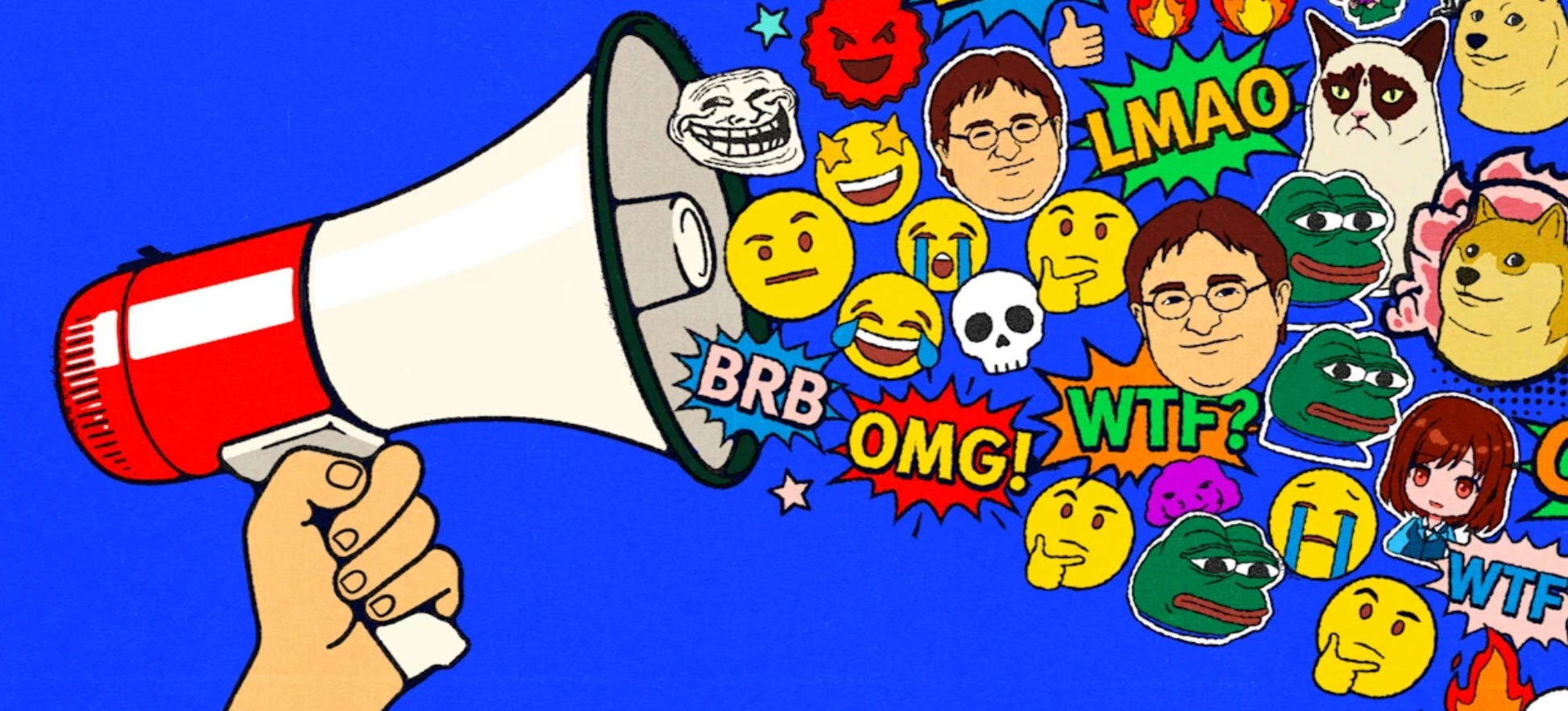
Scott: For national security scholars, they’re just not serious, or perhaps evidence of some sort of infantile delusion. For theologians, they are an effort to make war-making seem harmless or comical, the core stuff of serious moral depravity. But what should we make of the endless stream of AI-slop posted by Trump about wars in general and his war of choice against Iran in particular? Is there a method to this madness? And how does it measure up against Iran’s video and music based war propaganda, which by all measures is shockingly effective and presents a new chapter in how to do it. This is the subject of an impressive FT essay from Elaine Moore.
When Donald Trump wants to update the world on the status of the war with Iran, he occasionally reaches for a meme. Like many memes, these are absurd. In one, an AI-generated US Navy ship shoots down an Iranian drone with the words, “Lasers: Bing, Bing, GONE!!!” (Does a laser make a bing sound?) In a recent meme spree, one that included references to a three-year-old Bud Light boycott for no apparent reason, Trump posted AI images of Iranian oil tankers being blown up, one day after the Pentagon paused strikes.
More than a third of Americans now get their news mainly from social media, according to the Reuters Institute, and the country’s oldest-ever president is also its most terminally online. Chaotic, crude internet jokes have become official US political commentary. That in turn has prompted the country’s enemies to engage with a strange new battlefield.
Trump is not the only one posting memes. If Russia’s invasion of Ukraine was the first TikTok war, then the Iran conflict is the first meme war. While Trump is on Truth Social, official Iranian accounts have embarked on their own trolling campaign via X. The Iranian embassy in Zimbabwe joked that it had lost the keys to the Strait of Hormuz and posted a creepy AI image of a zombified Jeffrey Epstein smiling at the destruction of Iranian hospitals. The Iranian embassy in South Africa posted a strange, AI-generated video of Trump singing about blockades.
The Institute for Strategic Dialogue calls this “shitposting as statecraft”. Iran is using provocative, low-quality images and videos to try to present itself as the witty, self-aware underdog. It has been rewarded with a huge engagement boost. This sort of posting, says the ISD, could become a blueprint for non-traditional war propaganda in future conflicts…
Most importantly, memes are often jokes. So when Trump posts ones that compare him to a king, a fighter pilot or Jesus, he may well like the heroic way the pictures look, but he is also baiting his opponents to take them seriously and seem like crybabies who can’t take a joke. You have to go back to the late 1980s to understand how this came about.
Mike Godwin, then a law student in Texas, is credited with being the first to describe internet memes. As someone who spent a lot of time on online message boards, he wanted to find a way to undermine the annoying arguments that erupted between strangers. His solution was to create something he called Godwin’s Law: the maxim that any discussion on the internet will eventually lead to someone being compared to the Nazis or Hitler. Godwin, who now works as a technology lawyer in Washington, says he used that pseudo-scientific-sounding term to puncture self-serious commentators, and then seeded the idea into online conversations. “I had been reading a lot about information theory and the idea of information as something that is integrated into the physical world,” he says. “I knew I couldn’t say something earnest about [the arguments] — that would lead to ridicule — so I came up with this idea, this joke, and let it propagate.”
In his essay “Meme, Counter-meme”, published in Wired in 1994, Godwin described what he did as “memetic engineering”. He drew on the idea of memes that British biologist Richard Dawkins introduced in his 1976 book The Selfish Gene — “units of cultural transmission” that could spread and evolve culture by non-genetic means. While Dawkins was talking about fashion or recipes, Godwin’s online meme was a phrase designed to stop bad-faith arguments. Online memes tended to have a few distinct characteristics, one of which was that the butt of the joke was often the person posting it. The smooth, grey-headed “stonks” guy, for example, was a symbol of financial failure. In “rage comics” and “image macros” (pictures with text on top) creators and re-posters poked fun at themselves for being embarrassed or exasperated by life.
As time went on, jokes were sometimes piled on top of one another in a way that could make the memes unintelligible to the casual observer. As memes have been adopted for commercial purposes or political commentary, the target of the joke has shifted outwards. And once a meme is out in the world its creator has no say over how it is used. Pepe the Frog, loved by the alt-right, was originally drawn by San Francisco cartoonist Matt Furie, who is generally described as “gentle”. Furie sued the Infowars website for using Pepe in a poster that featured its far-right conspiracy theorist founder Alex Jones and was awarded a $15,000 settlement (he said he would give the money to a frog charity). But he has not managed to stop Pepe being used in racist, antisemitic memes — nor will he.
The more that memes are employed for war propaganda, the emptier the meaning and the flatter the jokes will fall. Once it might have been worth asking whether the “bing” in Trump’s laser meme was a reference to something else — maybe an old internet joke about Super Mario fans being annoying, or the fact that Trump was once recorded using the word “bing” over 50 times.
Knowing that could have unlocked another layer of meaning. Now it doesn’t matter. Online memes began with an attempt to puncture self-serious commentators. But what is there to puncture when the subject matter is this serious? To Godwin, the current wartime insults and boasts are very far from what he imagined memes should be. “My idea for memes was something that would trigger people to think,” he says. “What this is is more like a substitute for thought.”
