



Jared Kushner, Grifter Par Excellence
Mother Jones
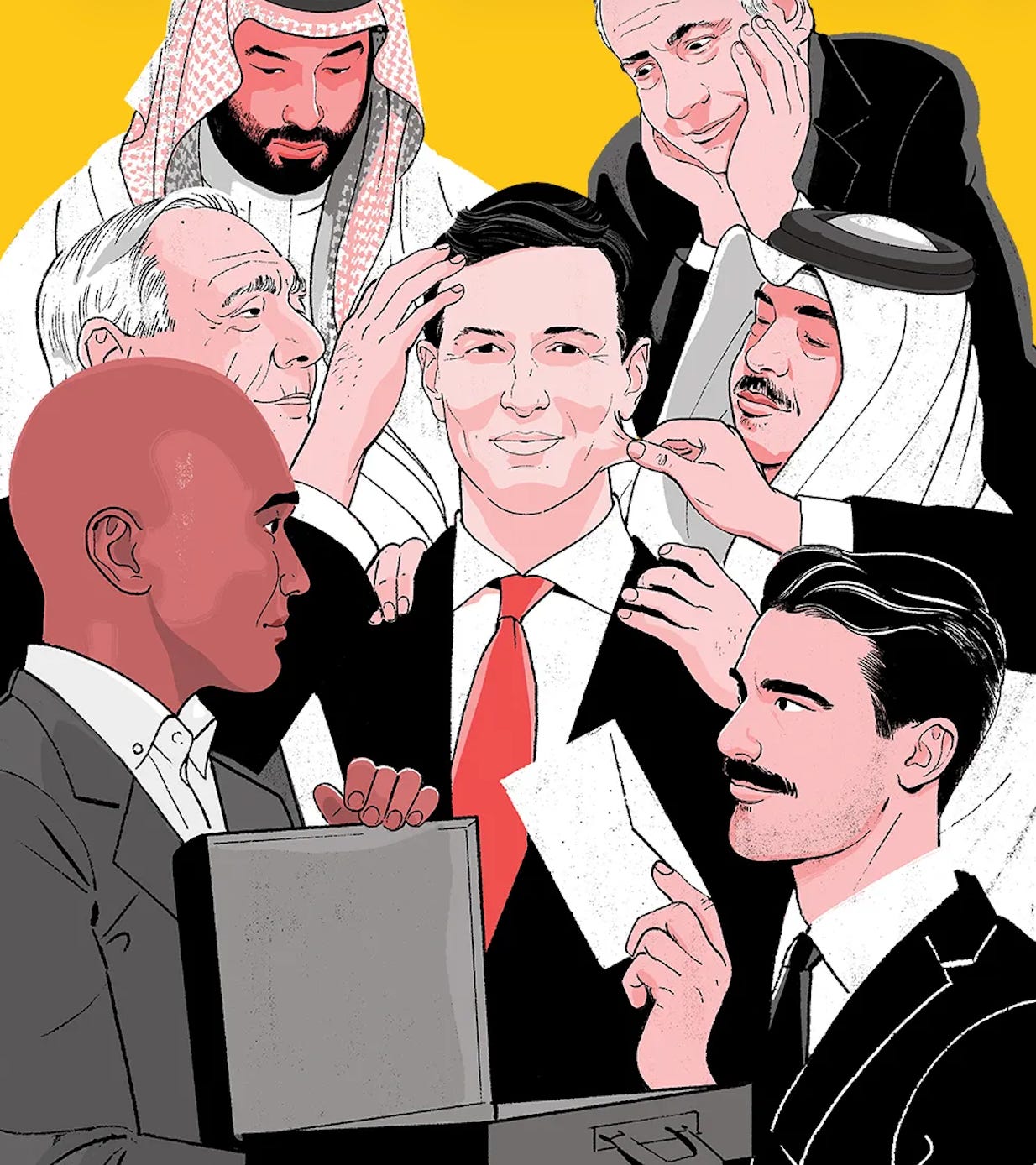
Scott: Jared Kushner has been raking in billions and most of the money is coming from foreign governments anxious to have access to and influence over his father-in-law, led by the Saudis and now including an ever lengthening queue potentates and strong men from natural-resource rich nations around the world.
It’s a scandal of a magnitude much greater than anything that ever preceded it. And the Beltway world is largely oblivious to it.
Casey Michel previews his forthcoming book on Kushner, the king of grifters, in Mother Jones:
In scale and audacity, what Kushner has attempted—and achieved—is on another level entirely. He asked foreign regimes to trust him with billions of dollars even though he’d never managed an investment fund. One former Republican official, as The New York Times noted in April 2024, “could recall no precedent for a government official leaving office and starting an investment firm that would immediately receive billions of dollars from foreign governments with which the official had been working while serving in government.” And that was before Trump placed Kushner—who had zero diplomatic or foreign affairs expertise until his father-in-law rose to power—at the center of every international crisis, elevating him to the role, arguably, of the nation’s leading diplomat.
Even Rep. James Comer, a Kentucky Republican who led the charge against Hunter Biden, was taken aback: Kushner’s Saudi funding arrangements, he said, “crossed the line of ethics,” and when a consultant close to Kushner called and asked him to tone down his criticism, Comer said he instructed the intermediary “to tell Kushner to fuck off.”
Kushner was denied top-secret clearance until Trump overruled intelligence officials. “There was a risk the Saudis were playing him,” said a former White House official.
Of course, it wasn’t just Saudi Arabia that saw Kushner as a pliable source of influence. The United Arab Emirates, whose own despot had cultivated Kushner years before, began tossing money at Affinity Partners around the same time. So did the Qatari regime, which slipped back into America’s good graces as it was helping bail out Kushner’s family company. To date, firms linked to the UAE and Qatar have invested at least $1.5 billion in Kushner’s fund. With more modest infusions from smaller investors, nearly all foreign, Affinity’s asset pool grew and grew, topping $6 billion and generating more than $100 million in management fees for Kushner and his partners. (Affinity’s fee structure, the Saudi investment officials wrote in their analysis, seemed “excessive.”)
The HKR Look Back (2)
Charles: If you were not alive when Jack and Bobby Kennedy were running for office it is almost impossible to imagine the quality of devotion they inspired. For millions of Americans their age or thirty years younger they had elegance and intelligence and a magnetism none of their opponents could match. Millions of us invested our whole beings in their destinies. After Jack was murdered in 1963, millions waited for the restoration. Fifty-eight years ago this week it was closer to happening than ever before, when Bobby Kennedy strode into the ballroom of the Ambassador Hotel in Los Angeles to claim victory in the 1968 presidential primary in California. It wasn’t clear that he could defeat Hubert Humphrey two months later at the Democratic National Convention, but he carried the magic of a Kennedy’s momentum.
As soon as he left the stage, he was shot. Twenty-six hours later he was dead.
When his body was lowered into the ground of Arlington National Cemetery it took with him the hopes of millions. And when 1968 ended with the election of the deeply hated Richard Nixon, a huge portion of two generations of Americans were never able to invest that much of themselves in any candidate again.
Justin and Janet Feldman were great New York liberals–reform Democrats–and good friends of Bobby Kennedy. They were also close friends of my parents, and Justin was already my political mentor when I was ten.
Both of them were on the train that took Bobby’s casket from Penn Station to Washington D.C. The train ride was supposed to last four hours, but the crowd surged on to the adjoining track in New Jersey, and two spectators were killed by a northbound train. That made the Kennedy train four hours late on its voyage to the nation’s capital.
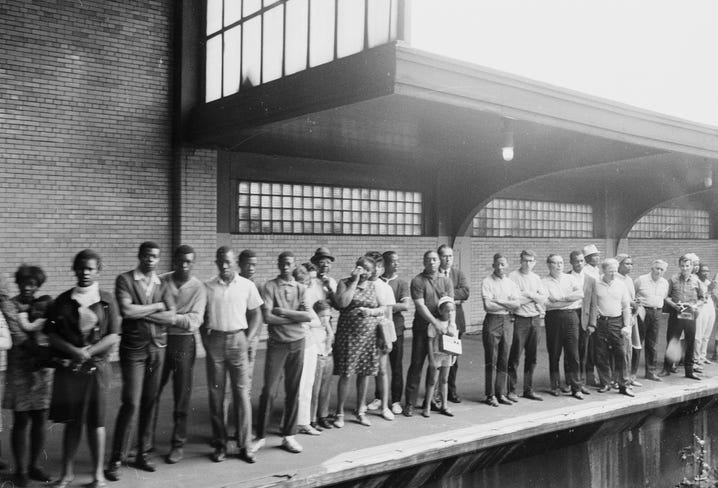
The Feldmans wrote this piece, planning to offer it to The New York Times, but it was never published. This week their daughter Jane Feldman shared it with me for the first time. It has never been public before. Here are some excerpts.
We were on that Saturday train. All of us on that train were there because we were friends of Bob Kennedy. Everyone had been associated with him in different ways and in various contexts. We had been his friend for many years and in many causes.
Others for shorter periods and only in a specific way. But we were all bound together because we not only believed in him and followed his political leadership, we loved the man himself. We loved the depth of his commitment and the strength of his resolve. And we loved him for his compassion, his friendliness, his humor, and the hand of friendship he had extended to each of us. And we loved him for what he meant to people and for what people meant to him.
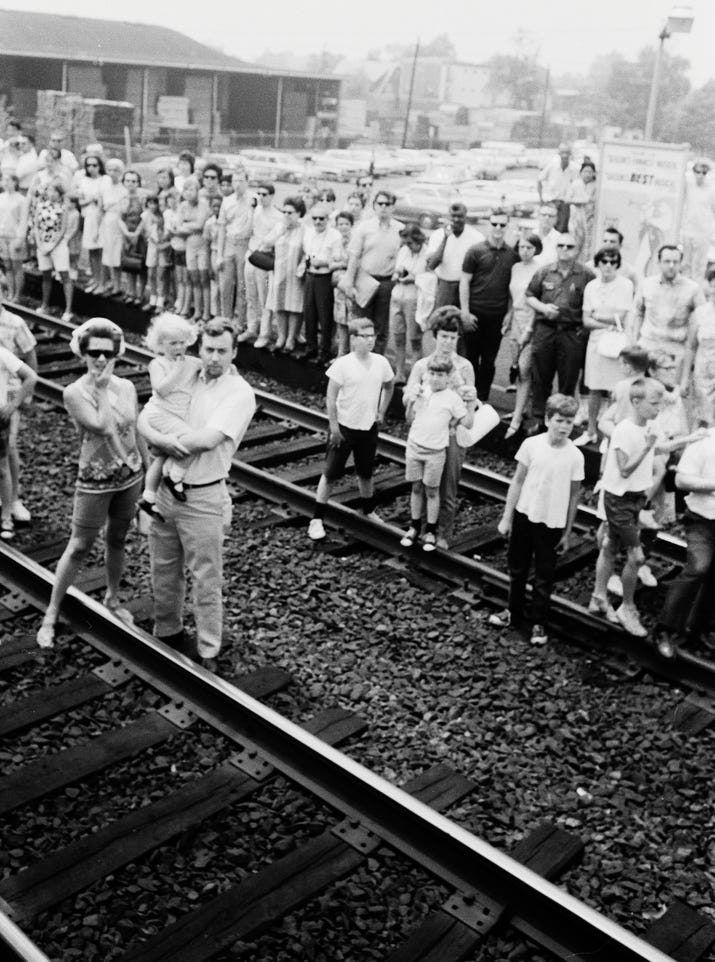
As we waited to board that train at Pennsylvania Station many of us felt that we had suffered as much grief as we could stand. Many of us had stood vigil at that casket at St. Patrick’s at various times from the time it arrived from California. We felt a compulsion to go back time and again and stand there to be close to him while the people who stood in line for seven hours and more filed past to say their good-byes.
We were numb. We had been drained of all emotion by the three days that had passed, by the moving service we had witnessed and by the eloquence of Ted Kennedy’s eulogy.
And below the numbness was a deep despair of the future.
In the beginning of this trip we were all absorbed with the past, with our private memories, with our sorrow and with the defeat of our dreams for the future. In the very beginning of that trip we were really unaware of the existence of any world outside of that train. But then we started looking out of the windows. The grief was there. Looking at the people brought tears to everyone. But the people outside the train made us realize that the only way we really could show our love for Boy Kennedy was to continue to carry some of those obligations which he so deeply felt.
Scott Horton and Charles Kaiser Are Veteran Authors and Journalists.
Charles: I came to this originally as a metro reporter for the New York Times where I covered all the city beats, including real estate where I met one Donald Trump in the 1970s. Then I was a media reporter at the Wall Street Journal after which I got into the business we’re still in as the press critic at Newsweek.
Since then, I’ve written books about the 1960s, about gay life in the United States since 1940 and about a family in the French resistance who I’ve known all my life.
Enjoy two weeks of The Horton-Kaiser Report for free.
