



The Future Is Peace
The New York Times
Charles: As everything happening on the ground in Gaza, the West Bank and Lebanon makes the possibility of a peaceful outcome feel permanently out of reach, two courageous survivors of this —one Palestinian and one Jew—have just published a new book that beseeches all of us to imagine a better world.
Maoz Inon’s parents were killed on Oct. 7, 2023 in the massacre at Netiv HaAsara, the closest Jewish community to the Gaza Strip. His co-author, Aziz Abu Sarah, was first shot at by Israeli soldiers when he was “seven or eight.” Then, when he was nine, his beloved elder brother Tayseer was arrested by the Israeli military and accused of throwing rocks at soldiers. According to Abu Sarah, the interrogators “beat and tortured him” and Tayseer later died from “untreated trauma to his internal organs.”
The two authors had only met once when the Palestinian reached out to Inon days after the massacre committed by Hamas with a simple text “Maoz, I’m so sorry to hear about your parents.” At practically the same moment, Maoz’s younger brother asked his whole family to reject revenge—“because avenging the death of our parents is not going to bring them back to life.”
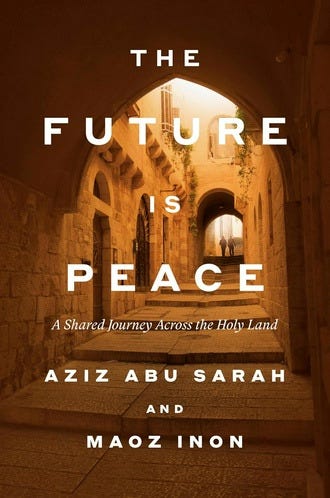
After that, Inon and Sarah both quickly promised to renounce violence and devote themselves to peace. Their efforts have attracted praise from the current Pope and his predecessor, and, when their book was published this week, Fintan O’Toole immediately praised it in The New York Times as
an immensely poignant account of a shared journey across Israel and the West Bank…It remains true to the horror while refusing to be defeated by it. It is raw with pain and rage and yet bravely insistent on the imperative of hope…
As they travel . . . from Inon’s parents’ burned-out home, through Tel Aviv, Jerusalem, the occupied West Bank and on to the Sea of Galilee, the sharing of personal experiences of suffering gives a common shape to their successively related chapters.
Abu Sarah writes: “Many Palestinians fear that acknowledging the horror of the Holocaust is tantamount to excusing the Nakba and the occupation of our land. They have a fear of acknowledging any Jewish pain at all, regardless of whether it was caused by Nazis or by Palestinians. It’s the same for Jewish Israelis who don’t know the history of the Nakba. They fear that if they acknowledge Palestinians’ suffering, it will absolve Hamas of its horrific deeds. But this mind-set keeps us trapped in endless violence.”

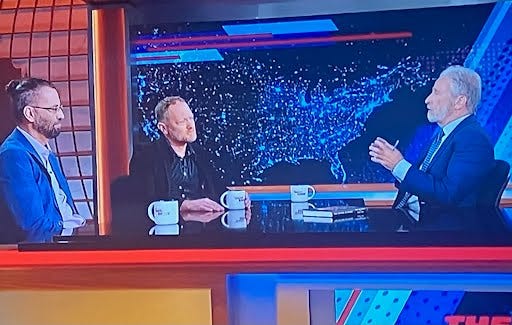
Last night Jon Stewart invited the authors on to The Daily Show for a 20-minute interview. Stewart called their book a “beautiful testament [to their] friendship and their pilgrimage.”
The Horton-Kaiser Report is independent, and relies on generous support from our readers, like you. Help us grow by gifting a subscription a friend or loved one.
In British Parliament, Sir Ed Davey calls Trump a ‘dangerous and corrupt gangster’
Daily Express
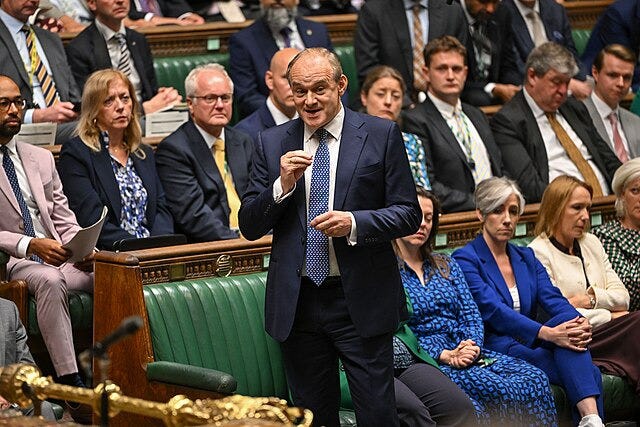
Scott: Question time in the House of Commons can produce some remarkable repartee. On Monday, Liberal Democrat leader Sir Ed Davey took to the floor to urge cancellation of King Charles’ planned visit to the United States.
Ed Davey lambasted Donald Trump in the House of Commons today, accusing the US President of being a “dangerous and corrupt gangster”. The leader of the Liberal Democrats made the comments as he called on the Prime Minister, Sir Keir Starmer, to advise King Charles to cancel his upcoming visit to the United States, marking the 250th anniversary of the Declaration of Independence.
It comes amid the fallout from the US and Israel’s deeply controversial war in Iran, which began in late February and led to Tehran effectively closing the Strait of Hormuz, a vital shipping route in the oil trade. In the weeks that followed, Trump has bashed Britain and other NATO allies for not joining the conflict as he comes under pressure to de-escalate. Trump sparked further fury with a chilling threat to Iran ahead of the start of a two-week ceasefire between the two nations that’s now in effect. In a post on Truth Social, the President said: “A whole civilization will die tonight, never to be brought back again. I don’t want that to happen, but it probably will.”
Addressing the Commons, Mr Davey said they were words “I never thought I would hear from an American president”.
“And though Donald Trump thankfully didn’t follow through this time, these words are a stark reminder of how reckless, immoral, and completely outside the bounds of international law this President is,” he added.
“Regrettably, he is no friend of the United Kingdom, he is no leader of the free world, he is a dangerous and corrupt gangster, and that is how we must treat him.
Easy Come, Easy Go
The Guardian
Charles: Exactly one week after Bloomberg published a transcript of a phone call in which Viktor Orbán likened his relationship with Vladimir Putin to that of a mouse with a lion, and one day after Orbán lost in the most exciting electoral wipeout in recent European history, the Kremlin insisted it was never really attached to its Hungarian puppet at all.
“We were never friends with Orbán,” declared Kremlin spokesperson Dmitry Peskov.
Analysis Shows US Has Adopted Israeli ‘Double Tap’ Strike
New Lines Magazine
Scott: A striking number of emergency medical personnel are being killed in both Iran and Lebanon as a result of the use of a ‘double tap’ strike technique. After a first strike on the target, the attackers then wait until medical and rescue personnel have rushed to the scene before striking a second time. The technique is harshly criticized by medical groups and international humanitarian law experts as a conscious targeting of medical personnel which is forbidden under international law. And now both Israel and the US are using this approach.
Centcom [U.S. Central Command] said they hit 13,000 targets in just over a month. We’ve been documenting U.S. wars for more than a decade now. In the most intense period of fighting in the war against ISIS [the Islamic State group] — that second-phase, really intense heavy fighting period — they were averaging about 800 targets a month, across both Iraq and Syria,” said Emily Tripp, the executive director of Airwars. “There’s a certain inevitability about [civilian] harm given the scale.”
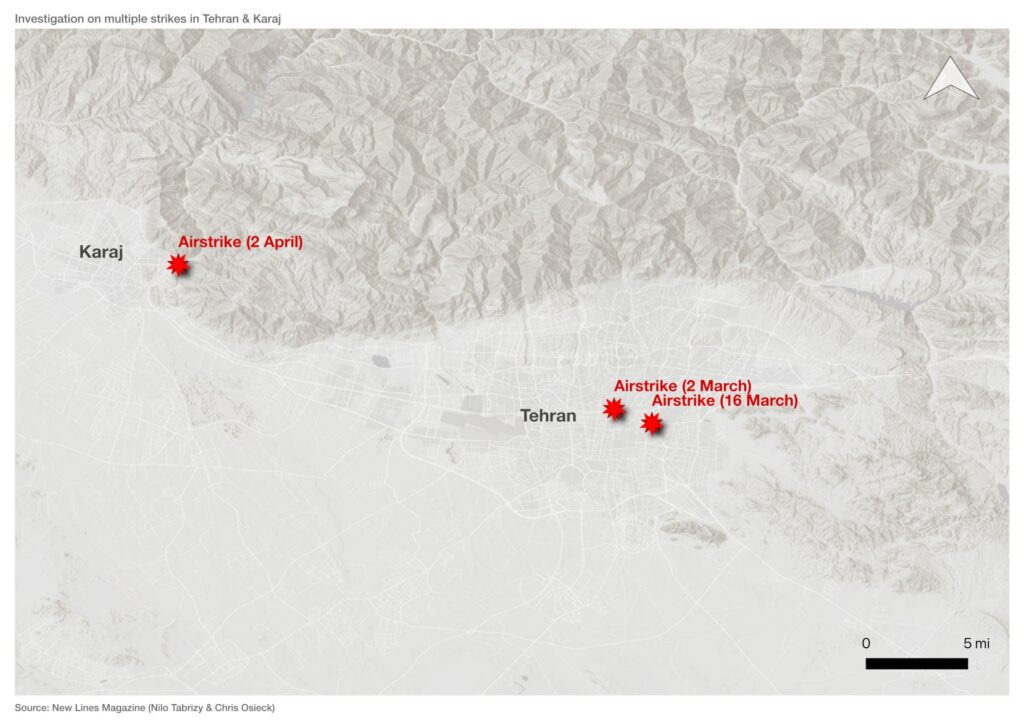
Taken together, the cases we documented reveal that the U.S. and Israel have employed so-called “double-tap strikes” in their campaign in Iran. The attacks, which involve aircraft bombing a site and then conducting further strikes, usually after civilians and medical personnel have gathered to rescue survivors, have been a consistent feature of the Russian war on Ukraine and Israel’s war on Gaza, and the tactic was repeatedly used by Bashar al-Assad’s regime in Syria. Experts say the strikes show a callous disregard for civilians by the U.S. and Israel, and may show a pattern of seeking to inflict harm on Iranians.
On April 2, videos posted online showed airstrikes on a bridge under construction in Karaj, a city northwest of Tehran in the foothills of the Alborz Mountains. Families had gathered near the bridge to mark Sizdah Bedar, an annual Iranian festival held on the 13th day of Nowruz. Marking the end of the Persian New Year celebrations, Sizdah Bedar is a day when Iranians spend time outside, picnicking and welcoming in the beauty of a new season. But in a year when Nowruz had already been marked by so much grief, Sizdah Bedar in Karaj ended in tragedy.
New Lines verified at least seven munitions striking the Bilqan B1 Bridge in Karaj. According to independent investigator and weapons specialist Leone Hadavi, these are consistent with precision-guided 2,000-pound bombs.
Wes Bryant, a former U.S. Air Force Special Operations targeting expert and former chief of civilian harm assessments at the Pentagon, also identified the use of these bombs in this strike. “This is even less of an excuse than launching Tomahawks from hundreds of miles away, where you don’t have a drone or other footage overhead in real time. There’s a capability now in this strike, and all these strikes, to have real-time characterization of the target area via that pilot before a strike is conducted, and then certainly with a reattack,” he said.
If you want to learn more about what’s happening on the ground in Lebanon, listen to our podcast episode with Abdi Latif Dahir.

Advantage China: How China Emerges from Trump’s Chaos as the Decisive Winner
Financial Times
Scott: Through a series of colossally destructive steps, including incomprehensible tariffs, trade wars, threats against historical allies, and most recently wars and threats of war against Iran, Venezuela, Canada, Mexico, Greenland, Nigeria and a host of other nations, Trump has established himself as a chaos agent without equal on the global stage. But one nation has not simply weathered Trump’s storm but has actually figured out how to reap enormous benefit from it: China.
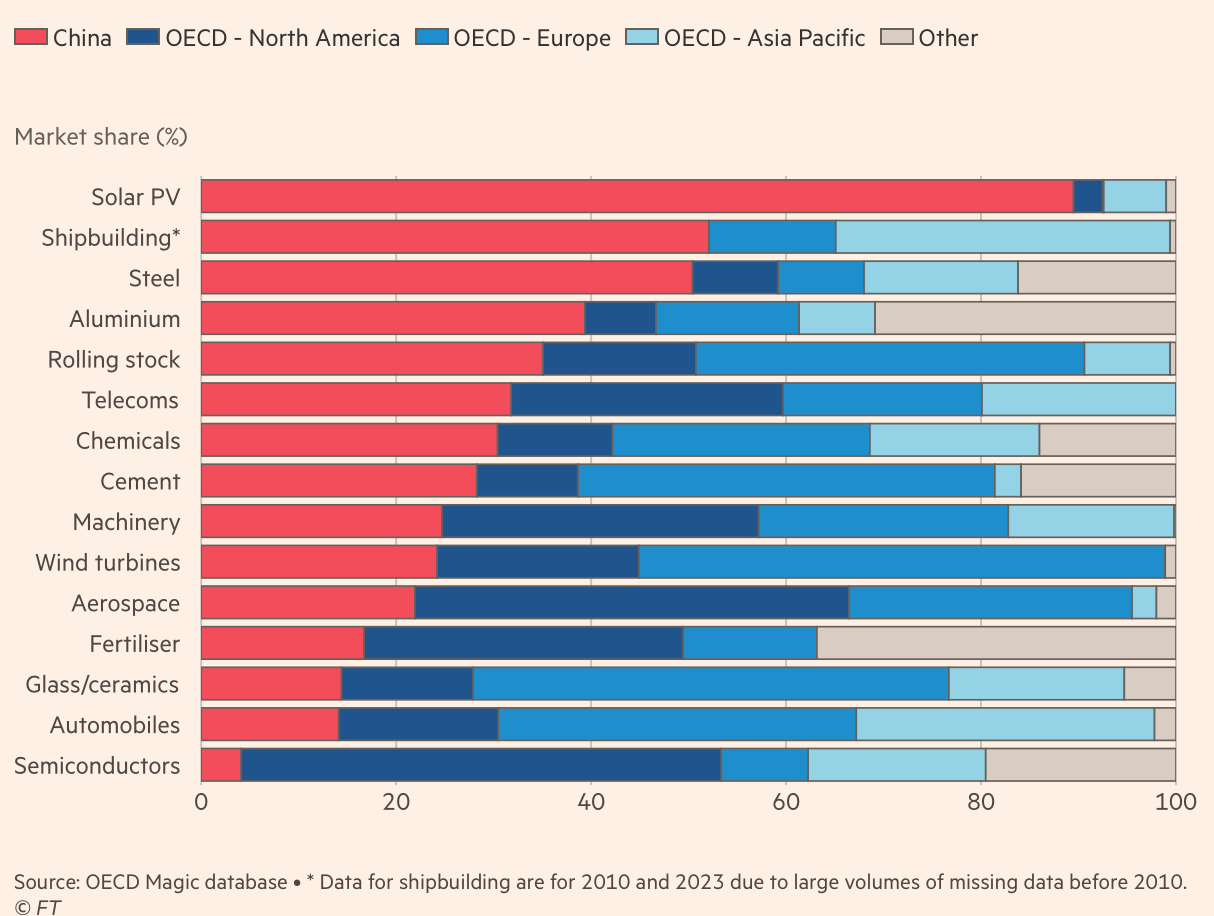
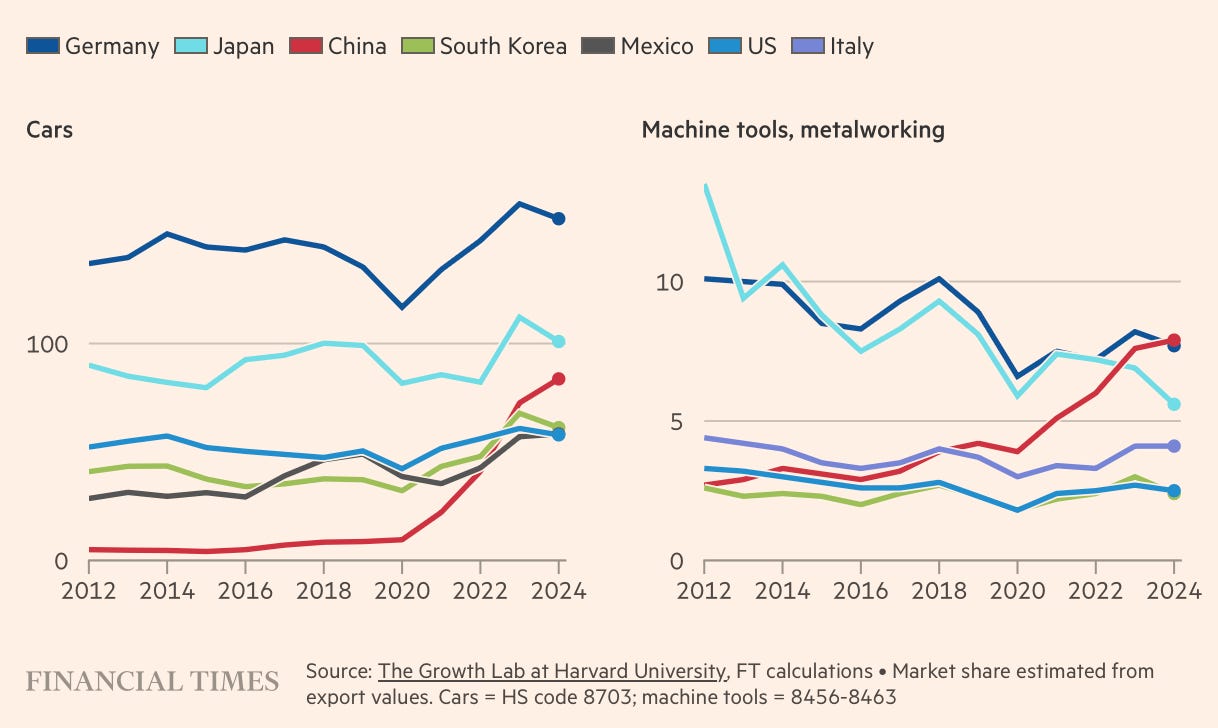
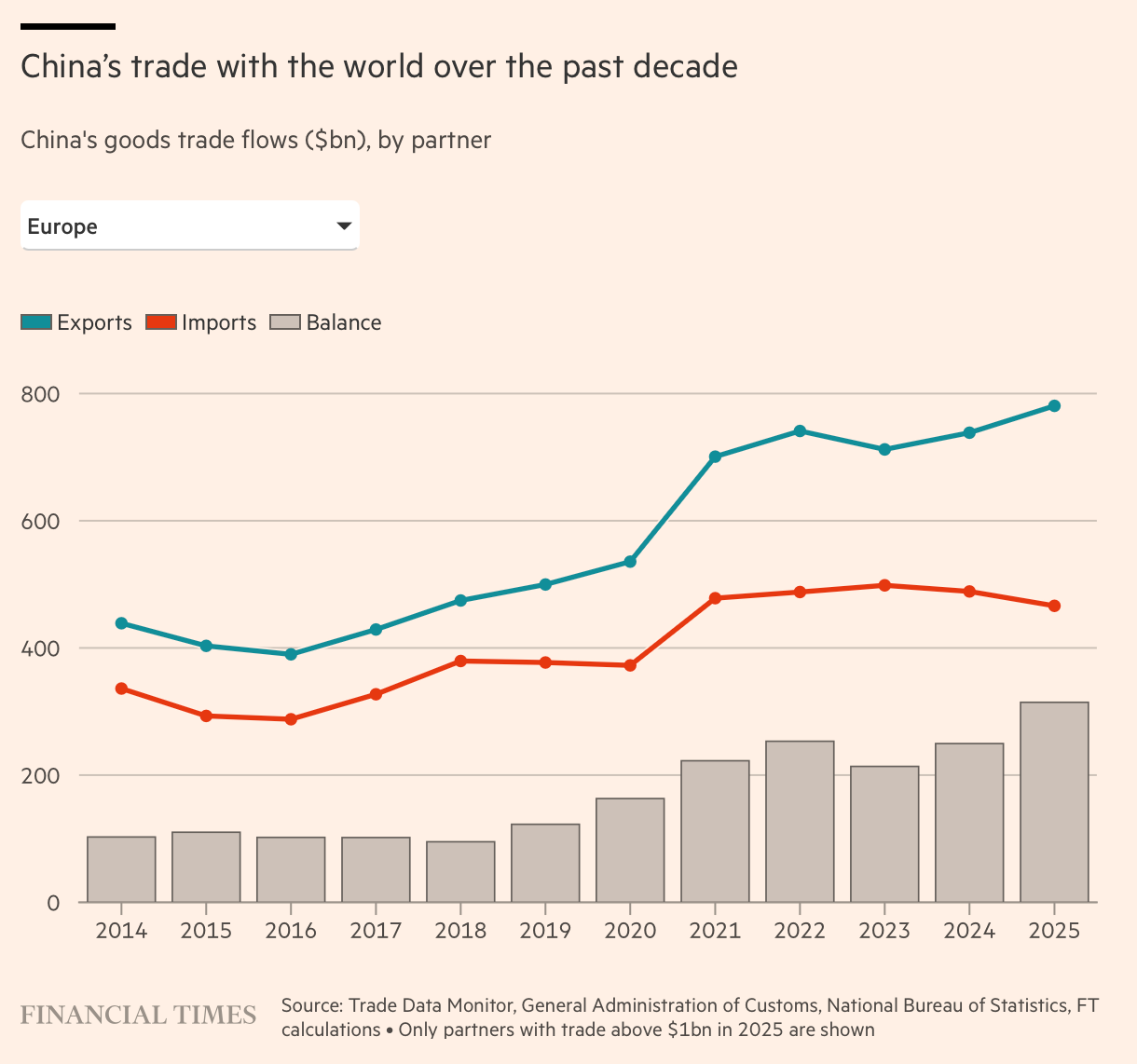
In a remarkable essay coupled with impressive graphics, the Financial Times has examined China’s formula for success and explained how the Middle Kingdom now stands poised to exercise global commercial dominance at a level once exercised by the United States—which turns out to be the principal victim of Trump’s antics.
Huang Xian’s product is about the size of his fist, a sensor that detects electrical current leakage and slots into electric vehicle chargers as a safety guard between the car and the grid. The device is not just a symbol of the innovation and accomplishments of China’s high-tech sector. It also reflects a trend eviscerating high-end manufacturing across the world, to the near despair of governments from Asia to Europe and beyond. The EV boom has propelled Huang’s sensor shipments to a projected 10mn units this year, up from about 20,000 in 2019, when his company Mega-Senway Electronic Technology entered the market. Back then it was still a niche product, supplied by a handful of German and Swiss groups that sold the sensors for roughly Rmb200 (around $30) — or more per unit. Mega-Senway made its first sensors for about Rmb40 each and sold them for Rmb100, leaving Huang with a healthy margin. As Chinese competition poured in, prices started to fall. European groups gradually exited the market. Huang’s Shanghai-based company now sells some sensors for as little as Rmb10 a pop. “We never thought the price decline would happen this fast,” he says. His company’s trajectory is emblematic of the larger economic forces reshaping global industry and trade as extraordinarily competitive Chinese companies push into a variety of industries at dizzying speed. Twenty years ago the global economy was shaken by a first “China shock” as a wave of low-cost goods destroyed the business models of manufacturers in advanced economies, displacing millions of workers and feeding discontent that fueled populist politicians including US President Donald Trump. Now a second shock is under way — one that is even more threatening to China’s trading partners: an assault on high-end manufacturing…
In China, there is a word that has come to describe the phenomenon: neijuan, or involution — a term that has become shorthand for a competitive dynamic in which everyone runs harder and harder for diminishing returns. It forces companies like Mega-Senway to move fast. Huang explains how they cut their own costs so dramatically over just a few years. First they acquired the factory that manufactured the sensors they designed. Then he visited nearby factories to study their best practices. A worker testing their finished sensors initially did it one at a time, he says. Huang redesigned the testing jigs to test four at a time, then eight, with a worker constantly loading or unloading batches. Now he has replaced the workers with robotic arms. “We would update our processes two or three times a year,” Huang says. “The pressure came that fast.”
China has ramped up market share in industries ranging from solar to shipbuilding and steel
And is gaining global share in cars and machine tools
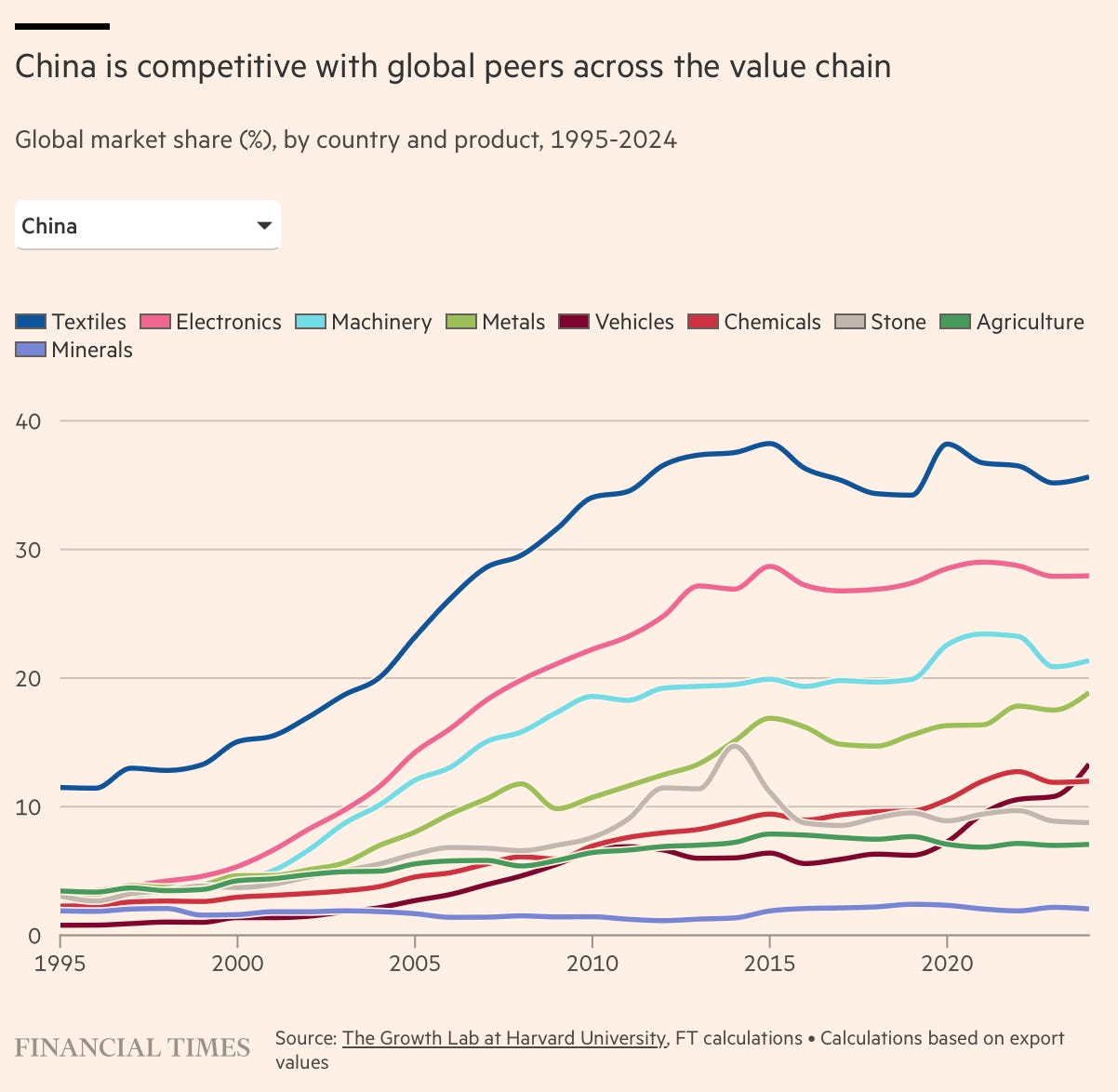
Overall, China is trading more with the world
The Iran War: Winners and Losers
Financial Times, New York Times & Associated Press
Scott: The Roman pontiff heard his call to the priesthood in studying the writings of the greatest African doctor of the church, St Augustine of Hippo. And today he uses a pilgrimage to Augustine’s birthplace, then in the Roman province of Nomidia, and now in Algeria, to make some points about just and unjust wars. Augustine believed that war is an unavoidable part of the human condition, that it accentuated the injustices of any society afflicted by it, and that leaders involved in wars needed to be conscious of that fact and work against it. Today our newspapers have reports on the victims of war, but we should pause to think also about the less-obvious winners and losers—those who profit from war, and those who suffer less obviously through economic distress.
First, the Financial Times reports today on how American financial institutions are poised to achieve bumper profits as a result of the war on Iran:
Volatile markets helped drive a rise in first-quarter profits at three of Wall Street’s biggest banks, as their trading businesses benefited from the geopolitical upheaval.
JP Morgan reported net income of $16.5bn, up from $14.6bn a year ago and the bank’s second-best quarter ever.
Chief executive Jamie Dimon said the US economy “remained resilient” even as concerns mount about the effect of higher oil prices.
At Citigroup, profits rose 42% year on year to $5.8bn, also beating expectations. Citi’s shares rose to their highest level since the financial crisis after its results.
Second, the Associated Press reports on how Trump’s sons—known in the marketplace as Uday and Qusay—are poised to reap immense profits from an investment in a drone-producing company that sells its wares to Gulf states seeking new protective systems against Iranian missiles and drones:
A drone maker backed by President Donald Trump’s two oldest sons is trying to sell to Gulf countries while they are under attack by Iran and dependent on the U.S. military led by their father.
The sales drive by Florida-based Powerus—which announced a deal last month to bring aboard Eric Trump and Donald Trump Jr.—positions the company to potentially benefit from a war that their father began.
“These countries are under enormous pressure to buy from the sons of the president so he will do what they want,” said Richard Painter, a former chief White House ethics lawyer under President George W. Bush. “This is going to be the first family of a president to make a lot of money off war—a war he didn’t get the consent of Congress for.”
Powerus co-founder Brett Velicovich told The Associated Press that the company is making sales pitches that include drone demonstrations in several Gulf countries to show how its defensive drone interceptors could help them ward off Iranian attacks.
Finally, the New York Times reports on the plight of hundreds of thousands of guest workers in Dubai who are imperiled—largely as a result of the sudden collapse of Dubai’s once booming hospitality industry because of the war.
When the war with Iran began in late February, customers hunting for bargains on designer wares stopped coming to the Outlet Mall Dubai and a saleswoman named Marjorie was forced to go on leave for a month.
Two weeks later, she said, her furlough was extended until June 1 without pay.
“All we do is worry about this situation and think ‘What if they repatriate us?’” Marjorie, a 32-year-old migrant worker from the Philippines, said in a recent interview. “If this continues for three months, maybe we will go back.”
The United Arab Emirates and its major metropolis, Dubai, have been spared much of the destruction and casualties that other countries in the region have suffered in the war. That is thanks largely to the interception of most of the drones and missiles that Iran has fired at it—more than 2,500—in retaliation for the assault launched by the United States and Israel.
The war has nevertheless taken a toll on the economy in Dubai, one of the major financial powerhouses in the region, and especially on the tourism and hospitality industries. Many expatriate residents have fled the country and tourists have largely stayed away.
Every war has winners and losers. But, when the instigators of the war are individuals who reap personal profit from it, that is a moral issue which requires special attention.
Three Nuclear Powers Are Involved in the Gulf War (And Iran Isn’t One of Them)
Drop Site News
Scott: Supposedly, Trump’s Iran War is all about stopping the proliferation of nuclear weapons. But a significant community of national security experts are convinced that, to the contrary, everything Trump has done is likely to hasten nuclear proliferation and make a nuclear exchange far more likely in the coming years.
It’s essential to recognize going into a study of this conflict that three nuclear powers are already implicated in it: the United States, Israel… and Pakistan, the possessor of the “Islamic bomb,” which is currently attempting to facilitate talks between the United States and Iran. Pakistan’s implication comes through a recently concluded mutual defense agreement between Saudi Arabia and Pakistan, the details of which have long been sketchy. But Drop Site News offers some new detail:
On Saturday, as Pakistan was in the middle of mediating hard-won ceasefire talks between the U.S. and Iran, Saudi Arabia made a sudden revelation that appeared to undermine Pakistan’s status as a neutral host. In a statement posted on X, the Saudi Ministry of Defense announced “the arrival of a military force from the Islamic Republic of Pakistan at King Abdulaziz Air Base in the Eastern Sector,” adding that the force would include a contingent of military aircraft and would improve “operational readiness between the armed forces of the two countries.”
Those deployments are the result of a defense pact signed last year between Riyadh and Islamabad that has now been activated amid an ongoing regional war and numerous Iranian attacks against military and energy targets in Saudi Arabia.
Ceasefire talks collapsed over the weekend in Pakistan, with the American delegation leaving without an agreement. But Pakistan is far from out of the picture; secret documents obtained by Drop Site News reveal the extent to which Pakistan is committed by treaty to potentially become a participant in the war it was attempting to mediate.
The details of the Pakistan–Saudi Arabia defense agreement have never been made public or even reviewed by Pakistan’s parliament. They are being reported here for the first time based on an archive of classified documents about the pact obtained by Drop Site.
The risk that Pakistan may itself be pushed into the war is also important context for the zeal of Pakistan’s leaders to bring an end to the fighting. Pakistan enjoys good ties with both Iran and the U.S., and relies heavily on financial support from Saudi Arabia. Following news that the United Arab Emirates had recalled a loan from Pakistan last week, Saudi Arabia and Qatar stepped up with $5 billion aimed at propping up Islamabad’s foreign reserves as it deals with fallout from the economic crisis caused by the war…
The classified 2005 agreement—a copy of which was obtained by Drop Site—states that the goal of the MCA is “to develop and strengthen cooperation in the military field between the two countries through expansion in areas such as training, deputation of personnel, defense production and transfer of technology, exchange of experience, purchase of weapons, equipment, spare parts and military medical services.” The document also includes provisions allowing for both parties to amend and expand the pact over time.
While the 2005 agreement was significant, it limited the scope of the bilateral military relationship to cooperation in training and equipment sharing. It did not obligate Pakistan to engage in actual military action or assume responsibility for the defense of Saudi Arabia.
The Long Wispy Tail of Comet R3
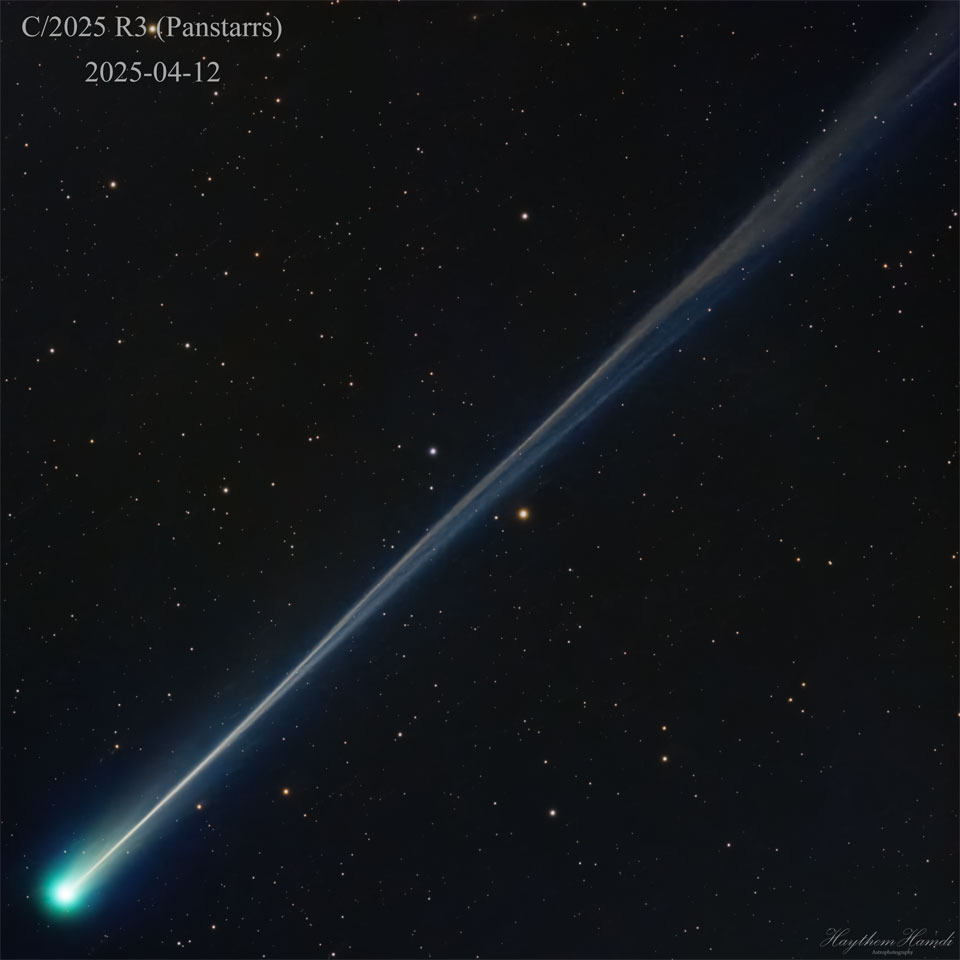
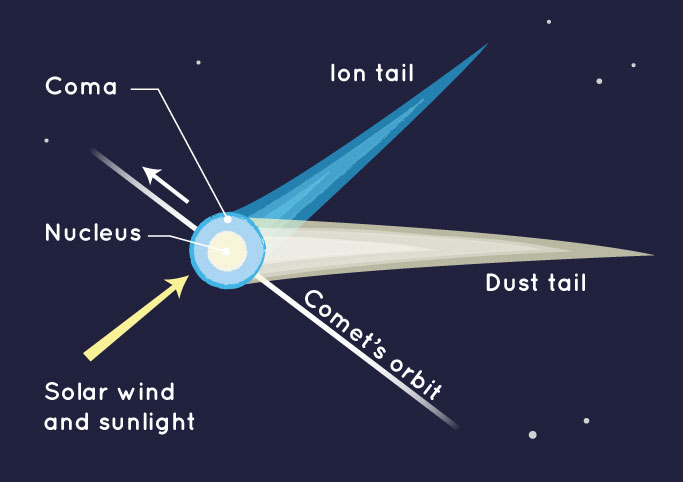
Why does Comet R3 (PanSTARRS) have a wispy tail? The newest bright member of the inner Solar System, Comet C/2025 R3 (PanSTARRS) is already extending an impressive stream of glowing gas. This tail starts from an unseen central nucleus of dirty ice that is likely a few kilometers across. The nucleus is warmed by the Sun and emits a cloud of neutral gas into a coma that glows light green. Nuclear gas ionized by energetic sunlight is pushed away from the Sun by the solar wind into an ion tail that glows light blue. The wispy nature of the ion tail is caused by the constantly changing structure of the solar wind. Pictured from Rhode Island, USA two days ago, Comet R3 (PanSTARRS) shows off a many-degree ion tail. Comet R3 (PanSTARRS) is best seen before dawn from northern skies for another 10 days, after which it will be best visible from southern skies.

Stop the ‘Space Race’
Nature
Scott: Shouldn’t all humankind cooperate in a reach for the stars?
Why has international cooperation that was once normal and commonplace, even during the Cold War, ground to a stop under Putin, Trump and Xi? That question isn’t asked strongly enough. Although led by NASA, Artemis II wasn’t just a US achievement; the mission was a collaborative effort, just barely, with Canada paying full freight. As the Enlightenment philosopher Denis Diderot taught us, nationalism needs to be held in check when it comes to science, because scientific endeavor must be for all humankind, if the species is to survive.
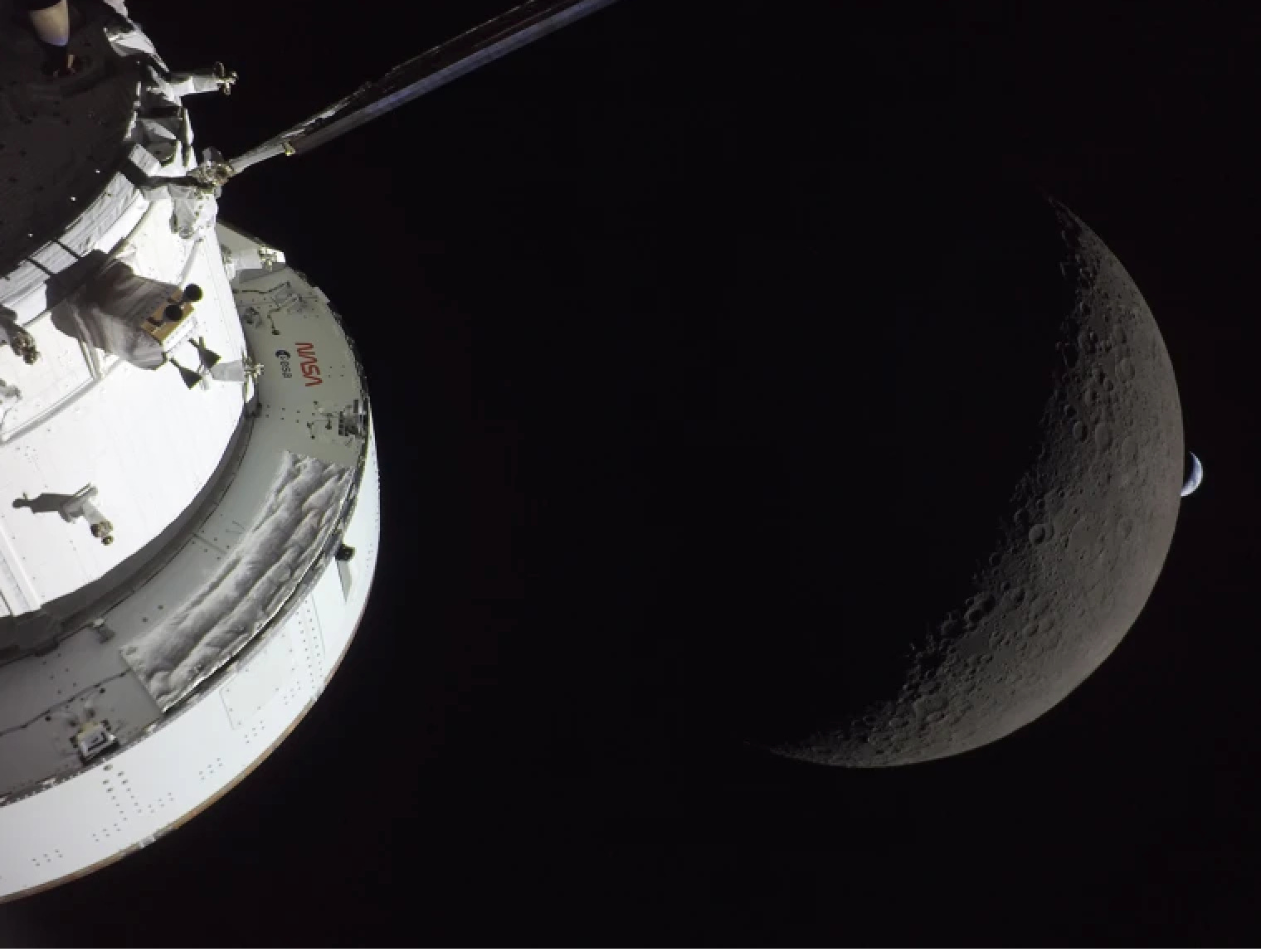
The Artemis II mission showed the world what curiosity and collaboration can achieve. It was not, strictly speaking, a scientific flight, yet it demonstrated some of the best aspects of science. Despite the conflicts and other challenges that humanity is facing on Earth, Artemis II was a global project, driven by a shared spirit of discovery.
Although NASA was at the controls, Artemis II was a multinational endeavour. The European Space Agency’s service module provided the power and propulsion needed to keep NASA’s Orion capsule going. The Canadian Space Agency cheered the presence of its astronaut, Jeremy Hansen, on board. And the space agencies of South Africa, Australia and other nations contributed tracking and other data to help monitor the spacecraft during its flight.
Staying connected
Throughout the mission — and in contrast to overtly political statements made by NASA’s administrator, Jared Isaacman — the Artemis II astronauts emphasized that they were flying not for the United States or Canada, but for all of humanity. Crew member Christina Koch reiterated the message of human connectivity after the astronauts briefly lost contact with Earth as they traversed the far side of the Moon and began their voyage home. “We will always choose each other,” she said. It was a powerful message.
Human space flight has always been a polarizing issue, with some in favour and others opposed. Today, robots can accomplish many of the goals of space exploration, making it unnecessary to endanger human lives…
Space scientists need to lean further into global collaboration. Space agencies, including those of China, India, South Korea and Japan, have been successfully exploring the Moon using robotic orbiters and landers in recent years. Researchers should continue to collaborate on scientific discovery missions and on analysing the lunar samples being brought back to Earth by various programmes.
This is also the time to demonstrate good stewardship of the Moon. As aerospace engineer Moriba Jah writes in a World view column, the governments and companies involved in lunar exploration must, at a minimum, accept that the Moon’s surface belongs to all of humanity (M. Jah Nature 652, 275; 2026). NASA and its international partners need to strengthen their commitment to the general principles laid out in the Artemis Accords, a non-binding set of principles, signed by 61 nations, for safe and sustainable lunar exploration.
Your Online Moment of Zen
This Boy
Charles: Early magnificence from the Fab Four. In England this was the flip side of I Want to Hold Your Hand. In the first of an endless series of indefensible decisions by Capitol Records, it was replaced for the American B-side with I Saw Her Standing There.
There is no Beatles song more important to me than this one. It never appeared on a Parlophone Album until Past Masters was released (as two CD’s) in 1988.

The Horton-Kaiser Report is edited by Imogen Sayers.
You both keep knocking it out of the park, choosing and reporting on a breadth of important news events that enhance enlightenment. I look forward to reading your analyses and synopses. The cherry on top, Moment of Zen, is a welcome closing anecdote that kickstarts the day, often with a tip of the hat to the arts and our humanity. Thanks for it all!