

How’s that Blockade Going?
The Telegraph
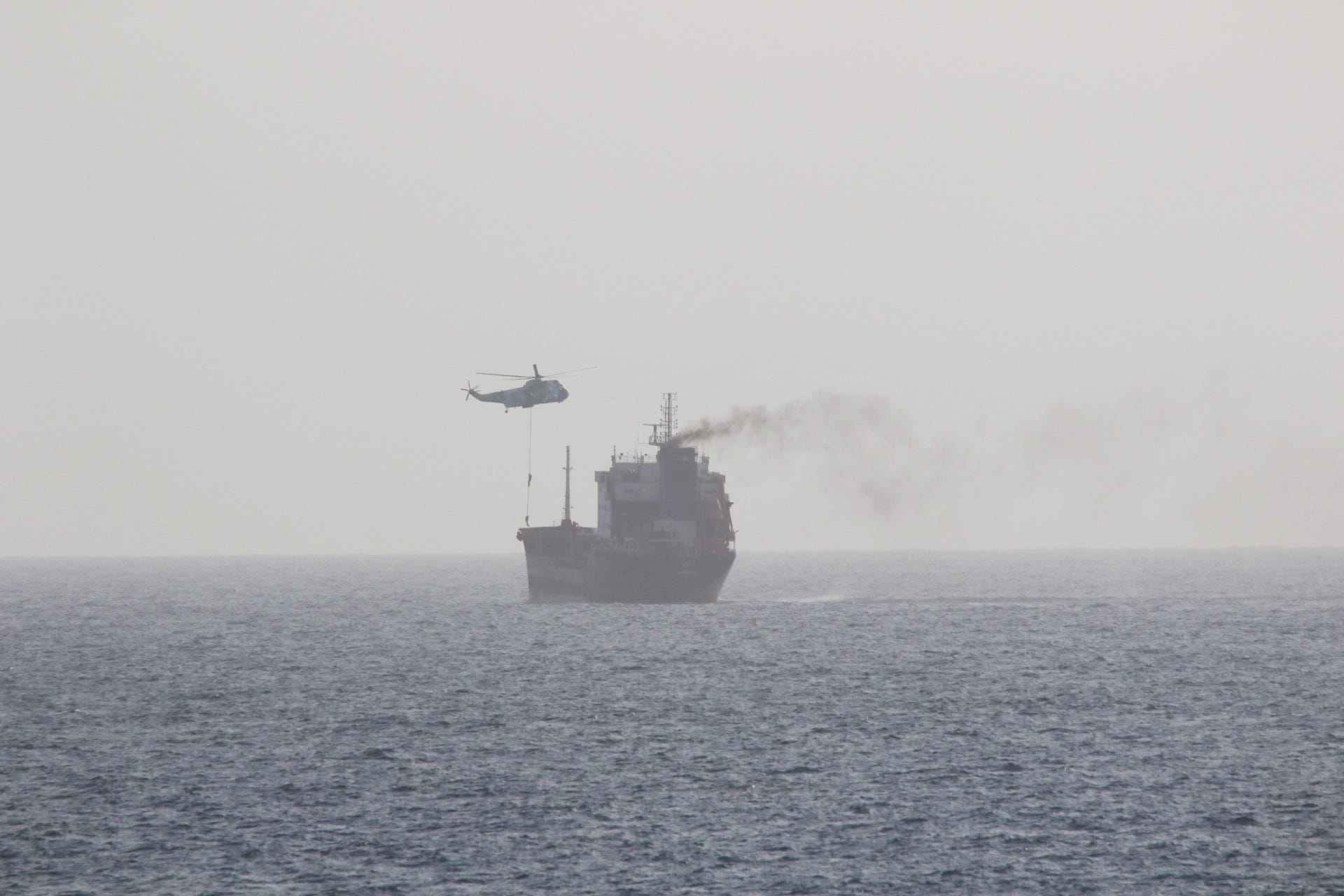
Scott: As the day progresses, the Very Tory Telegraph—the unofficial newspaper of the British Ministry of Defence—has been keeping count of the efficacy of the US blockade of the Strait of Hormuz.
True, the US is deploying massive resources for its effort… but this hasn’t stopped 26 Iranian tankers from running the blockade so far. Telegraph:
Shipping traffic through the Strait of Hormuz remained broadly halted on Tuesday with only three ships passing the waterway in the past 24 hours.
The Ean Spir products tanker, which had no known flag or known ownership, sailed through Hormuz on Tuesday after previously calling at an Iraqi port, ship tracking data on the MarineTraffic platform showed.
The Lian Star cargo ship, which had no known flag or known ownership, also sailed through the strait from an Iranian port, the data showed.
Separately, the Meda liquefied petroleum gas tanker, which had called at a United Arab Emirates port in the Gulf and also had no known flag or ownership, crossed the strait on Monday in its second attempt to leave the Gulf
Scott: Coverage of politics in the United States too often follows a he said, she said perspective with there being generally two official viewpoints—the Democratic and the Republican, the red and the blue, a liberal and the conservative.
The Horton-Kaiser Report searches for stories covered inadequately by the mainstream media in the United States.
We are independent and rely on generous support from readers like you. If you like The Horton-Kaiser Report, consider a paid or free subscription.
Jon Stewart: Should Trump Get High? Could Anyone Tell The Difference If He Did?
Charles: Turns out Donald Trump’s decision to sign an Executive Order speeding up the availability of hallucinogens to treat depression was almost entirely a result of Joe Rogen’s lobbying for them and Trump’s eagerness to mend fences with the powerful MAGA influencer who has repeatedly attacked him for the war in Iran, saying Trump’s supporters feel “betrayed” by it.
In any case, it was almost certainly the first time in our lifetimes that both of them ever embraced such a good idea.
Monday night Jon Stewart expressed some skepticism when Trump said at the same signing ceremony that he might jump on the ibogaine bandwagon himself.
“Can I have some, please? I’ll take it. I’ll take it, whatever it takes.”
Stewart didn’t want the man with his finger on The Button to do it
“I don’t think Trump should be using hallucinogens.”
And then he asked the existential question.
“But if he did would we even notice?
“‘They’re eating the cats and dogs…right near my beautiful ballroom. By the way did you know I’m Jesus.’”

Trump’s Purge of Female Cabinet Members Continues with Lori Chavez-deRemer
New York Times
Scott: Lori Chavez-DeRemer has become the latest—and third—woman from Donald Trump’s cabinet to face the ax.

Her ties to the Labor Department were never very clear, although her father was a teamster, and the Teamsters Union president is said to have asked Trump to appoint her as a payback for the union’s support.
In her year in office, she amassed an astonishing amount of controversy, most of it attached to alcohol and sex, and most of it being showcased in Rupert Murdoch’s New York Post, which for whatever reason invariably pictured the secretary in a yellow bikini, lounging by a pool.
It appears that the secretary handpicked young female staffers and tasked them to arrange for the entertainment of her husband (who was banned from the premises of the department based on allegations that he assaulted young women) and her father.
All of this was building to a crescendo in the form of a deposition by the Labor Department’s Inspector General, which she avoided by resigning from office. The New York Times report on the IG investigation seems to have triggered her resignation.
Labor Secretary Lori Chavez-DeRemer and her top aides and family members routinely sent personal messages and requests to young staff members that are now under review by the department’s inspector general.
Ms. Chavez-DeRemer and her former deputy chief of staff sent texts asking employees to bring wine to them during trips for the department. Sometimes the requests came in the middle of the workday.
Ms. Chavez-DeRemer’s husband exchanged text messages with young female staff members, as did her father. Some of the young women were instructed by Ms. Chavez-DeRemer and the former deputy chief of staff to “pay attention” to the men, according to people familiar with the investigation.
The text messages have been reviewed by The New York Times.
The messages were gathered as part of a monthslong investigation into Ms. Chavez-DeRemer’s leadership of the department, which began with a complaint filed to the inspector general’s office claiming widespread misconduct. The inquiry has revealed deep frustration in the department with Ms. Chavez-DeRemer, who took office in March 2025. Staff members across the political spectrum have described her as disconnected from the work of the department.
Some Laws Are So Bad They Can Still Make Opposites Attract
The New York Times
Charles: Senator Mike Lee of Utah is a wacko Republican, Dick Durbin a quintessential establishment liberal from Illinois. But both of them are so offended by Section of 702 that they have crafted a bill that would at least limit its most extreme abuses.
Another vile legacy of the War on Terror waged after the attacks of 9/11, it gives the government the unlimited right to tap the phone calls of foreigners without warrants.
Lee and Durbin explain Section 702’s worst unintended consequences:
It’s true that Section 702 doesn’t allow the direct targeting of Americans, but their communications are still often gathered during the warrantless surveillance of foreigners abroad. Once the government has this data, agencies then have the ability to search through it. And they do: Transparency reports reveal that thousands of such searches are performed every year. A federal court previously found that some the F.B.I. had violated the Fourth Amendment.
Predictably, without a requirement for court approval of these searches, abuses have been rampant. As a recent report from the Brennan Center for Justice highlighted, F.B.I. agents in recent years have searched for the communications of “protesters across the political spectrum; members of Congress; a congressional chief of staff; a state court judge; multiple U.S. government officials, journalists and political commentators; and 19,000 donors to a political campaign.” In a time of extreme partisanship, these abuses have provoked bipartisan outrage.
Under the Senators’ proposed Security and Freedom Enhancement Act, the government could still search its data bases for connections between foreigners and Americans, but it would at least have to get “court approval in the small number of cases in which these searches have generated results and the government has a proper basis for gaining access to the contents of the communication.”
It would also go a long way toward closing another loophole that allows a huge amount of warrantless surveillance:
The widespread practice of circumventing the Fourth Amendment by purchasing Americans’ sensitive information from data brokers.
The Department of Justice (including the Drug Enforcement Administration and the F.B.I.), the Department of Homeland Security (including ICE, Customs and Border Protection and the Secret Service) and the Defense Intelligence Agency have purchased cellphone location information for millions of Americans. Such information is highly sensitive and can reveal intimate details of that person’s life. Even more troubling, artificial intelligence could supercharge such surveillance, allowing the government to harvest and analyze mass quantities of highly personal and sensitive information about Americans without court approval. Our legislation would close these loopholes—again with pragmatic exceptions to accommodate legitimate safety and security needs.
Congress should not take an all-or-nothing approach to reauthorizing Section 702… But simply extending the law without any changes to protect Americans’ privacy should be off the table.
Four Agents Dead in US-Led Raid in Mexico, and Washington’s Explanations Don’t Add Up
El Universal
Scott: US agencies including the CIA and DEA were working with Mexican federal police and the Mexican army on a massive operation targeting a drug cartel’s lab operations in the Mexican state of Chihuahua immediately south of the United States, and something went wrong, resulting in several deaths.
So far accounts of the operation are so riddled with contradictions that it’s difficult to figure out just what happened though it’s evident that there’s a scramble to cover it up.
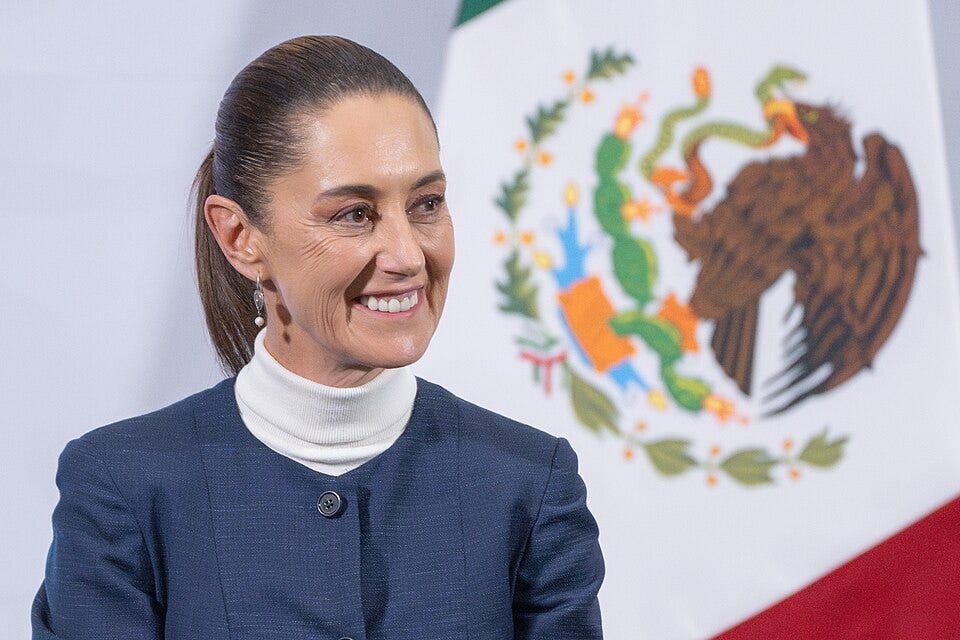
Mexican President Claudia Sheinbaum has insisted that she wants a straight and well documented account. It’s another episode of Sicario in the making, featuring US militarized ops under the nose of local governments, largely coopted.
The government in Chihuahua is run by the conservative and generally pro-US PAN party; it’s a reasonably good bet that the Trump team decided to sidestep Mexico City and work with local authorities. El Universal reports:
Two Mexican officials and two Americans died in a car accident in northern Mexico; among the deceased were a member and the Scdirector of Chihuahua’s State Investigation Agency (AEI). The two US officials who died on April 19 were agents of the CIA.
Mexican President Claudia Sheinbaum stated that an investigation would be launched to determine whether the operation violated the country’s national security laws, noting that her administration had no prior knowledge of the operation; the CIA declined to comment.
According to the news outlet, the officials were returning from an anti-drug operation in Chihuahua conducted as part of the joint effort between the two countries to combat drug trafficking. The officials had reportedly attended a meeting following the operation to dismantle a clandestine drug laboratory in a remote area.
In a joint operation involving AEI, the Ministry of Defense, and the Specialized Prosecutor’s Office for Strategic Operations, two methamphetamine laboratories were located. The Americans who died in the accident were CIA agents returning from an operation led by the Mexican Armed Forces to dismantle clandestine methamphetamine laboratories in the mountains. Eloy García, a spokesperson for the state prosecutor’s office said that the US agents were part of an authorized training program designed to teach their Mexican counterparts how to handle synthetic drugs. “There is a misconception regarding what training and support actually mean,” John Feeley—who served as Deputy Chief of Mission at the U.S. Embassy in Mexico City between 2009 and 2012. “It’s not just about studying in a classroom. And not everything can be learned in an office setting.”
“What sets these joint operations apart from similar ones under the Mérida Initiative right now is the level of transparency with which they are conducted,” Mr. Feeley added, referring to the security alliance between the United States and Mexico. “This is exactly what should be happening: the Mexicans are in command of the operation, while the Americans provide the skills that Mexico needs, allowing both governments to combat illegal drug production in a more professional and lawful manner,” he continued.
What happened in the accident that claimed the life of the AEI Director in Mexico?
On Sunday, April 19, the deaths of four officials were reported following a car accident in which the vehicle they were traveling in allegedly veered off the road, plunged down a ravine, and exploded.
Their deaths occurred as they were returning from an operation to destroy six clandestine laboratories in the municipality of Morelos—located in the southern part of the state—where 100 hectares of land were secured. Furthermore, it was confirmed that two of the deceased were personnel from the U.S. Embassy.
State Attorney General César Jáuregui Moreno stated that the two U.S. Embassy personnel were engaged in “training activities as part of the exchange we typically and routinely conduct with U.S. authorities.” He stated that the U.S. employees were conducting training activities approximately eight or nine hours away from the site of the operation against the drug laboratory.
Upon the conclusion of the raid, they met with personnel from Chihuahua’s AEI, and the accident occurred hours later.
US Response Regarding the Deaths of Its Officials in Mexico
In its article titled “Two CIA Agents Die in Accident in Mexico Following Anti-Drug Operation,” WaPo reports that the US Ambassador to Mexico, Ronald Johnson, stated “This tragedy serves as a solemn reminder of the risks faced by Mexican and U.S. officials dedicated to protecting our communities, and it reinforces our determination to carry forward their mission and uphold our shared commitment to security and justice, in order to protect our people”.
The Attorney General of Chihuahua stated that Sheinbaum’s office was not notified because only Mexican agents—approximately 40 in total—participated in the seizure of the drug laboratory, the planning of which took around three months.
Did Sheinbaum know about the operation in Chihuahua?
During her daily morning press conference on Monday, April 20, the Mexican leader commented that the federal government had no knowledge of the operation; she asserted that the operation was a decision made by the Chihuahua state government. Furthermore, she requested additional information from the administration of Governor Maru Campos (of the PAN party), and an inquiry is currently underway to determine whether there was a violation of the National Security Law, as well as to address the U.S. government.
“She is right; it was never reported that there was any participation by U.S. agents in the operation, because there were no U.S. agents present in the operation that led to the seizure of the narco-laboratory—perhaps one of the largest ever located. That operation involved the participation solely of agents from the State Investigation Agency and SEDENA,” emphasized Jáuregui Moreno. The Washington Post reports that individuals familiar with the matter spoke about the intelligence agency’s role in the events in Chihuahua on condition of anonymity, due to the sensitivity of the subject.
War Without End
The Guardian
Charles: Guardian columnist Sina Toossi has this week’s most concise explanation of why the Trump administrations’ non-strategy “strategy” is a complete disaster—and has left the Iranian strongmen feeling more powerful than ever.
Iran’s delegation to the first round of post-ceasefire talks with the US in Islamabad arrived on a plane named Minab 168 after the people – mostly young schoolgirls – killed in a US bombing early in the war. The name signalled both grievance and resolve, framing the talks as part of a conflict in which Tehran has already absorbed immense costs.
That framing helps explain how Iranian officials approached the talks and how they view the current impasse. Rather than negotiation from a position of weakness or urgency, they see diplomacy as an extension of a battle they believe they endured without losing their core advantages. With the ceasefire set to expire on Wednesday and no diplomatic breakthrough in sight, the risk of a return to war is sharply rising.
From the Iranian vantage point, military pressure did not break their position. Their main leverage remains: stockpiles of enriched uranium, the disruption of the strait of Hormuz and its global economic ramifications, and a wartime record of absorbing sustained US and Israeli strikes over more than 40 days while continuing to strike back across the region with missiles, drones, and allied forces in Iraq, Lebanon and Yemen.
This stands in sharp contrast to prevailing assumptions in Washington, where the focus has been on how pressure might accelerate Iranian concessions. Iran, however, appears more willing to bide its time, hold on to its core leverage, and pursue a broader strategic settlement that links its development and prosperity to that of the Gulf and, by extension, the global economy.
That divergence reflects a deeper mismatch in how each side understands the trajectory of the conflict. For US policymakers, the central question is what combination of military and economic tools can compel movement on far-reaching demands, including curbs on Iran’s nuclear programme, missile capabilities and regional alliances. For Iranian decision-makers, the question is whether those demands require trading away what they see as core pillars of security.
So naturally Trump announced late yesterday that he was extending the ceasefire “until such time as Iran’s leaders and representatives can come up with a unified proposal.”
Pope Talks Oil, Corruption and War
Associated Press

Scott: Equatorial Guinea is sometimes described as the most corrupt nation on earth, and by any measure, the thievery of its political leadership is spectacular. Vast oil revenues fund lavish lifestyles for the small elite surrounding the president, while a large proportion of the population continues to live in poverty.
In his apostolic journey in Africa, the Pope ventured there and addressed subjects that seem more than simply topical.
“In a world wounded by arrogance, people hunger and thirst for justice. We must encourage those who believe in peace and dare to engage in “countercurrent” politics, which focus on the common good. What is urgently needed is the courage of new visions and an educational pact that gives young people space and trust,” he said. “Even more than in the past, it is clear today that the proliferation of armed conflicts is often driven by the exploitation of oil and mineral deposits, with no regard for international law or the self-determination of peoples. Without a change of direction in the assumption of political responsibility, and without respect for institutions and international agreements, humanity’s destiny risks being tragically compromised.”
His remarks were well measured for his surroundings, but to most observers they appeared unmistakably tied to the conflict now engulfing the Middle East as well, where the movement of fossil fuels is regularly cited as the principal cause of conflict. Associated Press reports:
The discovery of offshore oil in the mid-1990s transformed Equatorial Guinea’s economy virtually overnight, with oil now accounting for almost half of its GDP and more than 90% of exports, according to the African Development Bank.
Yet more than half of the country’s nearly 2 million people live in poverty. And rights groups including Human Rights Watch — as well as court cases in France and Spain — have documented how revenues have enriched the ruling Obiang family rather than the broader population.
Leo, who arrived from Angola, met with Obiang at the presidential palace and then addressed government authorities, diplomats and civil service representatives. Noting that the encounter occurred on the first anniversary of Pope Francis’ death, Leo quoted the late pope in denouncing income inequalities that he said had been exacerbated by a global economy focused on the pursuit of profit at all cost.
A Fresh Look at the Crab Nebula

This image that NASA’s Hubble Space Telescope captured of the Crab Nebula, paired with its past observations and those of other telescopes, allows astronomers to study how the supernova remnant is expanding and evolving over time.
This observation from NASA’s Hubble Space Telescope, released on March 23, 2026, gives an unparalleled, detailed look at the aftermath of a supernova and how it has evolved over the telescope’s long lifetime.
Hubble captured the nebula’s intricate filamentary structure, as well as the considerable outward movement of those filaments over 25 years, at a pace of 3.4 million miles per hour.
Your Online Moment of Zen
I Love Every Little Thing About You
Charles: This song came out in March of 1972, when I was the Columbia stringer during the day counting demonstrators on Broadway for Marty Arnold, a brilliant Timesman who sat back at his desk at 229 West 43rd Street crafting another beautiful tone poem about the latest anti-Vietnam protest that would fail to prevent Richard Nixon’s landslide re-election in November.
My best contribution to one of Marty’s stories: the middle-aged woman carrying the sign reading “My son and 40,000 others Died in Vain in Vietnam.”
At night I was downtown discovering the joys of men at the Ninth Circle on West 10th Street. All the time I was listening to amazing Stevie Wonder songs like this one, which were the only things that kept any of us a little sane through all of that madness.
The Horton-Kaiser Report is edited by Imogen Sayers.