

The News You Need on Thursday, May 14th, 2026.
UK PM Keir Starmer faces a leadership challenge. Is this the worst time ever to be a journalist? The cost of committing Genocide. And more. The news you need today from The Horton-Kaiser Report.


Trump Corruption Watch
More on Qusay’s and Uday’s Kazakh Adventure
Financial Times
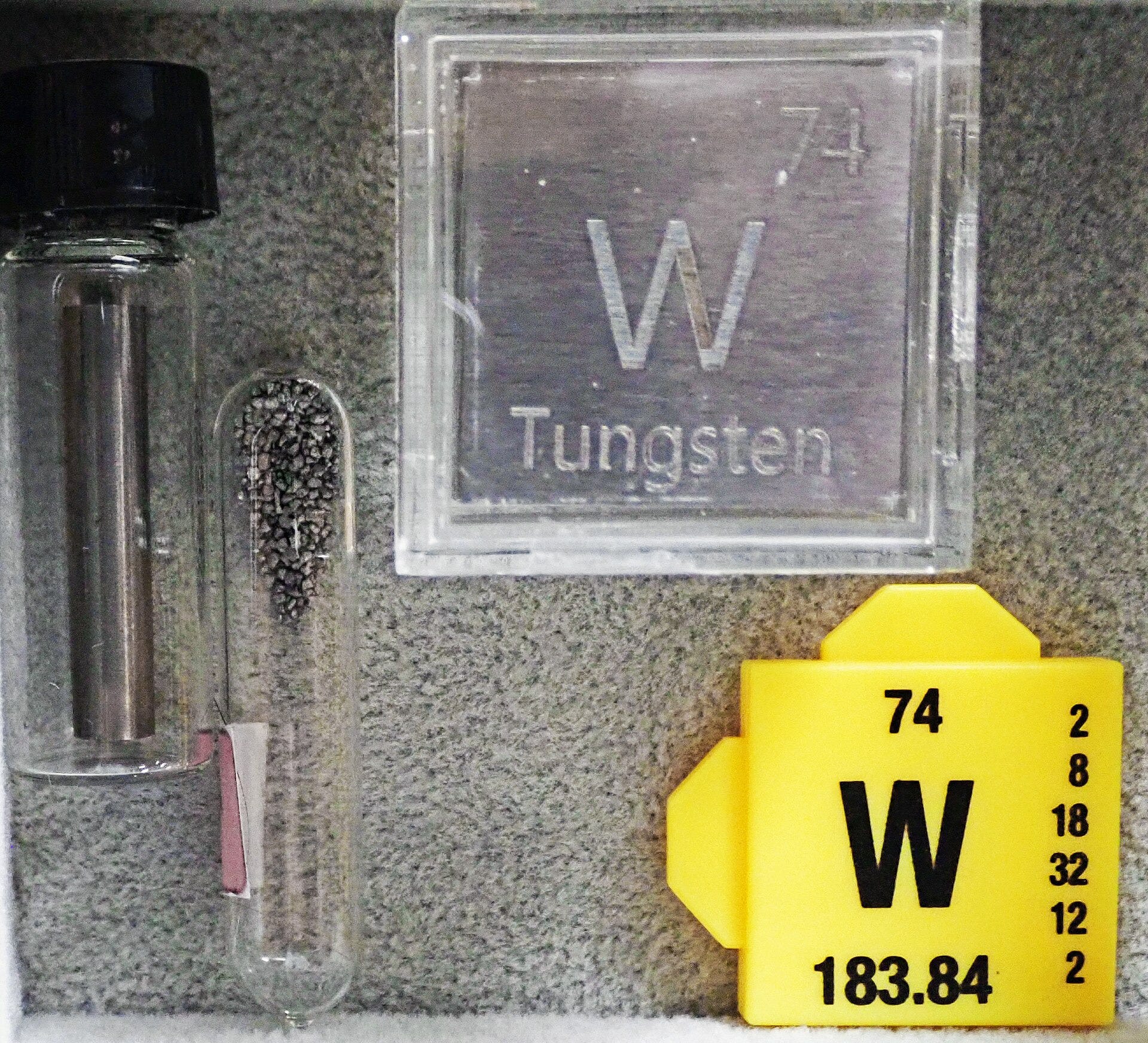
Scott: Donald Trump and the Kazakh strongman Kassym-Jomart Tokayev had a brief chat about Trump’s desire to secure a tungsten mine on Kazakh soil. In no time the mine is awarded to a company and Qusay and Uday—Trump’s sons Don Jr. and Eric—are installed as its owners.
The problem then becomes how the mine will be financed. In record time, Pete Hegseth and the Defense Department step up to make the essential funds necessary to develop the first phase of the mine.
As my Central Asian friends say, they marvel over a US president who, together with his family, operate in a more blatantly corrupt manner than any Central Asian leader has since the death of Turkmenbashi.
A company linked to Donald Trump’s sons has asked the US defence department for an additional $400mn to develop a tungsten mine in Kazakhstan, adding to $1.6bn in government support for the project. Cove Kaz Capital, which last month agreed to merge with a shell company backed by Donald Trump Jr and Eric Trump, applied in March for $400mn in financing from the Office of Strategic Capital, a branch of the defence department that backs supply chain technologies needed for national security, according to two people familiar with the matter. The US Export-Import Bank and the Development Finance Corporation, two federally funded agencies, in November said that they had issued nonbinding letters of interest for up to $1.6bn to support the development of the Northern Katpar and Upper Kairakty tungsten projects in central Kazakhstan. Cove Kaz controls 70 per cent of the projects. The group’s pitch to the OSC for the extra $400mn indicated that the funds would hasten progress of the mine’s development, one of the people said.
Is This The Worst Time To Be A Reporter Ever?
Reporters Without Borders
Charles: That seems to be the conclusion of the 2026 report from Reporters Without Borders. “For the first time in the history of the Reporters Without Borders World Press Freedom Index, over half of the world’s countries now fall into the ‘difficult’ or ‘very serious’ categories for press freedom. In 25 years, the average score of all 180 countries and territories surveyed in the Index has never been so low,” said RSF Editorial Director Anne Bocandé.
Israel fell from 112 to 116 from the top of the list where journalists are safest. The group noted more than 220 journalists have been killed in Gaza by the Israeli army since October 2023, including at least 70 who were slain while carrying out their work. In an interview with Democracy Now, Clayton Weimers, the American executive director of the organization said “This is really just a policy at this point to target journalists, and also, to add insult to injury, by slandering them and calling them Hamas terrorists. These are journalists who are known to us. And we do the work to ensure that every journalist that we are counting in our data is, in fact, who they say they are—a reporter.”
In the United States, Weimers said reporters covering ICE and No Kings demonstrations had been in “dozens and dozens of very violent incidents…sending them to the hospital... It’s caused us to introduce a new program that provides independent and freelance journalists with protective gear. That’s the kind of program we’ve been running for years in places like Ukraine and Lebanon, the Democratic Republic of Congo. It really is a sad state of affairs that we now feel compelled to do the same thing in the United States.”
It is certainly no coincidence that Norway, one of the most civilized countries in the world, has been ranked number one for ten years in a row as the best place to be a journalist. That is the power of great journalism—to make life better for everyone.
The other highlights of the latest report:
Out of the five indicators used to assess press freedom worldwide — which determine the economic, legal, security, political and social environments for journalism — the legal indicator has seen the sharpest decline this year.
The United States has fallen seven places and other countries in the Americas, such as Ecuador and Peru, have plummeted in the ranking.
Eritrea comes in last for the third year in a row.
Post-Assad Syria has seen the biggest improvement in press freedom in the world, climbing 36 places in the ranking.
In over half of the world’s countries and territories (52.2%), the state of press freedom is categorised as “difficult” or “very serious.” This category was a small minority (13.7%) in 2002.
In 2002, 20% of the global population lived in a country where the state of press freedom was categorised as “good.” Twenty-five years later, less than 1% of the world’s population lives in a country that falls under this category.
The Horton-Kaiser Report is independent, different from other US media.
Scott: On the issue of the journalist and the journalist’s responsibility, I’m really quite struck by something that Pope Leo said. That the moral, ethical and professional responsibility of journalists is not to be regurgitating the views of people in power—like political figures and wealthy corporate interests that control commercial media—but to be an independent voice.
To assess carefully whether the things that are claimed as facts really are facts, and to discover what the facts are.
Charles: Scott Horton and I first bonded 20 years ago when we were each blogging about the horrendous torture being carried out by the second Bush administration during the so-called War on Terror. The New York Times news department never called torture torture. They always called it ‘enhanced interrogation.’
We both thought it was a terrible thing.
Listen to Scott speaking to NPR’s On The Media in 2009 about torture.
Get the news you need from us, free for two weeks.
