



Trump Corruption Watch Jr.
Qusay Keeps Racking Up Pentagon Contracts, and Now We Know How
ProPublica
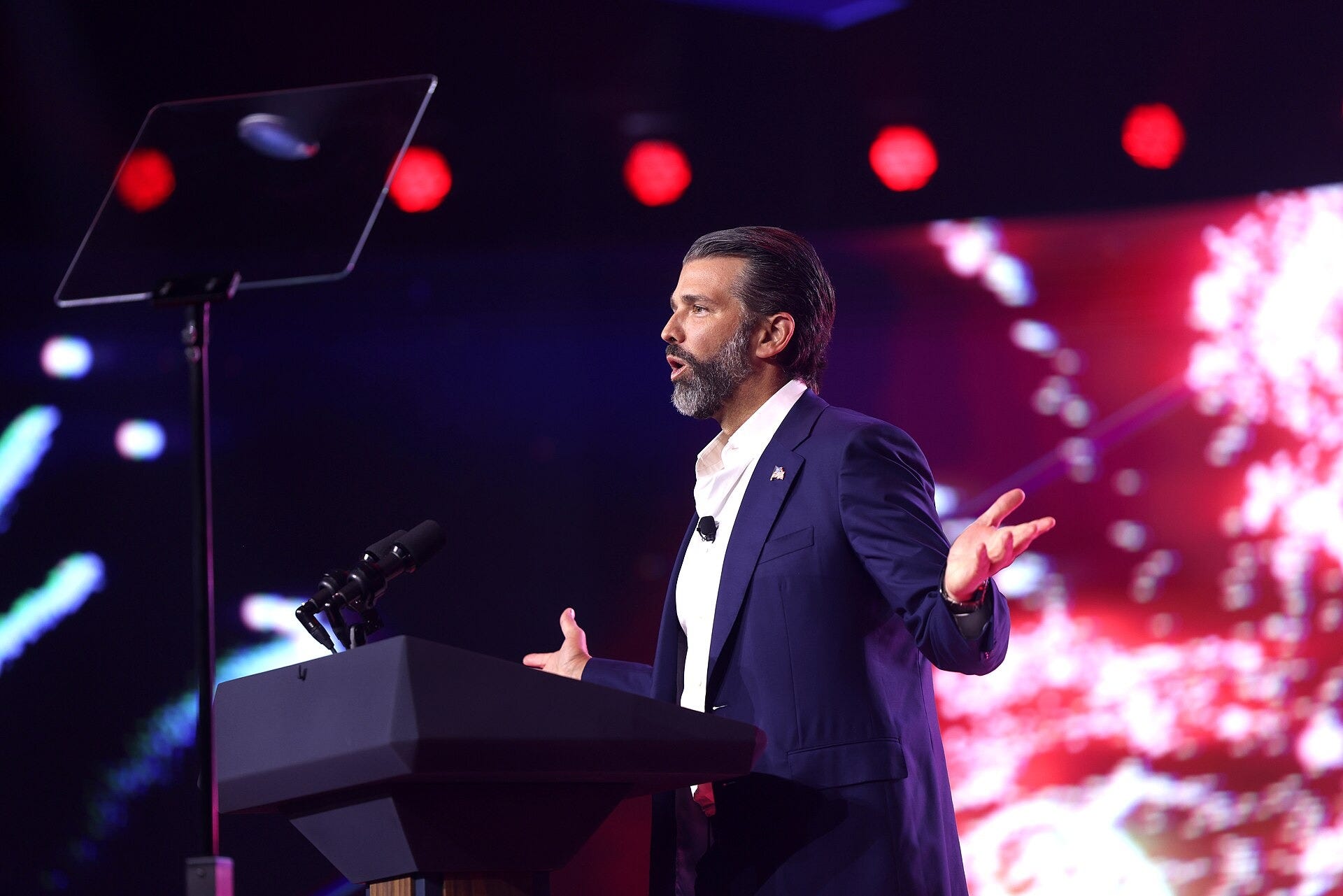
Scott: How does he do it?
Donald Trump Jr keeps racking up lucrative no bid Pentagon contracts. And now ProPublica shows how it works: A strategically timed phone call from the White House to the Pentagon makes all the difference.
Pure corruption and graft.
When the Pentagon announced a $620 million loan last year to a small North Carolina startup linked to Donald Trump Jr., defense officials and the company tried to tamp down suspicions of cronyism…
Interviews and Defense Department records reviewed by ProPublica show that the request to loan hundreds of millions of dollars to the firm linked to Trump Jr. was made by Peter Navarro, a White House adviser to President Donald Trump and a friend of Trump Jr.’s.
Of the dozens of companies the Pentagon was considering funding at the time, Vulcan’s was the only deal initiated by a top aide to the president, said an official at the Pentagon who was not authorized to speak publicly.
After defense officials got the White House request, they asked Pentagon staff to move at an unusually rapid pace, said another person who was involved in the deal at the Pentagon but not authorized to speak about it. The staff worked late nights and with little sleep to get the loan through in a matter of weeks, the source said.
“The call came from the White House: We have to get this done,” the person said.
How China is Systematically Destroying the Uyghurs: The People and Their Culture
Financial Times
Scott: No place on earth has as much prison space reserved for its population as China’s Central Asian province of Xinjiang, historically better known as East Turkestan or Uyghuristan. The home of the Uyghur people.
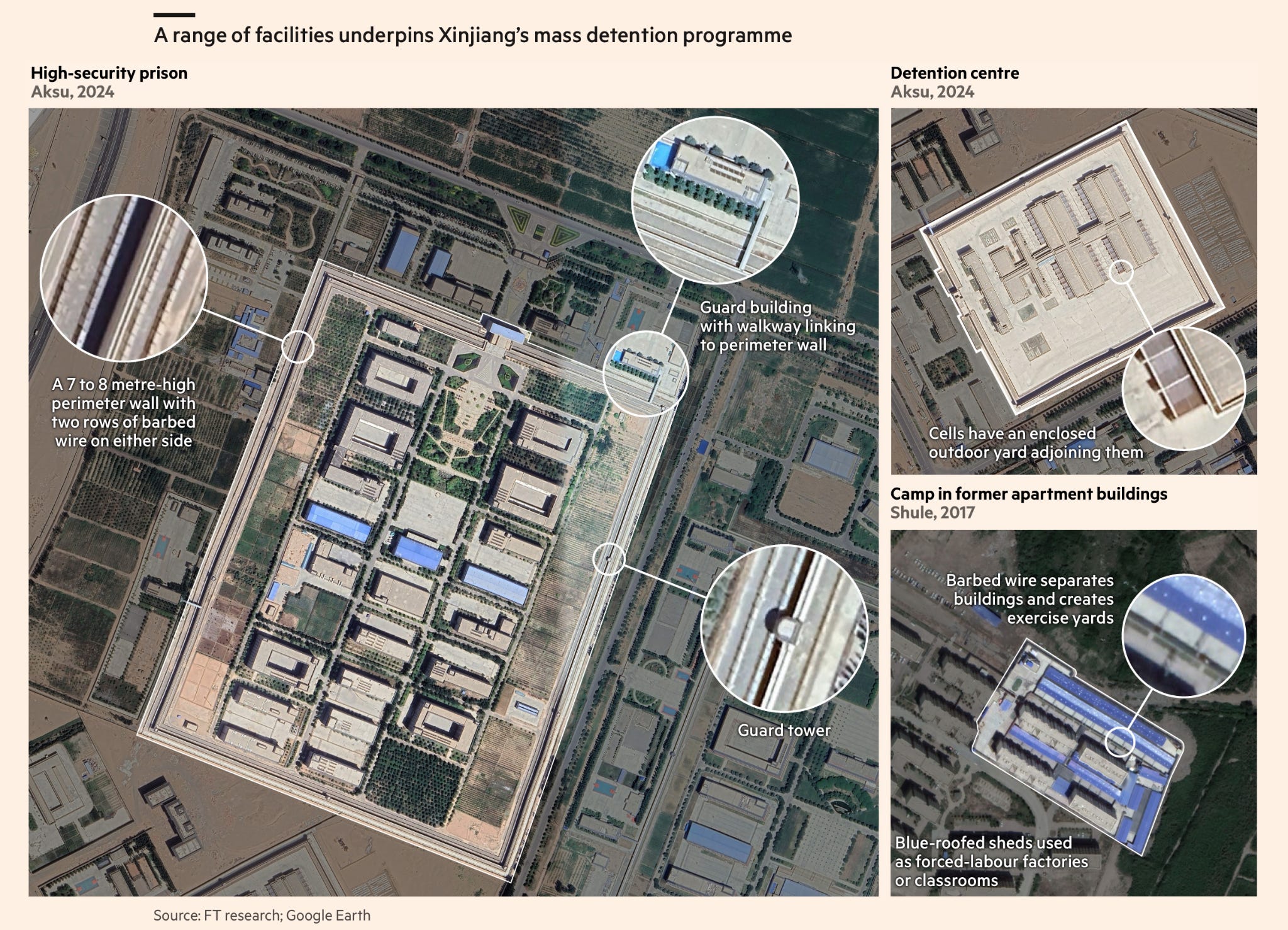
This fact is an ominous sign of the Chinese Communist Party’s intentions with respect to the Uyghurs and their homeland, which is a combination of ethnic cleansing and brutal psychological warfare designed to efface every trace of their identity as a nation. All in the interest of converting them into model subservient Chinese subjects.
In this essay, the Financial Times has undertaken a remarkable study of the Chinese formula for heavy handed repression, which is somewhat less bloody, but certainly just as brutal as that practiced today in spots as varied as Gaza and the West Bank or Sudan.
This ruthless brutality is the defining trait of Xi Jinping and the CCP regime.
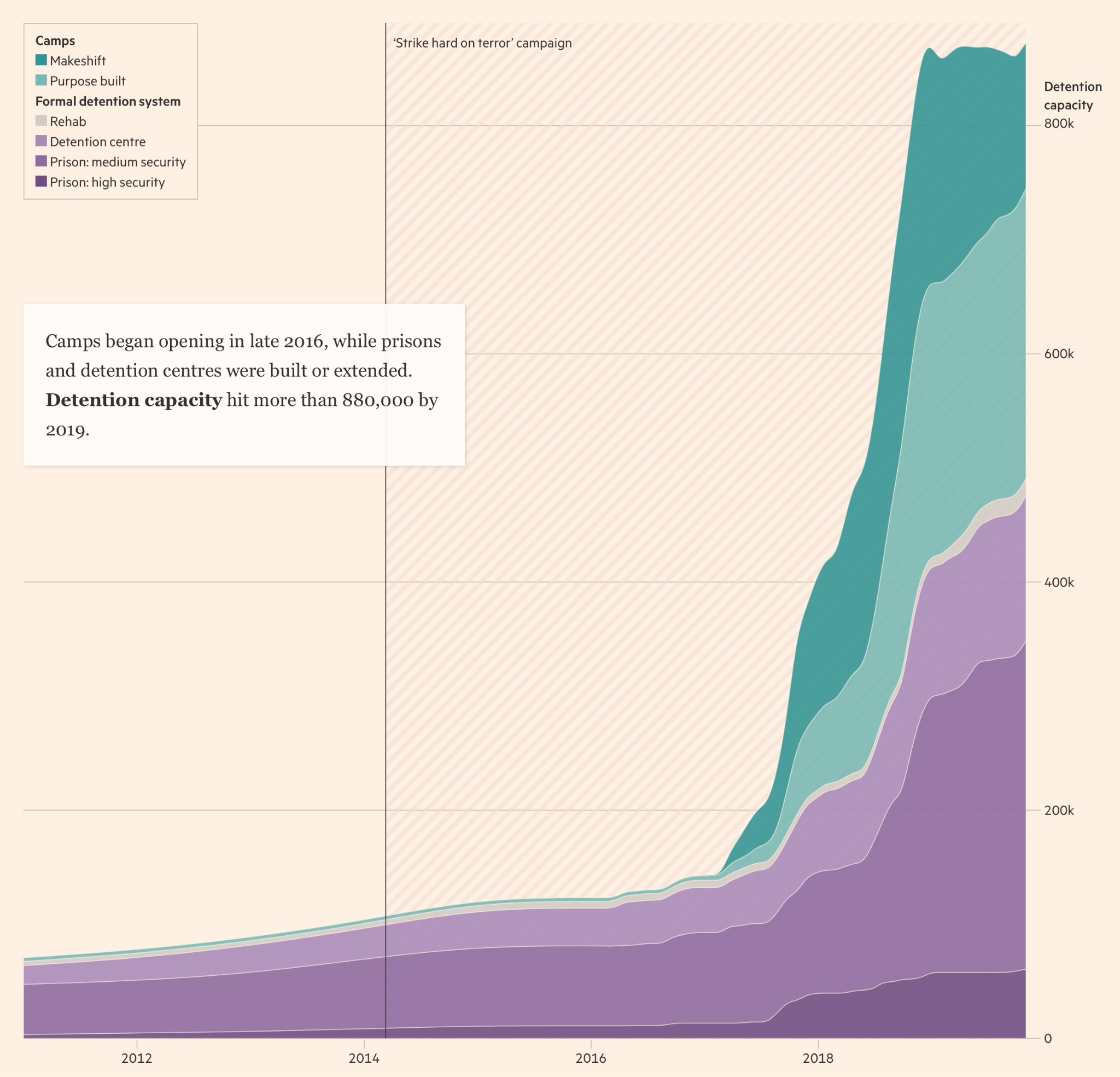
In late 2019 the Chinese government announced they were closing the camps which had drawn so much condemnation. Shohrat Zakir, Xinjiang’s governor, said detainees had “graduated”.
But FT analysis suggests that the Chinese state’s campaign of oppression against Uyghurs and their culture and identity has in fact entered a new phase. While many camps have shut, a vast network of prisons and detention centres remains, alongside pervasive surveillance and systems of coercive social control…
Beijing has expanded labour transfer programmes that move Uyghurs into factory work elsewhere in the country—schemes United Nations experts say can amount to forced labour. This places multinational corporations that work in China in a challenging situation, as Beijing is also making it increasingly difficult and dangerous for companies to perform due diligence in their supply chains so they do not target Uyghur rights.
The employment scheme is Beijing’s new priority, says Adrian Zenz, director of China Studies at the Victims of Communism Memorial Foundation, a US non-profit. The camp system acted as a “catalyst” for policies including “birth prevention, parent-child separation, boarding schooling . . . and labour transfer”.
What the state orchestrated through the boarding school system amounted to a “dramatic tearing apart of Uyghur society”, Zenz adds. He says children are separated from families at increasingly young ages, while the Uyghur language and cultural practices are heavily restricted.
Researchers say the campaign reflects Beijing’s drive to assimilate Uyghurs into mainstream Han Chinese identity amid rising nationalism under Xi Jinping.
Uyghurs’ distinct language, culture and Islamic faith create a “degree of insecurity that has only intensified as China has begun taking this profoundly nationalistic turn,” says historian Hannah Theaker. “They just want to force them to be Chinese,” adds Peter Irwin, co-executive director of the Network for Uyghur Rights.
Bringing Hope to America from Hungary
New York Times
Charles: Last month journalist M. Gessen won the Pulitzer Prize for opinion writing, and last week they proved again how richly they deserved it with a magnificent essay about the most important feel-good story of our time.
Gessen traveled to Hungary to witness the inauguration of the new prime minister, Péter Magyar and to dissect exactly how he was able to overwhelm the most entrenched authoritarian regime in the European Union: At the ballot box.
The story has a special urgency for everyone in America who is desperate to rid our nation of the monsters now running our government. Decent Americans are craving new ideas about how to do that, and that’s what Gessen’s piece offers us.
As Gessen wrote, Magyar’s victory over Viktor Orbán “was stunning—unique in our era of democratic backsliding—and it holds clear lessons for the United States.”
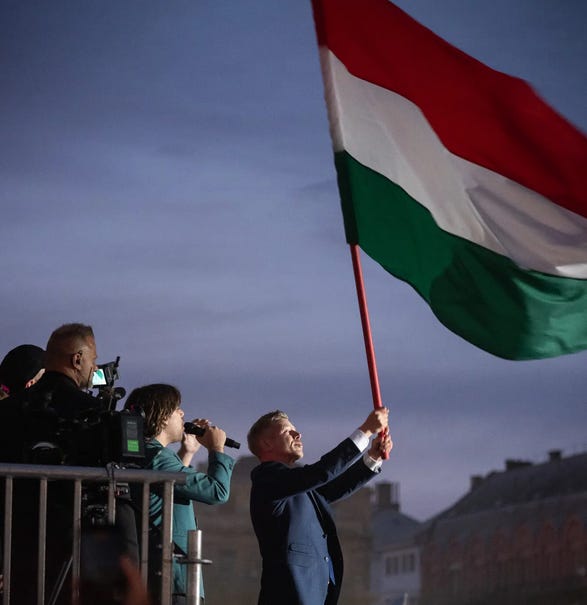
The best news here is that very old-fashioned politics can still triumph in an era almost fatally polarized and dumbed down by the algorithms of social media.
Magyar had traveled to an estimated 700 locations, turning many of them into “Tisza islands”—outposts of support for his party.
One obvious lesson of Magyar’s success lies in the scale, reach and relentlessness of his organizing network. “They had 2,000 Tisza islands with between 30,000 and 50,000 volunteers,” Balint Magyar told me, in evident awe. “Just in their call centers, they had 3,000 to 4,000 people in the last week of the campaign.”
This is another lesson of Magyar’s success: Old-fashioned in-person politics can be a powerful antidote to media fearmongering.
Magyar called Orbán’s Hungary a mafia state—a fundamentally criminal enterprise. Third lesson: Don’t mince words.
Magyar’s politics are aspirational and inspirational, a tone that is an antidote to the cynicism and vulgarity of autocracy. It is the opposite of, say, the approach taken by California’s governor, Gavin Newsom, who trolls Trump by trying to outperform him in the debasement of political language and political life
Like Zohran Mamdani, Magyar excelled at converting potential supporters into campaign volunteers.
It should be a particular source of joy for all of us that the last American to campaign in Hungary for Magyar’s opponent is the next man we most desperately need to consign to the dustbin of history: J.D. Vance.
My father, Philip Kaiser, was Jimmy Carter’s Ambassador to Hungary. As soon as he learned that this would be his next post, he resolved to convince Carter and Secretary of State Cyrus Vance that America needed to return the Crown of St. Stephen to Hungary.
The crown has been the symbol of Hungarian nationhood since the 12th Century. At the end of World War II, right-wing Hungarians delivered it into the hands of the US 86th Infantry Division in Austria in 1945. After that it languished in Fort Knox for 33 years.
My father believed the crown had to be returned to Hungary to increase its sense of independence from the Soviet Union when it was still part of the Soviet bloc.
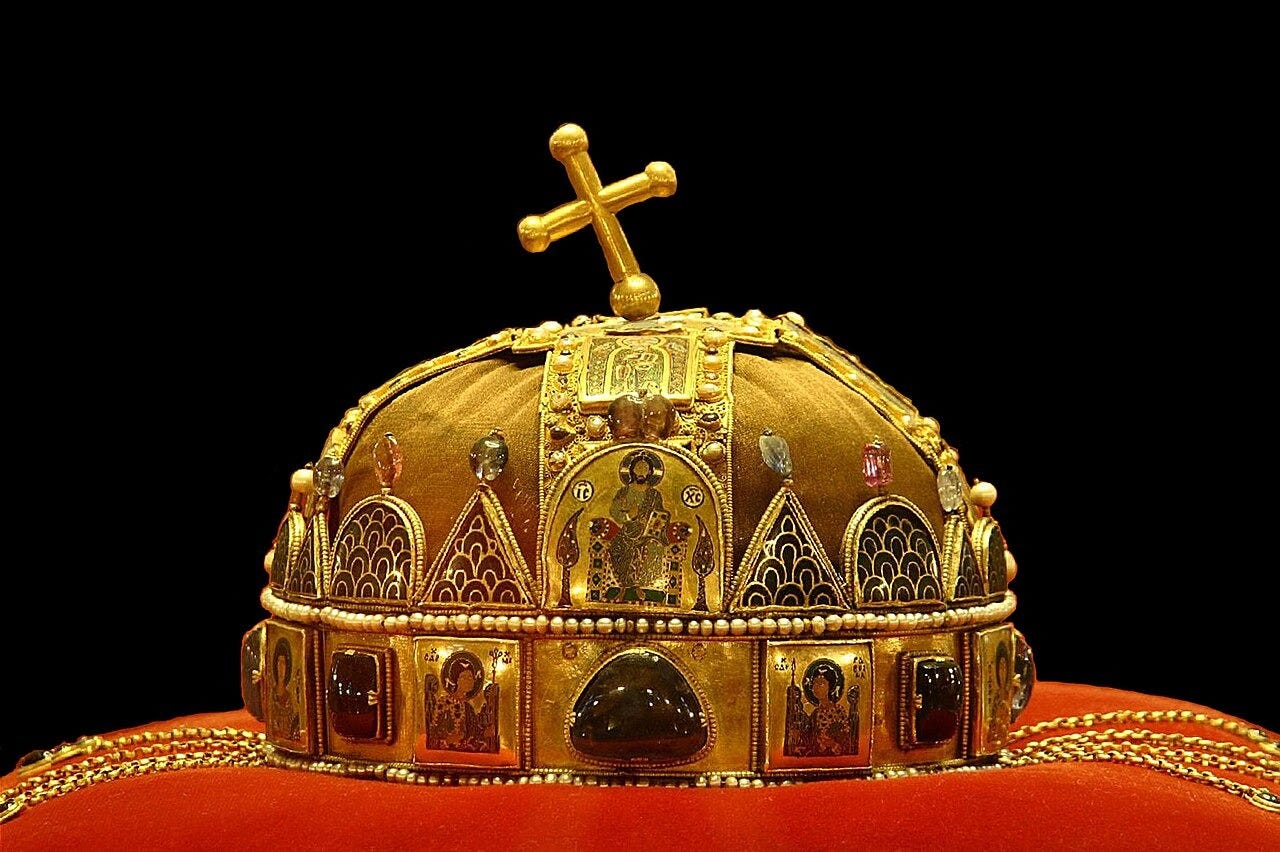
On Jan. 6, 1978, Vance and Kaiser returned the crown to Hungary. The Times reported, “Many Hungarians in the hall had tears in their eyes as they stood rigid and gazed at the crown, displayed on a red velvet cushion.”
My father died at 93 in 2007. He had been decorated by the Hungarian government, but he was already distressed by the right-wing path Hungary was embarking upon back then.
Nothing in the world would have made him happier than the triumph of Péter Magyar.
Nothing except the demise of Donald Trump.
Knowledge Is Power
Scott: I believe passionately that one of the really poor items in media coverage in the United States is science reporting.
I am routinely pulling things out from major science journals that are significant news in themselves but haven’t really been covered as news.
Try getting the news you need from Charles and I, free for two weeks.
