



The Moscow Hotline
TASS Russian News Agency
Scott: Donald Trump and Vladimir Putin love to chat, and these chats never seem to take the form of conversations between heads of state, at last not on the US side.
Protocol would usually provide that each side had an array of advisors present, an interpreter, a note taker. And it would provide that a careful synopsis of the conversation—known as a “readout”—is made available soon thereafter.
Putin observes these protocols. But for whatever reason, Trump does not. Indeed, he seems embarrassed when they are disclosed, as if there were some secrets he preferred to keep. A call occurred on Wednesday, and the Kremlin duly and promptly reported it (or at least some of it) to the public. But the White House did not.
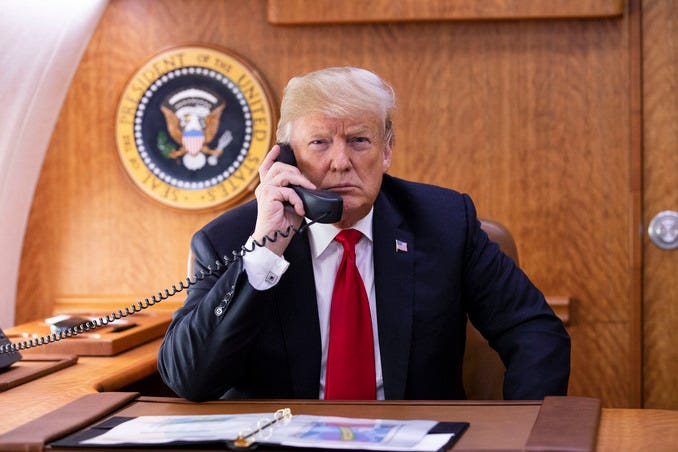
Russian President Vladimir Putin held a “frank and businesslike” phone conversation with his US counterpart Donald Trump, Russian Presidential Aide for International Affairs Yury Ushakov said.
During the conversation that lasted an hour and a half, the leaders discussed, among other things, Russia’s readiness to declare the Victory Day ceasefire, Ukrainian peace process and the situation in Iran. They also agreed to stay in touch, including personal conversations and talks at the level of aides and envoys.
Today’s call became the 12th phone conversation of the Russian and US leaders since Trump returned to the White House in early 2025. The previous one took place on March 9.
Below are key facts about the conversation between the leaders of Russia and the United States.
Russia’s readiness for May 9 ceasefire
Putin told US President Donald Trump that he is ready to declare a ceasefire during the Victory Day celebrations. “Trump actively supported the initiative, saying that this holiday marks our joint victory over Nazism in World War Two,” Ushakov said. In his words, the US leader “spoke positively of the Easter ceasefire, recently announced by Russia.”
Ukrainian conflict settlement
At Trump’s request, Putin informed his American counterpart about the situation in the special operation zone, where Russian troops “are holding the strategic initiative and pushing back the enemy positions.”
The Russian president told Trump that since the beginning of 2025, Moscow had transferred more than 20,000 bodies to Kiev, and received just over 500.
Trump told Russian leader Vladimir Putin that “a deal that would put an end to the conflict in Ukraine is already within reach,” Ushakov said. “The US president stressed the importance of bringing hostilities to an end as soon as possible, as well as his willingness to do everything in his power to facilitate this,” the Kremlin aide continued. “His representatives will continue to maintain dialogue with both Moscow and Kiev.”
“Both Vladimir Putin and Donald Trump have given broadly similar assessments of the behavior of the Kiev regime led by Zelensky, who is pursuing a policy of prolonging the conflict, encouraged by European countries and with their support,” Ushakov went on.
In his words, the Russian leader “said it unequivocally that Kiev resorts to openly terrorist methods, attacking purely civilian sites on the Russian territory.” “Our president reaffirmed that the goals of the special military operation will be achieved in any case,” Ushakov added.
He emphasized that Moscow would prefer achieving the goals of the special military operation through negotiations, but “for this to happen, Zelensky must give a positive response to the well-known proposals that have been put forward repeatedly, including by the United States.”
In Ushakov’s words, Putin expressed great appreciation for the personal efforts of US First Lady Melania Trump to reunite Russian and Ukrainian children with their families and asked the US president to convey his best birthday wishes to her.
Situation around Iran
The two leaders paid special attention to the situation in Iran and in the Persian Gulf.
“Vladimir Putin considers Donald Trump’s decision to extend the ceasefire with Iran to be the right one, as it should give negotiations a chance and help stabilize the situation in general,” Ushakov said.
“The Russian president drew attention to the inevitable, extremely harmful consequences not only for Iran and its neighbors, but also for the entire international community if the United States and Israel resort to violent actions again. And, of course, the option of a ground operation on the territory of Iran seems completely unacceptable and dangerous,” the Kremlin aide continued.
He added that “Trump outlined his assessment of the outcome of the recent phase of military confrontation, as well as his views on the difficult situation facing Iran and its leadership.”
Ushakov noted that, overall, “among the issues on the international agenda, the presidents focused primarily on the situation in Iran and the Persian Gulf.”
Attempt on Trump’s life
Putin conveyed words of support to his American counterpart Donald Trump over his most recent assassination attempt, strongly condemning the crime, “emphasizing [at the same time] the unacceptability of any form of politically motivated violence.”
Ushakov added that the date of the crime was emphasized in the conversation. The assassination attempt was carried out on the eve of the birthday of the American president’s wife Melania Trump, who was born on April 26, 1970.
Russia-US cooperation
The presidents of Russia and the United States also talked about prospects of mutually beneficial projects in the economy and the energy sector, Ushakov told reporters.
“When Russian-US relations were discussed, huge prospects of mutually beneficial projects in the economy and the energy segment were stated from both sides,” Ushakov said. “The whole range of large-scale initiatives in the economy, as the presidents noted, has already been discussed specifically between representatives of our nations.”
How Israel’s Scheme for Regime Change Boomeranged
Foreign Affairs
Scott: Israel’s leading Iran analyst, Danny Cirtinowicz, has completed a chronicle on Israel’s regime change scheme based on a assassinating major Iranian political and military leaders.
The scheme was put together, sold to Donald Trump, accepted by him, and implemented. The results, however, were very much the opposite of what the plan suggested—but they were precisely the results that most of the Israeli analysts expected.
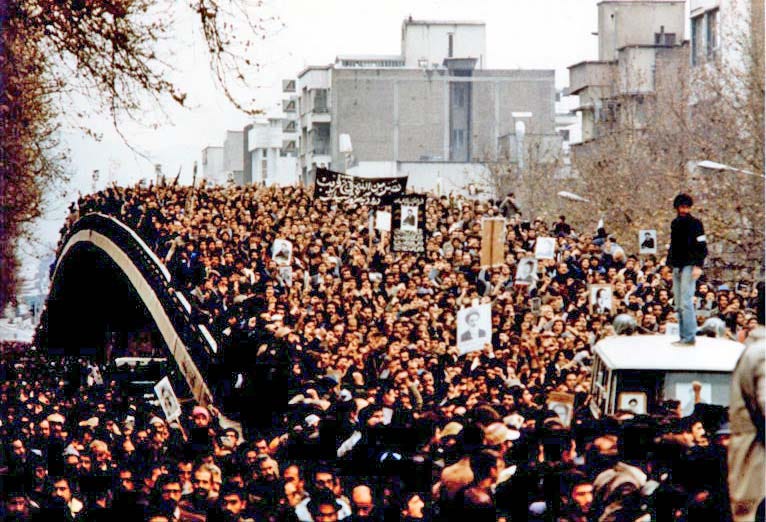
It didn’t have to be this way. The protests that erupted in Iran in late December—one of the country’s most serious waves of unrest since the 1979 Islamic Revolution—were only the most public illustration of a process of internal change that had been gaining momentum. The regime was under severe economic strain and faced profound popular discontent. Even after a January brutal crackdown on demonstrators, the government remained very fragile. In response, it had already begun to loosen some socially repressive policies and seek a deal with the United States that would exchange military and nuclear advancements for sanctions relief. But instead of accelerating that change, the US-Israeli war set it back. Khamenei’s death disrupted Iran’s evolution and provided the regime with an opportunity to consolidate. Paradoxically, the external pressure meant to topple the Iranian regime has helped preserve it.
The core error, says Cirtinowicz, came directly from Trump himself, who was ecstatic over the success of his Venezuelan operation. And once Trump had made this observation, no one on his team dared to question or contradict him.
Such a mindset and lack of understanding could lead to renewed war at a much higher intensity—inflicting far greater damage to the global economy and entangling Washington in a prolonged, potentially endless conflict. Or it could yield an agreement that provides Tehran economic relief, extending the life of a previously embattled regime and making it even more eager to exploit loopholes and advance its military objectives under the radar. Although Khamenei was an ideologue, he was not dogmatic. He was often wary of taking unnecessary risks and preferred to listen to all sides in strategic discussions. He proved willing to work with the Obama administration to reach a nuclear agreement; he hesitated to join Hamas in war after the October 7, 2023, attack on Israel; and he was cautious in responding to Israeli strikes in 2024. Most consequentially, although he advanced Iran’s nuclear program, he was reluctant to acquire nuclear weapons and even issued a fatwa against them.
