



How Elon Bought His Own Private Justice Department
New York Times
Scott: The hallmark of Trump 2.0 is the privatization of government. All instruments and agencies of government, especially those intended to regulate, are made to serve private interests—not merely the interests of the Trump family and its entourage. Also the interests of the tech bros, who decision to back Trump in his third run for the presidency gave it a decisive boost and returned him to power.
Elon Musk’s entire rise to be the word’s wealthiest man has been marked by brutal indifference to the environment, defiance of health and safety regulations, and the exploitation of minority populations, especially Blacks. This was simple the way things are, as he learned growing up in apartheid-era South Africa. A lesson that has accompanied him his entire life. Nothing better reflects Musk’s embrace of these operational principles than his Grok AI-related project in a heavily Black area of the Mississippi Delta. Both NYT and Wired have the story.
In an unusually aggressive move, the Justice Department told a federal court in Mississippi that Elon Musk’s artificial intelligence company, xAI, has the right to run dozens of polluting gas-burning turbines in the state despite not having permits for them.
The Justice Department late on Monday said that the court should throw out a lawsuit against xAI that was brought by the NAACP claiming that the turbines violate the Clean Air Act. The suit threatens national security by “seeking to shut off the power supply for artificial-intelligence innovation that supports the Department of War’s military operations,” according to the memo, which was signed by Stanley Woodward Jr., associate attorney general and the No. 3 official in the department.
The memo also argued that the federal government should have unchallenged authority to stop environmental lawsuits brought by private groups or individuals…
The NAACP sued xAI in April to challenge the company’s use of unpermitted gas turbines for data centers near the Tennessee-Mississippi border.
The lawsuit argues that the company was violating the Clean Air Act and is polluting Black neighborhoods near the facilities. The language of the Clean Air Act, the main law governing air pollution in the United States, says that individuals and groups can file what it calls “citizen suits” against companies or government agencies to compel enforcement of environmental laws. The suits have long been a mainstay for environmental groups.
What’s at stake here is the poisoning of the drinking water of a community of Black people. Does this actually even creep through all the techno-babble of the NYT coverage? On the other hand, the DOJ filings do appear designed to boost the value of SpaceX as it launched its IPO, turning Musk overnight into the world’s first trillionaire. Musk’s success in the biggest pump and dump scam since Crédit Mobilier is apparently a high priority for DOJ.
And note that DOJ makes this into a “national security” matter by claiming that Musk’s Grok AI has been assisting the war effort against Iran with targeting. The consequence of this? The DOJ has turned the xAI facility into a perfectly legitimate military target for the Iranians, should the war effort resume… as well as other Musk operations within their reach.
Trump Corruption Watch
ICE Systematically Overpaid For Warehouses
Business Insider
Charles: ICE was given billions to spend on warehouses it was supposed to turn into detention centers, and it vastly overpaid for almost all of them, from New Jersey to Utah.
As Jess Craven points out, the most egregious example is in Social Circle Georgia. There the PNK Group, controlled by Russian-born Andrey Sharkov, purchased land in Social Circle for $29.4 million. Then it built a warehouse. The following year ICE bought it from his company for an astonishing $128.6 million.
This nationwide scandal has continued almost completely under the radar of the MSM.
Yesterday, The New York Times reported the Department of Homeland Security is now “planning to offload seven warehouses purchased for more than $700 million by either giving them to other federal agencies or selling them outright”--including the one in Georgia.
The Time story said “as soon as the agency bought the warehouses, local communities began to rebel, including in conservative areas that worried about the toll on local utilities and the economy, and the potential to draw protests. Even Republican politicians wrote to homeland security leaders urging them to turn away from the idea in their communities.”
Incredibly, The Times story makes no mention whatsoever of the vast over-payments for most of the warehouses.
How St. Petersburg’s Underworld Shaped Putin’s ‘Mobster Mindset’
The Times
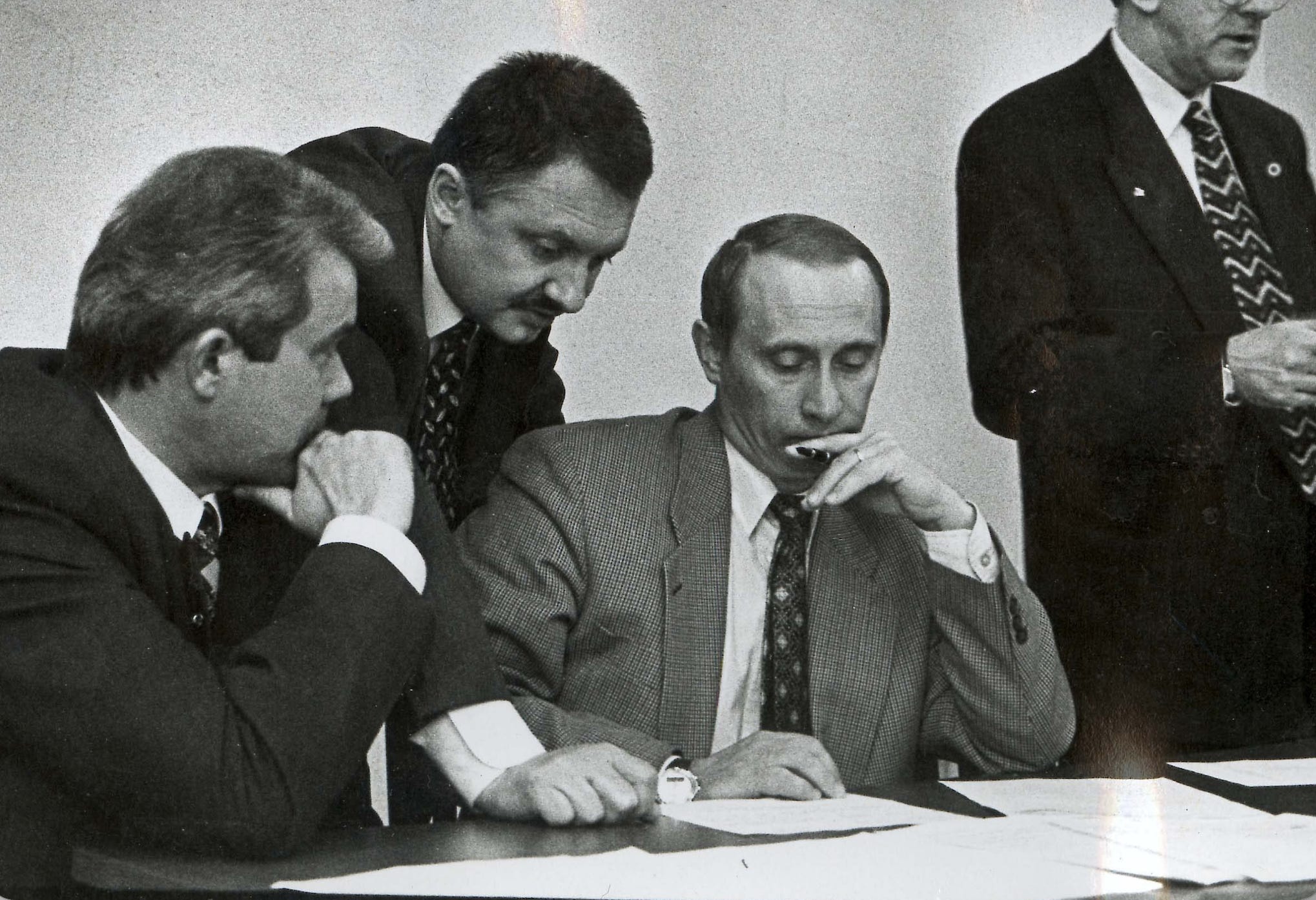
Vladimir Putin, St Petersburg, 1994. After years of running influence operations from an office in Dresden, the young KGB lieutenant colonel comes home.
Scott: Especially after the collapse of the USSR, the Russian spy services and the mob were just two sides of the same coin. Remarkably few westerners have any appreciation of that fact. But this exposé, drawing on the criminal case involving Russian contract killer Ilya Traber develops their trajectory very effectively. And without some understanding of this you really can’t appreciate how Putin thinks and operates.
Traber, a former naval officer who served on a Soviet nuclear submarine, forged ties with the powerful Tambov crime group in St Petersburg in the 1990s, Russian opposition journalists say. Putin issued licences for Traber to take control of the city’s lucrative port and oil terminal on behalf of the gang, according to Putin’s People, a book by the British author Catherine Belton.
Yuri Shvets, a former senior KGB officer, told a court in London in 2015 that Putin and his ally Viktor Ivanov helped to turn the port into a hub for smuggling drugs from Colombia to western Europe. Ivanov, who went on to lead Russia’s anti-drugs agency, denied the allegations.
