



China’s Biggest Ally? / AI and Espionage / When Third Rate TV Stars Rule The Skies / China Rising
How Jensen Huang Built the Backdoor Route That Keeps Beijing in the AI Race
Wall Street Journal
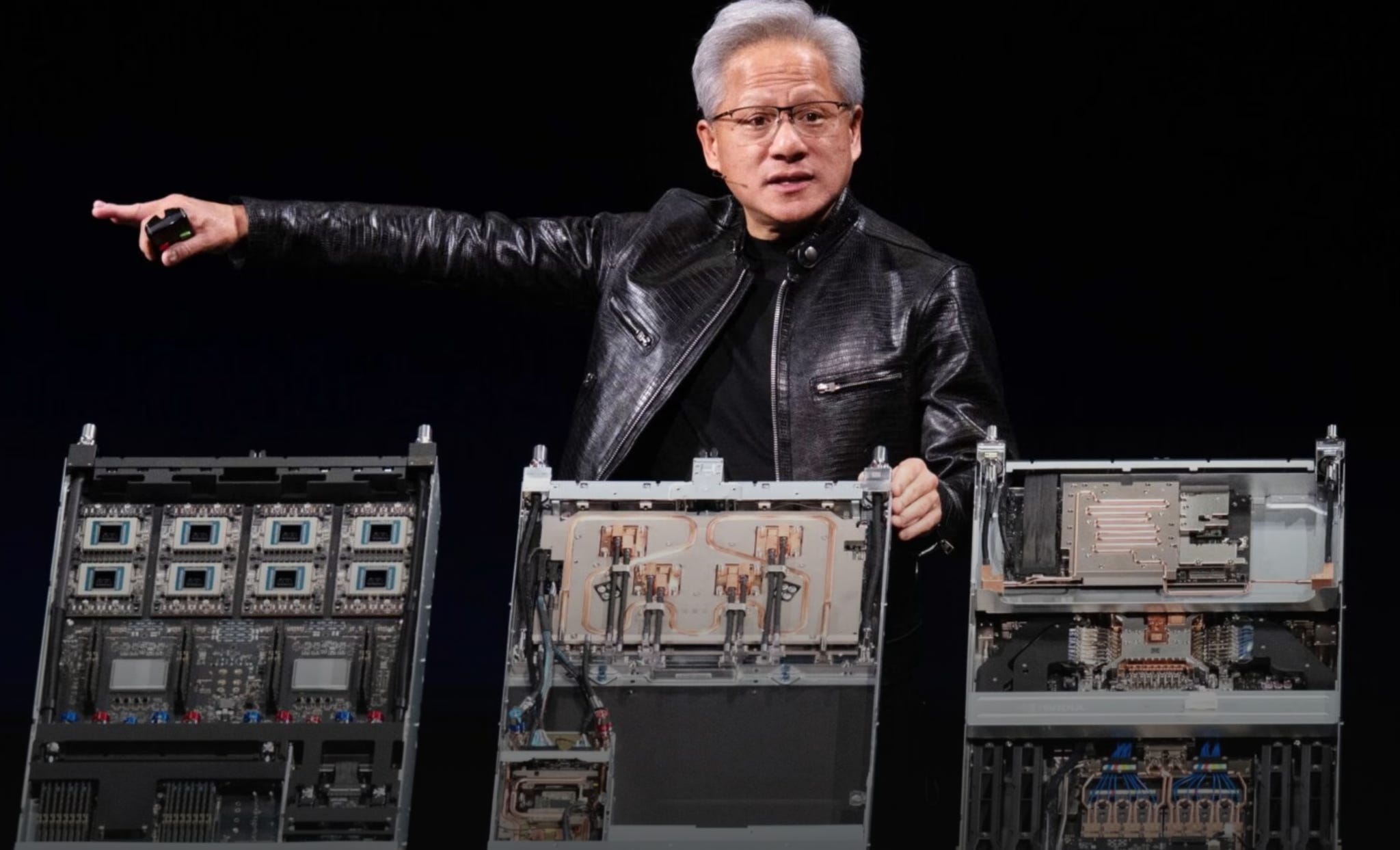
Jensen Huang making a presentation in Taiwan earlier this year. Photo: Lam Yik Fei/Bloomberg
Scott: Nvidia is a sort of matryoshka doll of scandals. On the outside is a scandal of sexual dalliances, a marriage betrayed, a corporate executive dipping his quill in the corporate inkwell and being caught at it. In the inner layer is a story of extremely savvy and well-executed corporate espionage by the Chinese intelligence services, hellbent on erasing their critical technology deficit in the construction of chips (the one sector indisputably dominated by the Americans). And at the core is a story of government corruption gone wild: how government officials at the highest levels (particularly Commerce Secretary Howard Lutnick and President Donald Trump) betrayed their country’s clearly defined interests at the lure of personal, private gain. Each of these stories is worthy of a feature length motion picture. And ultimately the story at the core is the most fatal one for the United States. It’s remarkable how few commentators in US corporate media are capable of unraveling and understanding these three strands.
But WSJ has done a very good job here of unfolding the background of Jensen Huang’s relationship with China and how it led to his ineluctable downfall.
Huang built a multibillion-dollar business to feed the ravenous appetite of Chinese customers for American chips, cultivating a network of Asian partners who could serve the Chinese far from Washington. He made a friend of President Trump and lobbied Washington hard to keep the backdoor to China open.
China jumped to take advantage of the avenues Trump didn’t close. Its AI developers exploited the Nvidia chips they desperately needed to catch up with America’s leaders, either using smuggled chips or accessing them remotely in places like Malaysia.
Revelations about Huang’s affair with an executive at one of those Asian partners—a possible Chinese intelligence asset—didn’t just blow up his career. They now threaten to implode the entire lucrative ecosystem he built in Asia to get China the chips it needed.
Nvidia reported $12.4 billion in China revenue in the six months through July 26 of this year, or 7% of its global revenue, and analysts say that countless more billions of dollars ultimately trace back to Chinese customers. By the estimate of Culper Research, the short-selling firm that flagged Nvidia’s China issue in May, more than 20% of Nvidia’s revenues last fiscal year were driven by China.
In Southeast Asia, “Chinese demand is responsible for the massive scale of data centers,” said James Chai, a researcher at Iseas-Yusof Ishak Institute in Singapore.
Huang’s downfall has set off a groundswell in Congress to halt the workarounds that allowed him to get Chinese business. Commerce Secretary Howard Lutnick has come under fire because he was seen as close to Huang and advocated a light touch on chip exports—a position that is now losing support within the Trump administration as the Commerce Department looks at tougher rules to curb China’s access to Nvidia chips.
The White House said this past week Trump “maintains complete confidence” in Lutnick. A Commerce official said that Lutnick and Huang don’t have any kind of special relationship beyond the commerce secretary wanting a good rapport with one of the most important U.S. companies.
Records seen by The Wall Street Journal show Megaspeed—the company of the former Nvidia CEO’s onetime mistress, Alice Huang—arranged to send nearly $12 billion worth of top-of-the-line Nvidia chips to companies in China between March 2024 and June 2025. Nvidia says it works to prevent smuggling.
In response to the Journal’s inquiries, Megaspeed said it conducts lawful business and designs its supply chain to comply with regulations including U.S. export controls. Megaspeed said it has retained external legal counsel to conduct an internal investigation. It said Alice Huang left the company in August 2025.
The shipment records show orders for several hundred thousand chips, the very ones that the U.S. wanted most to keep out of Chinese hands through export controls, though the records don’t show how much of the hardware was actually delivered or where it originated.
Huang was unapologetic in pushing to sell as many chips to Chinese clients as possible even as his American customers were racing to stay ahead of Chinese rivals. The CEO’s effort to persuade Trump to allow direct exports of Nvidia’s high-end chips to China was mostly unsuccessful, despite policy flip-flops and headlines on the subject. But the workarounds, including remote access to overseas data centers, made up much of the gap.
Has Nvidia Exposed the Scope of Chinese Industrial Espionage in the United States Today?
San Francisco Standard
Scott: As Kash Patel’s nomination was on the way to the Senate, FBI supervisors deliberated whether the Judiciary Committee needed to know that he had been identified as a person of interest in suspected influence operations being run by the Chinese and Russian intelligence services. Indeed, Kash had been caught taking substantial sums of carefully filtered money from both. In earlier days this would have disqualified anyone from a senior post in the intelligence community—much less from the oversight of the country’s largest counterintelligence operation. But Republican senators quickly made clear that they were unconcerned.
When Patel took over, his first acts included decimating the nation’s counterintel operations, firing and forcing into retirement hundreds of agents. Hundreds more were dispatched to chase after waterboys as a part of Trump’s immigration crack down. Russian and Chinese counterintelligence was particularly hard hit, and the Bureau’s capacity on the west coast, which tracked industrial espionage in Silicon Valley, was devastated.
Russian and Chinese spies now enjoy a golden age in the United States, able to travel places and do audacious things that would previously have been judged unthinkable. The whole Nvidia scandal furnishes good evidence of this fact.
Roderick Jones writes:
Jensen Huang’s resignation from Nvidia after reports of an affair with an alleged Chinese spy is being treated as a one-off scandal. But it’s not. In the past year, my private security firm, which is staffed largely by former intelligence and law enforcement officers, has handled a number of cases in which senior executives at U.S. technology companies had relationships with women who we came to believe were working for Chinese intelligence.
The artificial intelligence industry has a security problem that it does not yet fully understand. U.S. companies are building technology with massive commercial and national security value, but their defenses against foreign intelligence are, in most cases, nowhere near good enough. At the same time, the FBI counterintelligence squads that should help protect these companies are badly understaffed; some agents have been reassigned to focus on the administration’s political priorities, while others have been purged. The result is a widening gap between how much the technology matters and how well it’s being protected.
The FBI’s counterintelligence posture is an important part of this picture. NPR reported in October that in many of the bureau’s 56 field offices, counterintelligence squads are only 50%-60% staffed, as agents and analysts have been shifted toward fighting violent crime and enforcing immigration laws. The FBI disputes that this has weakened its counterintelligence operation. But it’s hard to believe these kinds of cuts haven’t affected China-focused efforts — and they come at a time when U.S. AI and AI-adjacent firms are more at risk from foreign interference than ever.
Investigating crime is important, but moving experienced personnel away from counterintelligence is a dangerous trade. Counterintelligence investigations are exceedingly complex and depend on accumulated knowledge and specialized judgment built over decades. That expertise is easy to lose and slow to rebuild. The history of intelligence shows that political purges take years to recover from.
After 9/11, for example, the FBI redirected large numbers of agents away from white-collar crime to counterterrorism. By the time the 2008 financial crisis hit, the bureau had fewer people to investigate mortgage and securities fraud — one reason so few of the people responsible ever faced charges.
In this new environment, technology companies can’t assume that government agencies will spot a suspicious relationship or intervene before valuable information leaves the organization. They need their own insider-risk programs to recognize foreign interference and respond. But in my experience, much of the industry treats protection against espionage as an extension of conventional cybersecurity or physical security, rather than what it is: a distinct investigative discipline that must operate across the whole business, from the engineers writing code to the data centers and supply chains — and, as the Huang case shows, must reach all the way to the top.
OpenAI had some success this year when its internal teams found bugging equipment (opens in new tab)planted by a Saudi national; however, in most cases, the affected company either has no security team or has the wrong kind, and the warnings come from a worried colleague. That’s lucky, but not a sustainable defense.
One reason companies miss these operations is that foreign interference rarely feels urgent. A death threat creates an obvious reason to act. A relationship that gradually opens access to sensitive information can look ambiguous or commercially useful or be too uncomfortable to question. Executives may hesitate because they fear disrupting a commercial partnership or creating an internal controversy. To be blunt: Spies don’t often look like spies…
Ultimately, the AI boom has made American tech companies some of the world’s most valuable intelligence targets. Their defenses have failed to keep pace, and the government agencies that might have caught what the companies miss are looking elsewhere. Much has been made of the U.S. retreat from Europe’s defenses. Less noticed is the U.S. retreat from protecting its own technology companies.
Is American Civil Aviation in Crisis?
New York Times
Scott: Only a few hours before America was rocked by an FAA four-hour long grounding order that continues to reverberate across the country, NYT published a small masterpiece by James Fallows that looks at the malaise surrounding civil aviation. It offers a perfect contextualization of the current dilemma. Is there a crisis in the FAA? Before the FAA ground order, few would have accepted that. Afterwards, most do. But what exactly is the nature of the dilemma? That’s not so easily articulated, and indeed in a series of public appearances we saw clearly that neither DHS secretary Markwayne Mullins nor Transportation secretary Sean Duffy could do so. For both of them, the crisis was little more than an opportunity to pursue established agendas: using the public stage to sing the praise of their Leader, or demanding more money to fix the problem—without actually identifying the problem or explaining how the money would be spent to fix it. It was a demonstration of the very worst in managerial incompetence.
One aspect of the crisis lurks in the background, and America’s tech-bro dominated media really doesn’t want to touch it—and that is the fierce internal competition among the tech bros for the multibillion dollar contracts that a technological overhaul of the FAA entails. Key contenders in the first tier are Elon Musk, Peter Thiel and Marc Andreessen—three of the most powerful tech bros who now encircle and guide Trump.
Why has the Department of Transportation made so little progress in addressing the problem and awarding contracts? That’s in large measure because the conflict in the first instance involves framing the problem and deciding on the technological approach to resolving it. And Thiel, Musk and Andreessen have distinctly different approaches which are framed by their proprietary technological interests. Duffy and Mullins fear being crushed in a food fight between tech bros. Indeed, it’s now safe to say neither of them even really has a clue about the technological issues that are engaged. Duffy after all launched his career as a male stripper before he became a reality TV show star, and Mullins, who never got a college education, found his highest calling as a plumber in greater Tulsa.
We now live in an age in which highly technical government agencies, which should be run by people with at least some technical aptitude, are instead managed by charlatans selected because they look good on Rupert Murdoch TV. That’s really the core of the current crisis.
Not long ago, Americans were living through a historic era of airline safety. Over nearly a 16-year period, starting Feb. 12, 2009, after a commuter jet crashed on an icy night near Buffalo, the major U.S. airlines handled a total of some 10 billion passenger journeys. And of those 10 billion souls, not a single one was lost to a crash. This achievement — the longest disaster-free period ever for U.S. air travel — was on par with the government-led effort to create a polio vaccine in the 1950s or the Apollo project that put the first human beings on the moon. It came to an end on Jan. 29, 2025, when an Army helicopter and an American Eagle commuter jet collided over the Potomac River.
The Potomac crash happened during airline rush hour at Washington’s Ronald Reagan National Airport. The two-person cockpit crew on the jet was following controllers’ instructions for a change in its assigned landing runway. The three people in the Army helicopter had allowed it to drift higher than its assigned altitude and did not see the inbound jet until an instant before they flew straight into it. The two aircraft plunged into the icy river; all 67 people aboard both were killed.
When safety measures fail and a plane goes down, or even when there’s a frightening close call, the National Transportation Safety Board leads the effort to find out how the “accident chain” was started, and why no existing safety measures stopped it. Its investigators interview everyone with any connection to the flight, from mechanics to gate agents. They recover the black box, with precise flight data from the aircraft, and listen to the cockpit conversations. They prepare flight-simulator recreations of what pilots would have seen out their windows and on their instrument panels. They take their time, often a year or more, in trying to provide the best-available answer to the central question: Why did people die?
Air travel has become so safe in large part because of a profound commitment from the people in charge to learn from tragedies — what aviation experts call “lessons written in blood.” In 1956, the Eisenhower administration responded to an airline collision over the Grand Canyon by beginning the decades-long process that would eventually make U.S. airline travel one of the safest forms of transportation the world has ever known. In 2009, the Obama administration responded to the Buffalo crash by overseeing a new set of reforms. With the Potomac crash of 2025, another reckoning was at hand. It would be up to the Trump administration to learn from this lesson written in blood.
But the Trump administration has displayed an extraordinary unwillingness to learn new lessons, and in some cases it seems to be unlearning the old ones. In a news conference following the crash, President Trump complained that the N.T.S.B. method was too slow, and he said he already had a good idea why people had died: D.E.I. hiring practices during the Obama and Biden administrations.
When the N.T.S.B. did release its findings a year later, it found that the culprit was not D.E.I. The immediate problem was the traffic jam of aircraft in the narrow air corridor between National Airport and restricted airspace over the White House and the Capitol, as helicopters and airplanes vied for operating space.
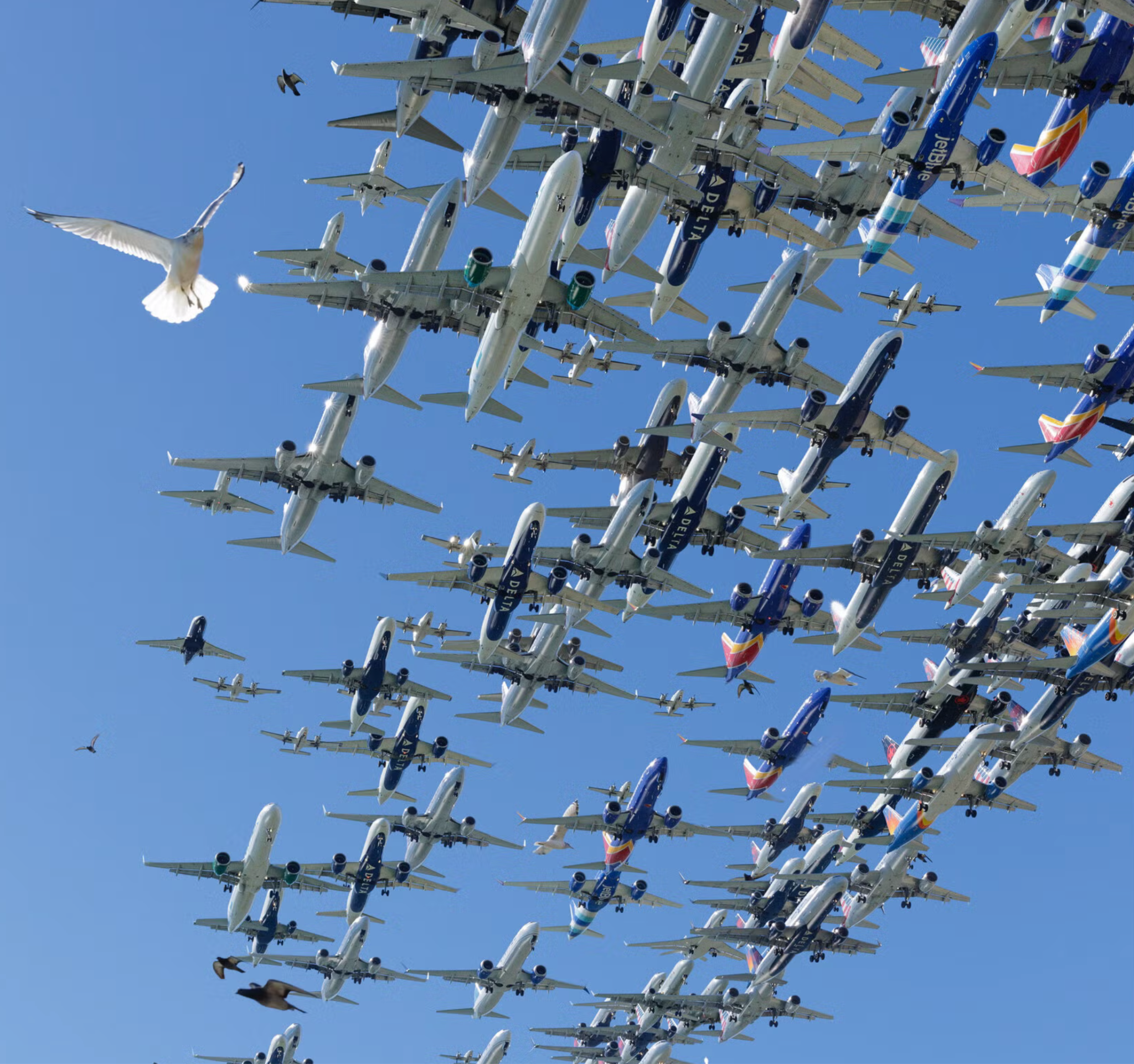
Beyond that was a broader context. (One that the national ground stop on Nov. 13, the day after this article was first published, would make plain.) Air traffic control facilities were chronically understaffed, and decades of deregulation and falling fares had resulted in overcrowding. Aircraft at the most in-demand hubs were taking off and landing back to back, often using authorized shortcuts to speed up traffic flow. Some of those shortcuts have led to disaster, and after the Potomac crash, the N.T.S.B. recommended 33 separate equipment and procedure changes that the F.A.A. should undertake to make future such accidents far less likely.
But more than a year and a half after the Potomac crash, the F.A.A. has not implemented one-third of these recommendations, a response the N.T.S.B. categorizes as “unacceptable.” (The F.A.A. told me that it is still evaluating how to address the other recommendations.)
When I asked Jennifer Homendy, the chair of the N.T.S.B., about the current state of the recommendations, she was blunt. “Recommendations alone don’t save lives,” she said. “Action does. And the sooner those changes are made, the safer our skies will be.”
Over the past 22 months, the rate of airplane accidents and close calls has suggested a system under enormous strain. Here is an incomplete list of the incidents we’ve seen in the months since the Jan. 29, 2025, Potomac crash:
March 5, 2025: Debris from a failed SpaceX rocket launch affects civilian airliners.
Nov. 24, 2025, Louisville, Ky.: An engine rips away from a UPS cargo jet on takeoff, killing all three members of the flight crew and 12 people on the ground.
Dec. 12, 2025: A JetBlue flight diverts to avoid a military tanker that had turned off its transponder as part of an operation in the Caribbean, the first of several such episodes.
Feb. 27, 2026, San Antonio: A police helicopter crosses the path of a plane cleared for landing. March 2, 2026, Burbank, Calif.: A TV news helicopter wanders into the path of another landing plane. March 22, 2026, New York: An Air Canada jet strikes a fire truck that was cleared to cross its path at LaGuardia Airport, killing the two Air Canada pilots.
May 17, 2026, Idaho: Two Navy EA-18G Growler electronic-warfare planes collide during the “Gunfighter Skies” air show.
July 15, 2026, Pensacola, Fla.: A Navy Blue Angels demo flight comes dangerously close to civilian spectators.
Aug. 4, 2026, Washington: Marine One takes off toward the path of a departing regional jet. Sept. 6, 2026, Miami International Airport: A cargo jet subcontracting to Amazon overshoots a runway on landing and kills five airport employees in an airport van.
This is an extraordinary series of lapses, by any measure.
The world according to China
Financial Times
Scott: The summit in Shenzhen will be the highlight of the coming week. For months, Vladimir Putin has dreamed of this summit. He envisions a modern replay of the Yalta Conference of Feb 1945, in which Roosevelt and Stalin redrew the map of Europe, highlighting American and Russian zones of interest in the wake of the defeat of the Axis Powers. This is made possible, in his view, by the successful placement of a Russian stooge, Donald Trump, in the American White House. Xi, however, has been decidedly cool to the idea. After all, in his mind, things are already going very well for China. He steadily achieves his major objectives. And according to some in his entourage, his favorite bit of wisdom has been this: “When your enemy is in the process of making serious mistakes, by all means, don’t interrupt him.” China’s major rival is the United States, and under Trump the country has entered into a mental fog—it is confused, easily distracted, lacks a clear definition of objectives, and is easily led astray through the tools of corruption and misdirection. China, indeed, has never had it so easy.
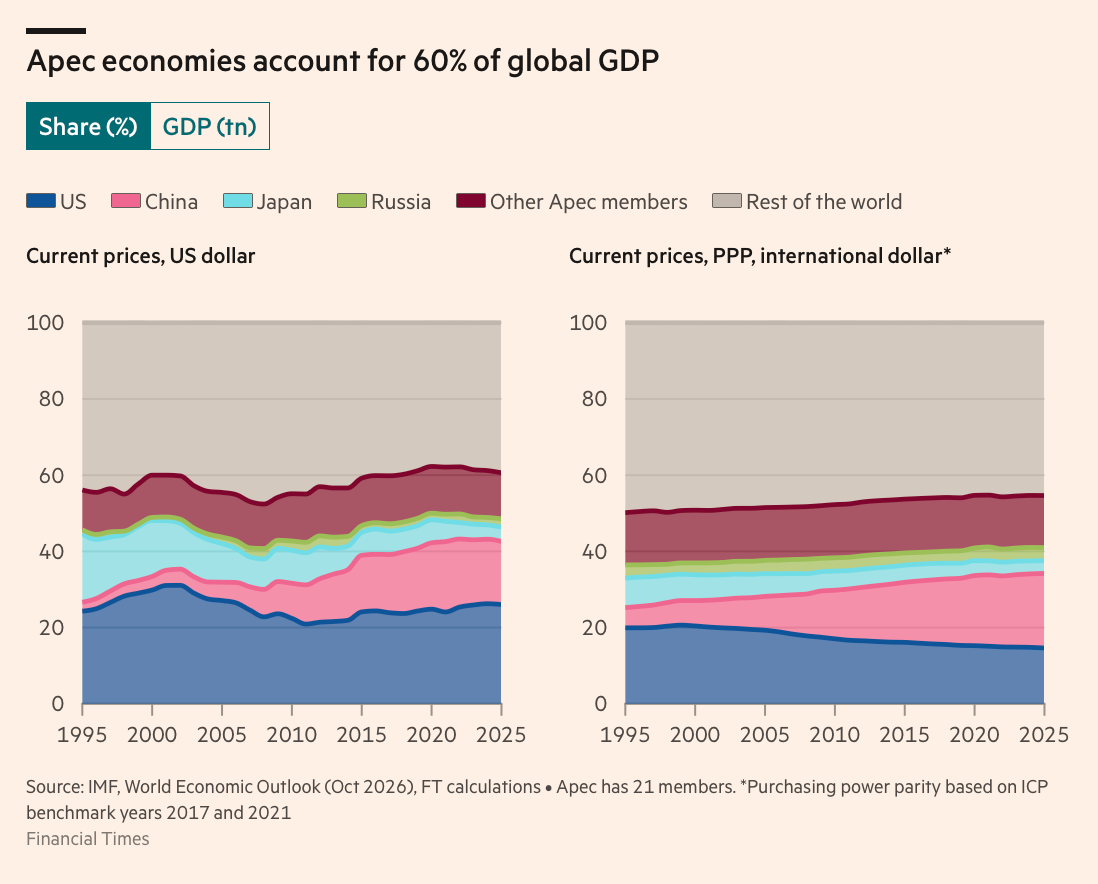
In Shenzhen this week, global leaders will experience first-hand what it might be like to live in a world led by China if the US one day cedes its hegemony and the liberal international world slides into terminal decline.
The Asia-Pacific Economic Cooperation summit to be held in the glittering south China technology hub will be one of the most tightly controlled since the 21-member organisation began meeting in 1989, say people familiar with the matter.
With US President Donald Trump and Russian leader Vladimir Putin expected to be among the guests, the meeting has been heavily truncated. Unlike usual arrangements for such summits, there are no informal “retreats” for leaders to interact informally.
Instead, leaders will have to travel 20 minutes for bilateral meetings with their host, China’s President Xi Jinping, at the palatial Kylin Villa, a state guesthouse nestled in lush hills beside Shenzhen’s tiger safari park, according to people familiar with the matter.
The heavily abridged forum — which diplomats grumble seems designed to reduce the free-flowing discussion characteristic of prior editions — comes as Beijing increasingly portrays itself as the centre of the multilateral system, filling the leadership vacuum left by the US under the Trump administration.
But while Chinese analysts hail Beijing’s growing push to change the global order to better represent developing countries, collectively known as the global south, western analysts and diplomats question whether Beijing’s version of multilateralism fits the usual understanding of the term.
The Shenzhen Apec meeting — the first to be held in the country since 2014 — is a good illustration of how China emphasises the appearance of global harmony while reducing the space for genuine international debate and joint decision-making, they say.
While espousing multi-polarity, they argue, China is laser-focused on the underlying great power competition. The real business of the Apec meeting, for example, is expected to be a potential trilateral meeting between Xi, Putin and Trump, and a bilateral session between the US and Chinese leaders, their third since May.
Leonid Meteors Through Orion

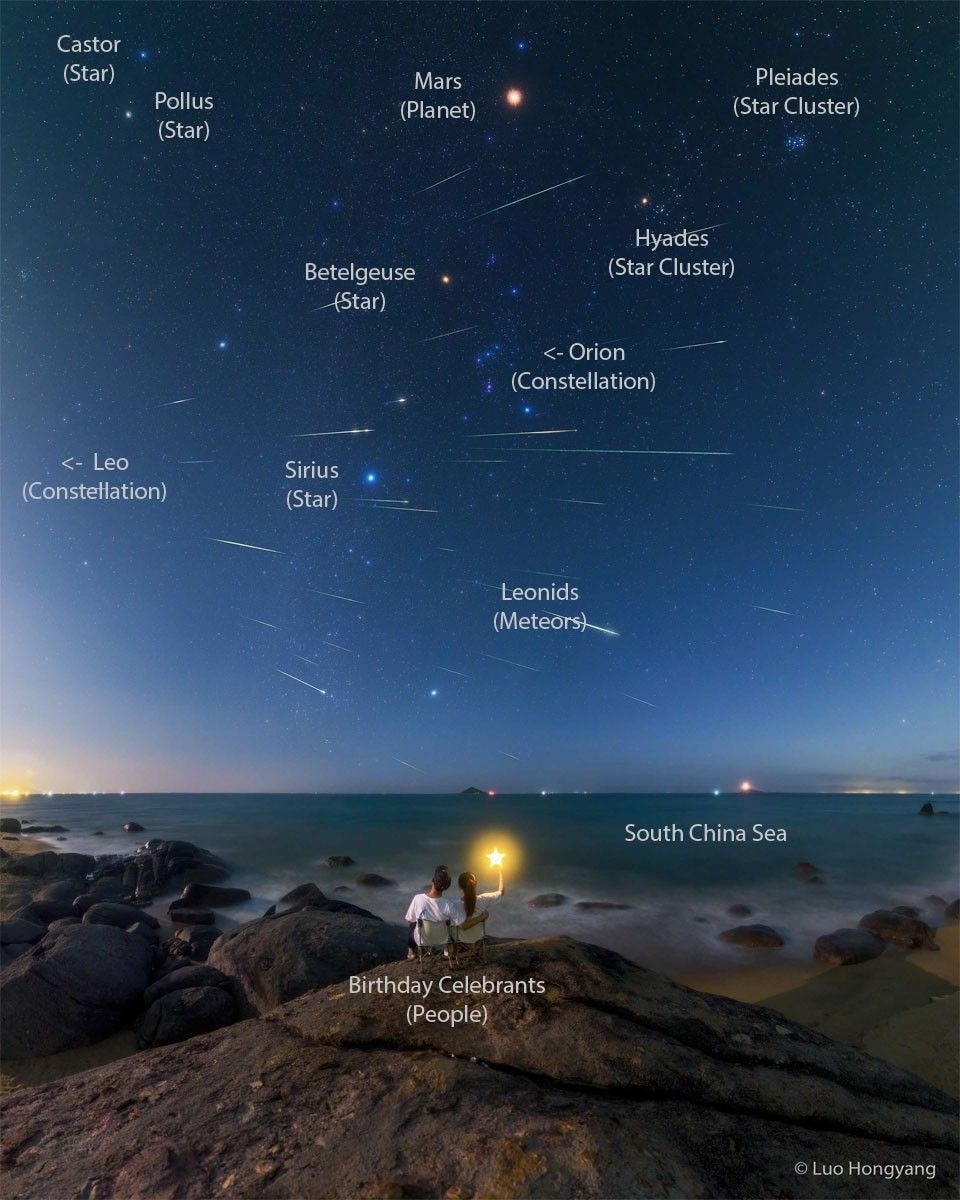
OriginalAnnotated
Explanation: Where will the next meteor appear? Even during a meteor shower, it is practically impossible to know. Therefore, a good way to enjoy a meteor shower is to find a place where you can sit comfortably and monitor a great expanse of dark sky. And it may be satisfying to share this experience with a friend. The meteor shower depicted was the 2022 Leonids and the view is from Hainan, China looking out over the South China Sea. Meteor streaks captured over a few hours were isolated and added to a foreground image recorded earlier. Leonid meteor streaks trace back to the constellation of Leo and were here seen streaking across the constellation of Orion. The bright red planet Mars appears near the top of the image. The Leonids peak in mid-November every year and so will peak again this week. Bonding over their love of astronomy, the two pictured meteor enthusiasts, shown celebrating their common birthday this month, were later married.
Photo: Luo Hongyang
Your Online Moment of Zen
Untitled
Mark Rothko
1968
The Kunstmuseum Den Haag, The Hague

Thank you for this valuable information and your expertise
good reading to help us gird for the week ahead as Trump travels to Asia with Lutnick and Bessant....