



The War Between the States, Trump Edition
New York Times
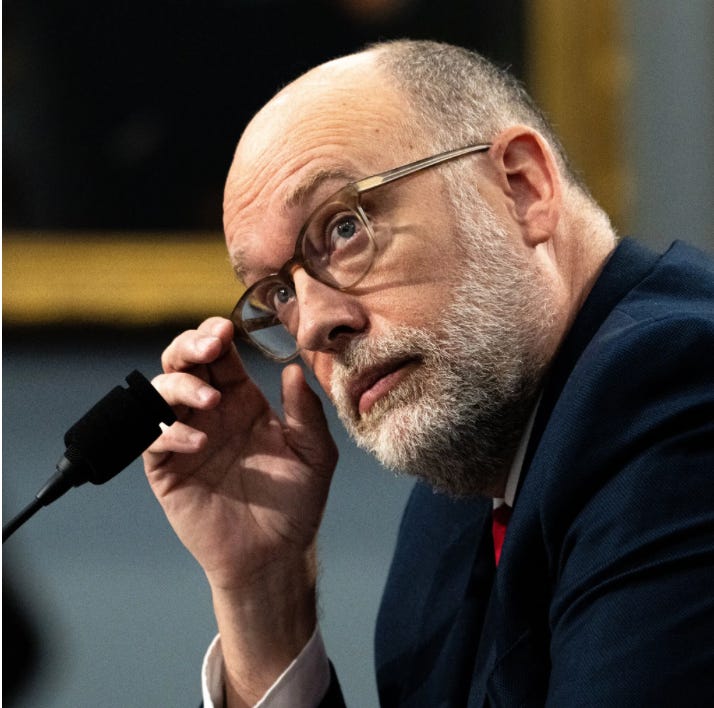
Russell Vought, Trump’s master tactician for civil war. Photo: Alex Kent/NYT
Scott: If you were intent on fomenting a new civil war in America, exactly how would you go about this? From the Cold War era forward, first Soviet and then Russian intelligence services focused vast resources on pursuing exactly this. They had a series of strategies, involving the recruitment of agents fitting a certain profile, studying regionalist movements for secessionist tendencies and identifying closely held animosities that could be accentuated. A study submitted to the Russian Duma of which I secured a copy showed that Russian intel identified white Evangelicals, gun enthusiasts, neo Nazi white supremacist youth groups and corrupt politicians all as particularly fertile and useful resources in this respect, and indeed a series of NBC reports done around the time of Trump’s first run for the presidency, on which I consulted, showed extensive recruitment efforts targeting each. But this is a focus on “outsiders.” What would you do if you had the reins of government in hand?
The most effective way to destroy a democracy would be to let people know that the government no longer serves the people as a whole, but rather only a small subset, pulled out on ethnic, racial, regional or religious grounds. And this precisely is what Trump is now doing. In the area of government services to the people, Trump is deciding that this means government services only people who support Trump. Hence decisions to terminate social security payments to states that “do not go after medicare fraud.” Never mind that medicare fraud is a federal crime, investigated and prosecuted by the federal authorities. And never mind that Florida and Texas, the two reddest states, are the epicenter of medicare fraud in the United States. In Trump’s vision, this means Minnesota and California must be shortchanged, because they are blue states. And now we learn that in court filings, Trump isn’t even trying to disguise the fact that he has stripped grants away from recipients simply because the state in which they live voted for Kamala Harris and not for Trump in 2024. That indeed has been installed as a formal rule of decision.
When the Trump administration canceled more than $7.5 billion in Biden-era federal grants for clean energy projects in October, it framed the move as an urgent corrective to protect taxpayer funds from waste. But it wasn’t true.
In little-noticed court documents, federal officials acknowledged this month that they had terminated the funding “based solely” on political criteria, targeting projects in states that were represented by Democrats and had voted for Kamala Harris, the party’s presidential nominee, in the 2024 election.
The admission showed how President Trump has weaponized the provision of federal education, energy, health, housing and infrastructure aid in his second term. Far from rooting out the sort of misspending that Mr. Trump sees as rife in Washington, the White House has instead sought to leverage the budget as a tool to assist its allies — or as a cudgel to hurt the president’s foes.
The saga illustrates the stakes as the Trump administration is completing a set of rules that would provide the president even greater control over more than $1 trillion in annual federal grants. To critics, the new regulation would only make it easier for Mr. Trump to strike wider tranches of congressionally approved funding over political differences.
Immoral, Impractical, Inhuman
New York Times
Charles: Those are the three I’s that define every important policy move of this administration.
The fourth one is Idiotic.
There are so many reasons to be enraged every day it’s hard to rank them, but the Supreme Court decision to eliminate the Temporary Protected Status of hundreds of thousands of immigrants from Haiti and Syria and El Salvador is certainly one of the top five of the summer of 2026.
Seventy percent of them are in the American workforce.
Like every generation of immigrants who came before them, these are the people who work the hardest to give America what it needs the most–from harvesting to hospital care and a thousand other things that make the great American engine work.
So naturally the Dimestore Gambinos running our government have made them one of their principal targets, just because most of them are not white.
Miriam Jordan and Madeleine Ngo explain:
A recent Supreme Court ruling cleared the way for the Trump administration to end a humanitarian program that has allowed about one million immigrants to work legally in the U.S. Around Washington, Salvadoran-born crews have helped renovate, rebuild and maintain the Capitol, the Pentagon and Arlington National Cemetery. In senior living facilities in Florida, Massachusetts and New York, Haitian caregivers assist aging Americans with daily activities.
These workers are among more than one million people who have been allowed to live and work in the United States under a decades-old humanitarian program, and who now face the prospect of deportation.
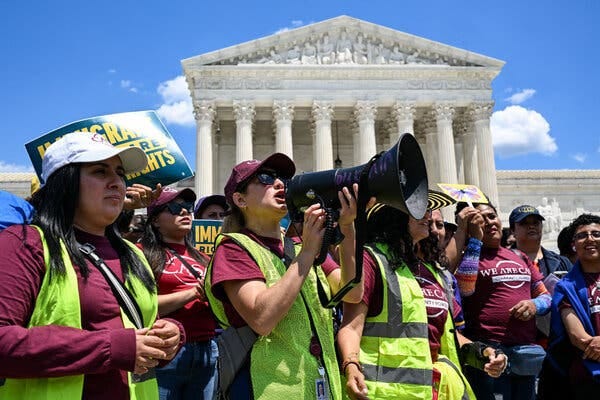
The Supreme Court decision last month allowing the Trump administration to end Temporary Protected Status for immigrants touched off protests outside the court.
Last month, the Supreme Court cleared the way for the Trump administration to end Temporary Protected Status, as the humanitarian program is known, and now industries are bracing for the loss of vital workers.
About 70 percent of T.P.S. holders were participating in the U.S. labor force, many in construction and health care, according to an analysis by researchers at the University of Pennsylvania.
But on Monday, about 350,000 T.P.S. recipients from Haiti and several other countries will lose their work permits in the first wave of fallout from the Supreme Court ruling. About 190,000 Salvadoran beneficiaries could be next to lose their status when it expires in September.
“For particular places and particular industries, tens of thousands of workers no longer able to legally work is going to be a very big hit,” said Alexander Arnon, the director of policy analysis at the Penn Wharton Budget Model, a nonpartisan research organization that has analyzed the economic impacts of T.P.S. workers.
Mastering the Art of Intimidating Journalists
The Guardian

Scott: At this week’s adjourned White House Correspondents Association dinner, participants were treated to a one-hour speech by Trump that was a curious mix. It was brimming with petty malice against individual named journalists. But it was also remarkably incoherent and difficult to follow. Trump’s obvious objective in these efforts is simple, classic authoritarian intimidation. But at the end of the day, he wants to internalize redlines within the profession, insuring that criticism is restrained before it can do any damage. Is his effort effective? The answer seems to be yes. The Guardian summarizes a new government-backed study of UK journalists and finds they have been effectively conditioned to mute their criticism of Trump.
Journalists are self-censoring their reporting on rightwing protests, Donald Trump’s administration and trans issues because of growing concerns about their personal safety, with newsrooms accused of “normalising” the risks they face.
Hundreds of journalists from across the UK have anonymously disclosed increasing nervousness over their security. Some have reported avoiding or altering coverage on certain topics due to intimidation, leading to self-censorship and “a narrowing of the public conversation”.
The findings are revealed in a government-backed investigation into the safety of journalists, ordered amid growing hostility to traditional media across the west.
“There have definitely been times where there’s been a story that’s maybe in the public interest, maybe worth reporting on, where we have had frank discussions about whether it’s ‘worth it’,” said one journalist.
A War Destroying Agriculture All Over The Globe
New York Times
On Sunday’s front page of the Times Peter Goodman gave us a superb takeout about the worldwide agricultural catastrophe produced by Donald Trump’s wholly unnecessary war on Iran.
In Bangladesh farmers can’t get the diesel fuel they need to irrigate their crops because of the closure of the Strait of Hormuz. The same problem affects farmers in the Philippines, Vietnam, Indonesia, Myanmar, Nigeria and Ethiopia, where nearly all irrigation pumps are powered by diesel.
The war has also caused an electricity crisis in Bangladesh, where two thirds of the electrical grid is powered by natural gas, much of it imported from Qatar and Oman. Faced with a national shortage, the government has prioritized urban zones while inflicting blackouts in rural areas.
Which makes Trump literally the first president ever to make whole regions go dark, tens of thousands of miles away from America.
As the war in the Middle East limits the supply of energy worldwide, millions of farmers are contending with scarcity and higher prices for fuel, threatening their access to irrigation and menacing the food supply. Faced with depleted harvests, many rural households in Asia and Africa are borrowing to cover the costs of cultivation, challenging their ability to produce future crops.
In much of the world, the closure of the strait has blocked shipments of food and fertilizer, making prices much higher.
Countries like Somalia and Sudan are suffering extreme hunger and even famine, as the crisis lands atop drastic cuts to the international relief system.
Yet even in countries that have enjoyed improving living standards and a relative abundance of food, a reversal of fortune is now unfolding. Experts worry that higher costs of irrigation could dissuade some farmers to plant.
“If this diesel crisis continues, farmers might not be interested in continuing to invest,” said Zakir Hossain Khan, an economist and co-founder of Change Initiative, a global research institution focused on sustainability.
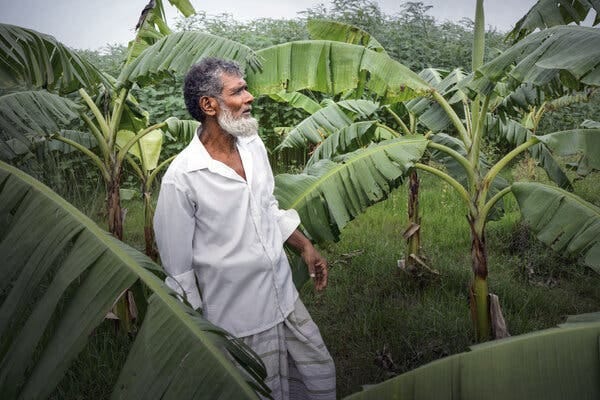
Fabeha Monir for The New York Times
When Dulal Hossain harvested his rice last month, he wound up with barely one-fourth the usual volume. Credit...Fabeha Monir for The New York Times
Inside RFKJr’s MAHA Grift: How It Works
Financial Times
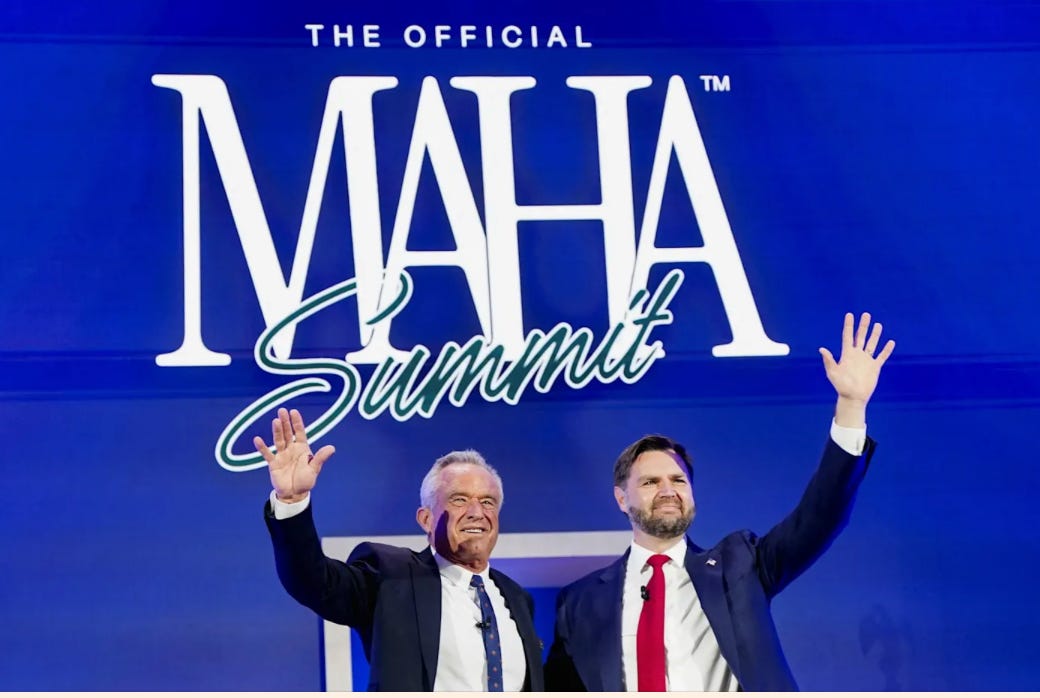
Robert F Kennedy Jr, left, and vice-president JD Vance at a Maha conference in Washington in November that set the stage for the regulatory overhaul now taking shape Photo: Nathan Howard/Reuters
Scott: RFKJr continues to stack FDA advisory panels with charlatans and snake oil salesmen. This week, he added eight new members to a six-member FDA advisory panel. Six of the eight were peptide vendors, and the seventh a compounding pharmacist. Within hours, the newly appointed members overrode the existing panel to clear the way for the sales of peptides. This is a huge business venture in which RFKJr and people in his immediate entourage are deeply involved. Here, the Financial Times studies exactly how this grift is operated and who profits from it.
Businesses tied to Robert F Kennedy Jr’s Make America Healthy Again movement are poised to benefit from a regulatory overhaul in Washington, as companies aligned with his agenda emerge as its earliest winners.
At a two-day meeting at the US Food and Drug Administration on Thursday and Friday, a Kennedy-backed advisory panel voted to broaden public access to a handful of drugs known as peptides, despite the agency’s scientific staff advising against it.
Wall Street analysts say the market for the drugs — which have gained popularity through social media claims ranging from rapid healing to muscular development — could grow into a multibillion-dollar opportunity for pharmacies, telehealth providers and drugmakers.
While President Donald Trump has drawn scrutiny for promoting cryptocurrencies and other businesses linked to his administration, less attention has focused on healthcare companies that could benefit from regulatory shifts under Kennedy. Now, a parallel “Maha Inc” kaleidoscope of companies and industries whose prospects are tied to the White House’s healthcare agenda is emerging.
One likely beneficiary is Enhanced Group, a telehealth company whose investors include Donald Trump Jr. It is preparing to sell peptides and its founder and chair, Christian Angermayer, appeared at a Maha event in November. Enhanced did not respond to a request for comment.
Olympia Pharmaceuticals, a Florida-based pharmacy that also appeared at the conference, has made multiple contributions to a Maha political fundraising group operated by one of Kennedy’s close associates, including one payment just a month after the FDA said it would consider loosening restrictions on peptides.
Olympia’s chief executive is also on the Maha group’s board of directors. Olympia also stands to benefit from the regulatory changes, according to investment bank Needham.
The FDA panel was “stacked” with people from the pharmacy industry who stand to benefit from the regulatory changes for peptides, said Paul Kim, a partner at consultancy Kendall Square Policy Strategies. “The conflicts here are astonishing,” he said. “It is political theatre at this point.”
Other sectors featured at the Maha conference have also benefited from regulatory changes under Kennedy. Companies developing psychedelic therapies and wearable health technologies are also poised to benefit from regulatory changes he has championed.
The Tour de France By The Numbers
New York Times
Charles: Before the throngs of over-heated Frenchment got to to see the 184 riders of the Tour de France, at every stage their first entertainment came from 170 cars and floats throwing packets of sausage, chips, pasta, gummy bears, coffee, socks, polka-dot hats, oven mitts, tote bags, key chains, bandannas–and cheese–into the crowds.
Eighteen million freebies.
David Segal reported all this for The Times. He “sweated at three stages of the Tour de France for this article”--something we would have had the good taste to omit, back in the day.
“It’s ‘Lord of the Flies’ out here,” said Andrew Jones, who had come from Ireland on vacation with family. “I just saw two guys wrestling on the ground over a bucket hat.”
The tour is controlled by one French family–the Amaurys–and they don’t share because they don’t have to.

About 300 cities apply each year to become a stop on the Tour — the 2,000-mile route changes annually — and chosen ones pay A.S.O. about $160,000 for the honor. Local authorities and the French government also help cover the cost of road closings and about 28,000 police officers and firefighters.
In return, the towns get what amounts to the greatest commercial in the history of tourism. Television coverage of the Tour amounts to hour after hour of riders pedaling through gorgeous landscape and postcard towns. It’s a highlight reel, broadcast in 190 countries, with one billion live viewing hours worldwide. For host cities collectively, the attention yields a windfall estimated at $900 million.
The Tour amounts to the greatest commercial in the history of tourism for France, with television coverage showing riders pedaling through gorgeous landscapes
Sponsors pay for the eight riders each team fields; the average rider salary is about $440,000, though stars earn far more. Support staff number 30 people and up. Then there is the cost of food, which is often cooked by a chef in a mobile kitchen. In return, the sponsors get media exposure that has been estimated to be worth tens of millions of dollars.
Sponsors pay to have their names on metal barricades. This year, Barcelona paid an estimated $11.5 million for the rights to host the Grand Départ, the opening stage of the Tour.
After World War II, the French government seized the race from the previous owner, who had collaborated with the Nazis. Then, in 1956, Émilien Amaury, the founder of Le Parisien Libéré, another newspaper, and a partner bought the rights, in perpetuity, for 20 million French francs, according to Alex Duff, author of “Le Fric: Family, Power and Money: The Business of the Tour de France.” That is the equivalent of about $700,000 in inflation-adjusted terms, a huge number for a trophy asset that in the days before television was losing money.
In 1965, Mr. Amaury bought out his partner’s stake, and he was succeeded by his son, Philippe, who died in 2006, leaving the company in the hands of his widow, Marie-Odile. By all accounts, she is formidable and unyielding.
Tranquility and Serenity
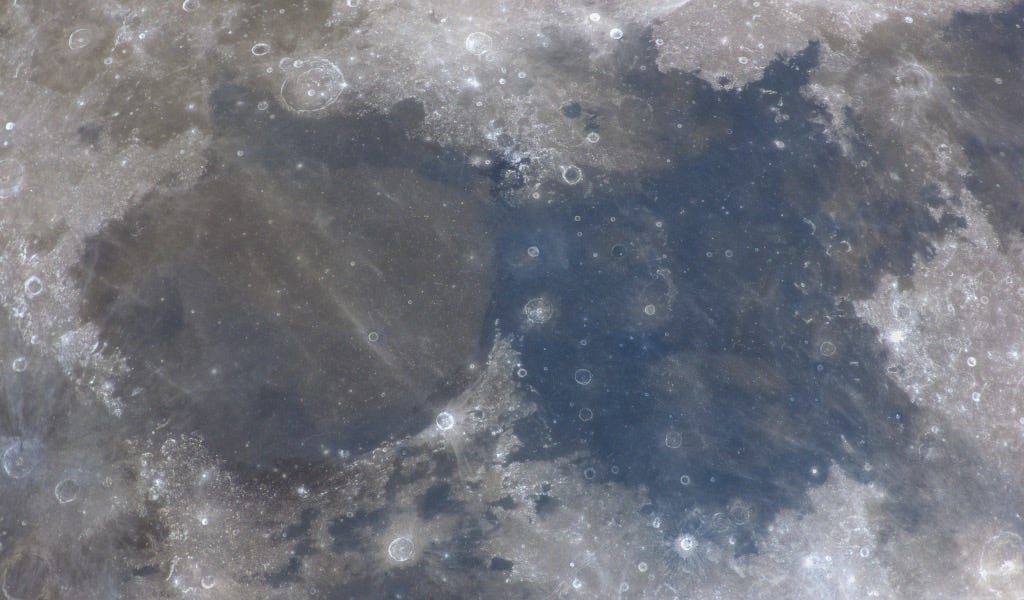
Image Credit & Copyright: Nyêrdson Ferreira
Explanation: The Seas of Tranquility and Serenity are calm today. They’re calm most every day though, since they are actually lunar maria, ancient lava flows filling in large impact basins on the Moon. Also known by Latin names Mare Tranquillitatis (right) and Mare Serenitatis, the smooth dark lunar “seas” are in stark contrast to the bright cratered lunar highlands surrounding them in this telescopic view. Of course their names are based on the historical, pre-telescopic designations of lunar maria. Easily visible to the unaided eye, the broad features on the Moon’s near side were imagined to be like the expansive oceans of planet Earth. On July 20, 1969, the Apollo 11 lunar module Eagle touched down on the Mare Tranquillitatis (at lower right), establishing Tranquility base and the first human presence on the Moon.
Your Online Moment of Zen
Heaven Must Have Sent You
Performed by The Elgins, it reached No. 9 on the Billboard R&B chart and No. 50 on the US Billboard Hot 100. Popular on the Northern soul scene in the UK, it was reissued in by Tamla Motown in 1971, and reached No. 3 on the UK Singles Chart.
It was written by Lamont Dozier and brothers Brian and Eddie Holland—the three songwriters of the ‘60’s and 70’s who gave us more joy than almost all other songwriters put together.
Come and Get These Memories,” recorded by Martha and the Vandellas, was the first H-D-H composition, in 1963. After that they had an unbelievable and unmatchable string of blockbusters, including these:
“Baby Love” (1964) (in three different places on one jukebox in the favorite joint for Yale undergraduates that year—just in case your 5th beer made it harder to find it))
“Where Did Our Love Go?” 1964
“Stop! In the Name of Love” (1965)
“You Keep Me Hangin’ On” (1966
“Come See About Me” (1964)
“I Hear a Symphony” (1965)
"You Can't Hurry Love" (1966) (My Number 1 Motown song of ALL TIME)
“Love Is Here and Now You’re Gone” (1967) – A striking single featuring spoken-word elements and dramatic minor keys. [1, 2, 3, 4, 5, 6]
“Reach Out I’ll Be There” (1966)
“I Can’t Help Myself (Sugar Pie Honey Bunch)” (1965) – A joyful, high-energy eternal staple of 1960s soul.
“Bernadette” (1967)
“Standing in the Shadows of Love” (1966) – A dark, urgent warning track anchored by heavy funk-inflected bass work.
“Baby I Need Your Loving” (1964) – The bittersweet breakout tune that introduced the group’s signature sound.
“It’s the Same Old Song” (1965) –
“(Love Is Like a) Heat Wave” (1963)
“Jimmy Mack” (1967)
“How Sweet It Is (To Be Loved by You)” (1964) – Smoother melodic soul originally recorded by Marvin Gaye.
“This Old Heart of Mine (Is Weak for You)” (1966)
“Band of Gold” (1970)
In the fall of 1966 I moved from a mansion in Kensington to the Loomis Scool in Windsor, Connecticut, the saddest journey of my life. For the next two years, Heaven Must Have Sent You and a one hundred fifty other songs kept me alive until I moved to New York City, where I was reborn.
)<iframe width=”560” height=”315” src=”
title=”YouTube video player” frameborder=”0” allow=”accelerometer; autoplay; clipboard-write; encrypted-media; gyroscope; picture-in-picture; web-share” referrerpolicy=”strict-origin-when-cross-origin” allowfullscreen></iframe>