



Zelenskyy Is Defiant / The Ballroom Is A Huge Pay for Play / US Lifts Sanctions on a Dubious Venezuelan / America’s Worthless Promises
Zelenskyy defies Trump as Ukraine resumes strikes on Russian refineries
Financial Times
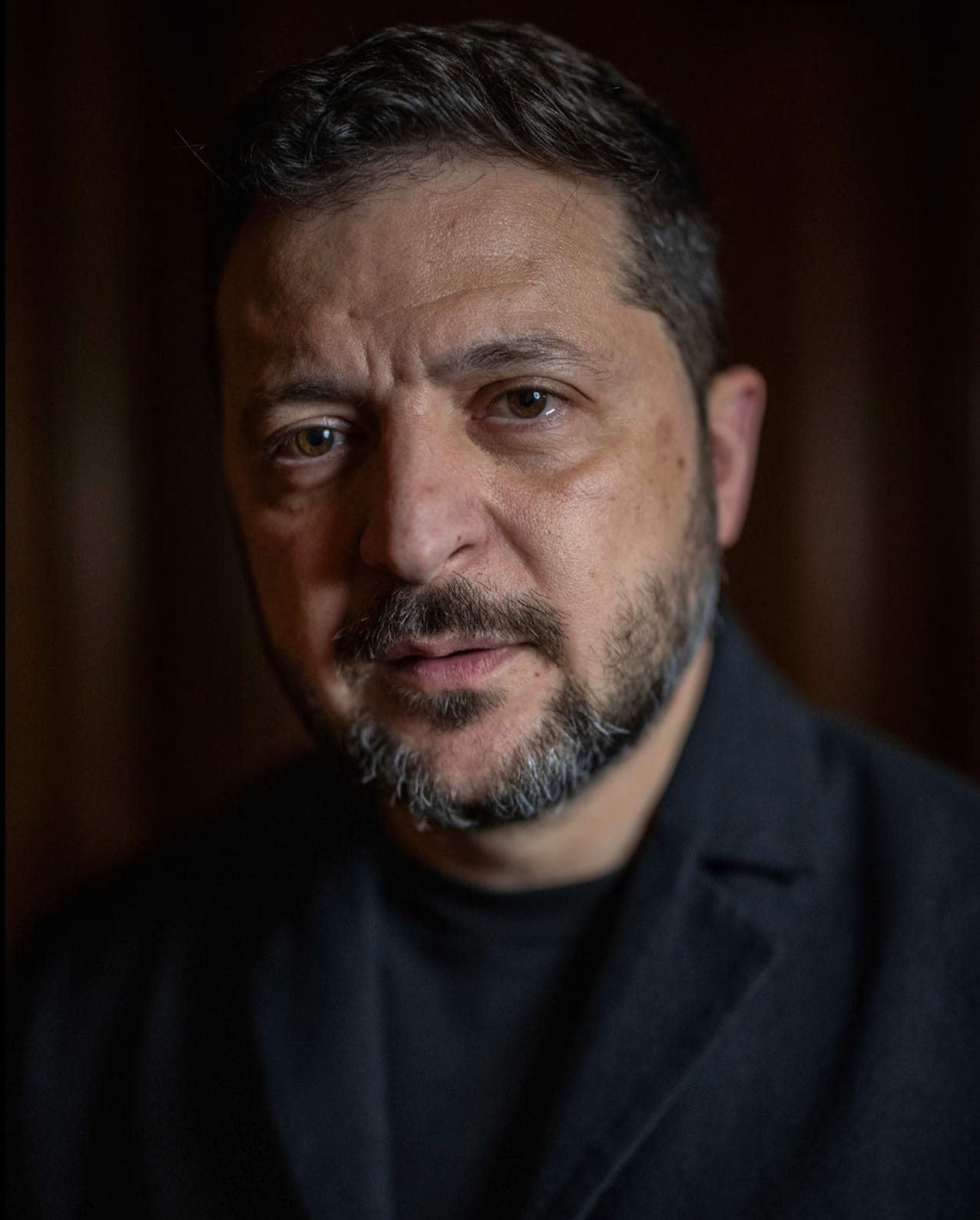
Volodymyr Zelenskyy: ‘The block [on attacking refineries] is out. We’re done’ © Charlie Bibby/FT
Scott: Over the last forty-eight hours, Elon Musk and Donald Trump have been competing for honors as to who can do more to betray Ukraine. By rights, Zelenskyy should be in a state of furor and striking back. But unlike both Musk and Trump, Zelenskyy is a serious and important person in world historical terms. And in an interview with the FT, he offers up a remarkably sober and astute take on who Trump is and what he’s doing. It’s something to which the US corporate media should pay attention, but won’t.
President Volodymyr Zelenskyy has said Ukraine will restart strikes on Russia’s oil refineries as he expressed anger over a “dangerous” withdrawal of US intelligence and simultaneous weakening of Starlink satellite internet service at a time of intense Russian attacks.
“The block [on attacking refineries] is out. We’re done,” Zelenskyy said in a defiant interview with the FT in London. He also lambasted Washington’s eagerness to strike business deals with Moscow and President Donald Trump’s apparent admiration for Russia’s Vladimir Putin. Asked to explain the two leaders’ relationship, Zelenskyy said Trump had an instinctive affinity for autocrats and the super wealthy. “He [Trump] speaks about it openly and loudly that he loves such people and he respects such people. Because for him people who can be leaders 20 years, 30 years, 40 years, it means they can be very strong.”
Washington has piled pressure on Kyiv to stop hitting Russia’s refineries, claiming that a moratorium, alongside a US deal with Moscow to buy hundreds of thousands of tonnes of Russian diesel, is essential to bring down American fuel prices.
Zelenskyy said he had paused energy strikes for three days to comply with US wishes, while Moscow continued to pound Ukrainian energy infrastructure and kill civilians — more than 100 in the past week.
But Zelenskyy suggested Trump could face a public backlash. “This politically is not simple [in America], because everybody will want to ask how it can be when some people are surviving, fighting, dying — and you make . . . business with the guys with such aggression.”
The Ukrainian president was speaking in central London after a day of meetings with King Charles, UK Prime Minister Andy Burnham and defence officials. On Friday he will address EU leaders in Brussels to plead for more robust sanctions against Russia and a faster release of EU funds to assist Ukraine’s war effort.
Zelenskyy said fighting without the US would be “very difficult” and conceded Europe would be stronger if truly united.
But a spate of elections in Europe over the next 12 months, with possible gains for pro-Russian parties, could bring “a lot of challenges” for Ukraine, he added. Asked about French far-right leader Marine Le Pen’s vow to stop financing Ukraine, he said France had a lot to lose because experience of the Ukrainian battlefield was essential for its defence companies. “It’s a win-win.”
Following Zelenskyy’s comments, Pavel Malkov, the governor of Russia’s Ryazan province, on Thursday said Ukrainian drone strikes had caused a fire at a refinery owned by state oil company Rosneft, adding that the damage was being assessed.
A Ukrainian official told the FT on Thursday that Kyiv hit a refinery in Russia’s Ryazan province overnight in retaliation for Moscow’s energy strikes. Rosneft did not immediately respond to a request for comment.
Ukrainian state energy company Naftogaz said Russia had struck one of its gas production facilities east of Kyiv overnight, halting operations.
Despite Ukraine’s pause, Zelenskyy said his forces had been left without US early-warning alerts for incoming ballistic missiles, while Elon Musk’s Starlink satellite communications service had been slowed down across the country, hampering frontline operations and medium-range strikes against Russian military sites.
Zelenskyy said Ukrainian military officials were told by their US counterparts that “if you will not stop [the energy strikes], we will block intelligence”, although it was subsequently presented to Kyiv as a technical glitch. He also dismissed the idea that failures of the Starlink system might have been caused by a fault. “It was not a technical problem, it was the will.”
Trump Corruption Watch
Trump’s Ballroom is Another Gigantic Pay For Play (Surprise!)
Washington Post
Charles: In another blockbuster exclusive, Washington Post reporters Jonathan O’Connell, Sarah Blaskey and Aaron Schaffer obtained the list of all the major contributors to Trump’s ballroom “including previously undisclosed contributors who have benefited from regulatory decisions, government contracts and, in one case, a pardon for a family member.”
The vast majority of funds came from companies and wealthy citizens doing business with the Federal government.
Nvidia and Apple, the Adelson family, and Charles Ergen, co-founder and chairman of Dish Network, each committed $25 million to the project.
Nvidia CEO Jensen Huang told reporters that the company was contributing to Trump’s ballroom “in a small way” but did not provide a dollar amount. Documents show Nvidia requested that its $25 million donation be kept anonymous.
The White House publicly identified 37 people, companies and foundations as donors last October, without revealing the amount of their individual gifts.
The list obtained by The Post, an internal spreadsheet used to track contributions for the fundraising effort, contains the source, date and amount of all 67 donations above $10,000 recorded as of late last month. It shows a total of $333 million from private donors, aligning with the administration’s public statements. Additional records, also internal to the fundraising effort, provide more detail about the donations and indicate that at least $77 million came from donors who requested anonymity.
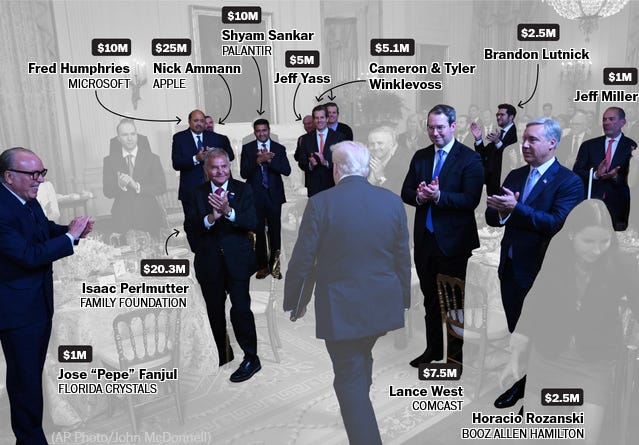
Cryptocurrency companies, now under loosened regulations from the Trump administration, and their investors promised more than $18 million. The largest portion came from Tyler and Cameron Winklevoss, co-founders of the Gemini crypto exchange, who together donated bitcoin valued at $5,050,018, the records show.
One of the earliest commitments to donate to the ballroom, from Sept. 23, 2025, came from the daughter of Julio Herrera Velutini, an international banker and dual Venezuelan-Italian citizen.
In 2022, the Justice Department indicted Herrera Velutini, then 50, on bribery charges, accusing him of helping finance the campaign of Puerto Rico’s then-governor in exchange for the removal of a regulator investigating his bank. The former governor and a political consultant were also charged.
Herrera Velutini and his attorney unsuccessfully tried to get the case dismissed, claiming prosecutors were criminalizing lawful political activity.
After Trump’s victory, Herrera’s daughter, Isabela Herrera, made two donations to Trump’s MAGA Inc., a political action committee, totaling $3.5 million, campaign finance records show.
The donations prompted the nonprofit Campaign Legal Center to file a complaint with the Federal Election Commission alleging that Isabela Herrera was serving as a “straw donor” for her father. The organization described her as a self-employed financial consultant in her mid-20s whose only prior political donation was $20 to Pete Buttigieg, a 2020 Democratic presidential candidate.
The organization said it got no response from the FEC, which declined to comment for this story.
In August 2025, Herrera Velutini’s charges were reduced to a misdemeanor as part of a plea agreement.
The following month, Isabela Herrera committed to donating $2.5 million for the ballroom, which has not been previously reported. Records show she paid a first installment of $835,000 on Oct. 14, 2025. Trump pardoned Herrera Velutini in January. Herrera’s second payment was due this month, the records show.
Last year, Charles Ergen, the telecommunications executive, found his company EchoStar in the Trump administration’s crosshairs.
Brendan Carr, the chair of the Federal Communications Commission, wrote Ergen in May to inform him that the agency had begun investigating EchoStar. Carr threatened to yank government licenses that were critical to the survival of the business, accusing EchoStar, owner of Dish Network, of not following through on promises it had made to upgrade its cellphone network.
The following month, Ergen met with Trump and Carr behind closed doors to discuss the investigation, according to Bloomberg. The outlet, citing unnamed sources, said the June 11 discussion included a brief exchange about Ergen’s political donations and whether he gave to candidates in both political parties.
The company referenced a June 11 meeting between Ergen and Carr in a regulatory filing and wrote that Trump “subsequently encouraged the parties involved to reach an amicable resolution.”
Ergen negotiated a deal to sell some of the company’s licenses to AT&T in August, subject to approval of the FCC and Justice Department.
Carr dropped the investigation the following month, thanking Ergen for his responses and for information he had provided.
In December, with the sale still pending, Ergen committed $12.5 million to Trump’s ballroom, according to the donation list. Records indicate Ergen requested that the source of the donation remain anonymous. The donation has not been previously reported.
U.S. lifts sanctions on Delcy Rodríguez’s brother amid Venezuela controversy
Miami Herald
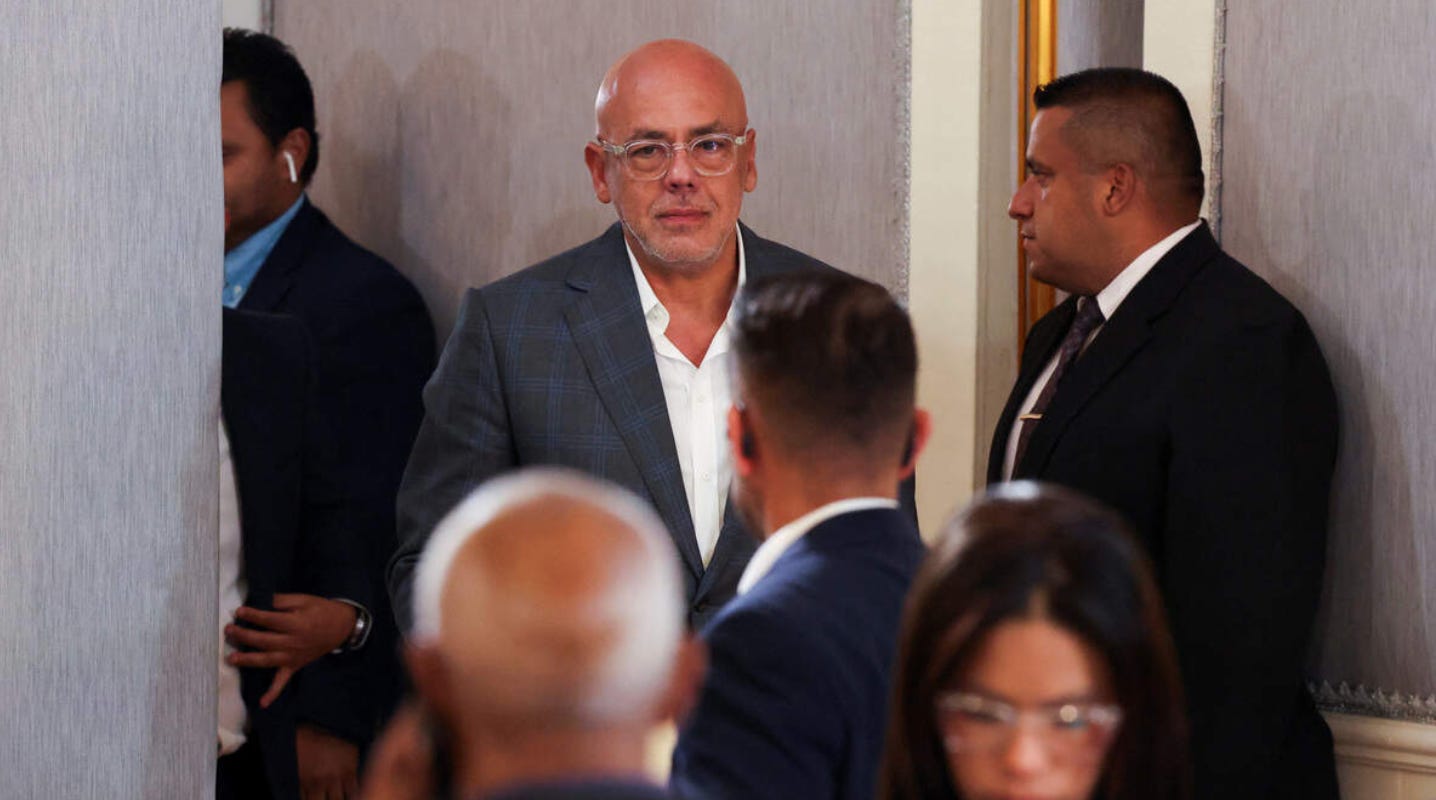
Venezuela’s National Assembly President Jorge Rodriguez arrives to address the media and sign agreements during the closing day of the first cycle of national dialogue talks, in Caracas on Aug. 12, 2026. Leonardo Fernandez Viloria REUTERS
Scott: How do we distinguish the empire building practices of George W Bush and his Neocons with Donald Trump and MAGA world? Venezuela is furnishing an excellent demonstration of how Trump builds an empire. In essence, it’s exactly the way the kingpin of an organized crime family would. The Neocons spoke of spreading democracy and market economics and addressing human rights abuses. Trump however is perfectly happy to keep the previous crime kingpin in power provided that he makes the necessary payments to the capo di tutti capi and creates opportunities for his lieutenants. And nothing demonstrates this better than the unexplained decision taken today to eliminate sanctions against a Maduro deputy who the US previously described as a corrupt drug trafficker. It turns out that Jorge Rodríguez may very well be just that, but as long as Trump gets his take, it’s perfectly okay.
The Trump administration has removed Jorge Rodríguez, the brother of Venezuela’s acting President Delcy Rodríguez and one of the country’s most powerful political figures, from a U.S. Treasury Department sanctions list, further intensifying an already controversial relationship between Washington and the Venezuelan government that succeeded ousted President Nicolás Maduro. The Treasury Department’s Office of Foreign Assets Control announced the removal of Jorge Jesús Rodríguez Gómez from its Specially Designated Nationals List, reversing sanctions imposed in September 2018 when the United States accused him and other members of Maduro’s inner circle of helping the Venezuelan leader consolidate his grip on power. The action comes amid growing cooperation between Washington and the government headed by Rodríguez’s sister, which has reportedly facilitated the transfer of prominent businessmen wanted by U.S. prosecutors, including Alex Saab in May and his longtime business partner Álvaro Pulido earlier this week. The Treasury notice does not explain why Rodríguez was removed from the sanctions list or indicate whether the decision was connected to Venezuela’s recent cooperation with U.S. authorities. The decision marks another significant development in the Trump administration’s increasingly controversial relationship with the Venezuelan government that emerged after Maduro was removed from power in January. Many Venezuelans, particularly opponents of the former president, view Rodríguez not as a departure from the authoritarian system they have long opposed, but as its continuation under new leadership. As one of Maduro’s closest and most powerful allies, she remains closely associated with a regime widely blamed for political repression, economic devastation and the exodus of millions of Venezuelans. For those critics, Washington’s growing embrace of her administration raises concerns that the United States may be helping preserve the very political system it once sought to dismantle. Jorge Rodríguez, a longtime Maduro ally who has held several senior government positions, has remained an influential figure in Venezuelan politics and a central member of the leadership surrounding his sister.
Paying The Price For Trusting The USA
Phillips R O’Brien
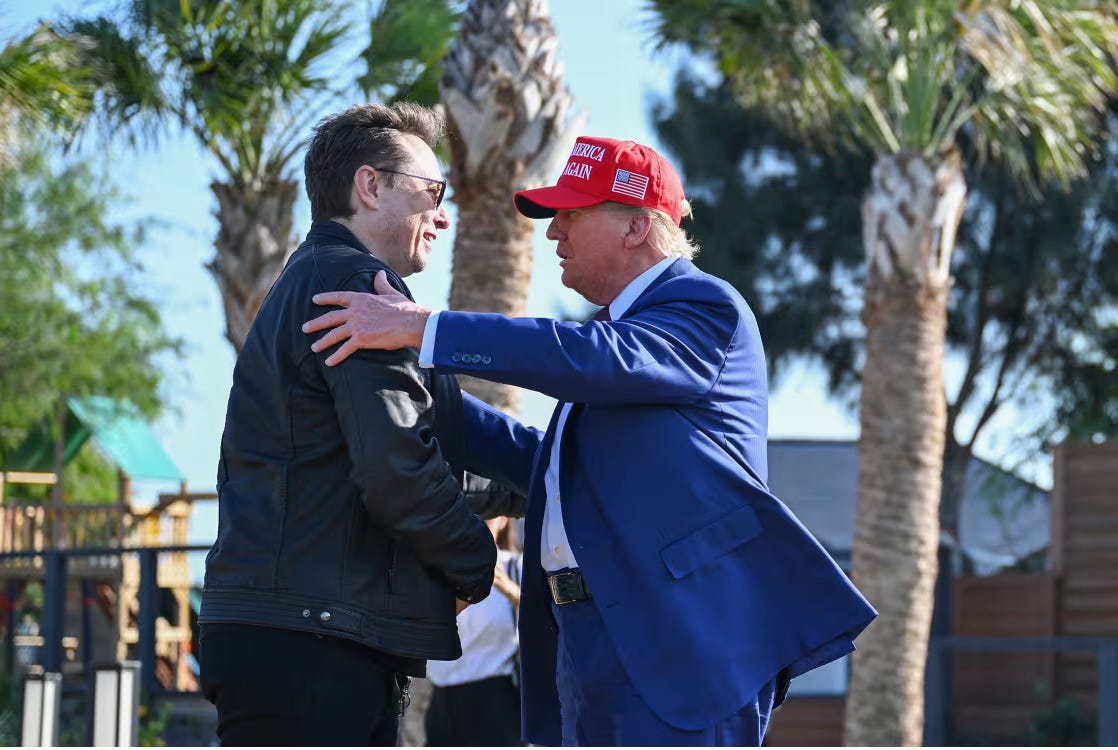
As America’s space budget is largely simply signed over to Elon Musk, Trump and Musk view a US taxpayer funded SpaceX Starship rocket launch in Brownsville, Texas, on Nov. 19, 2025.
Scott: This week America’s long-time allies have learned the hard way that relying on a Trump-led United States to behave as it promised is a very dangerous thing. The US has no alliance or partnership with the Russian Federation. But now we can see that in Trump’s mind, Russia is the paramount partner, and America’s role is a subservient one. This week that fact translated into hundreds of dead civilians in Ukraine as Trump pulled the plug on Ukraine’s missile system so that a ballistic missile attack from Russia—that clearly seems to have been coordinated with the White House—could rain down on apartment buildings in Kyiv.
Two states in particular are paying a great price this week for trusting in the USA—those are Saudi Arabia and Ukraine (and through all of Ukraine, Europe as well). Both states are getting bombarded by their enemies and are either being abandoned by the USA or, in the case of Ukraine, are seeing these attacks being supported by the USA. It is a lesson that needed to be learned long before this, but sadly was not. The depressing thing is that things will only get worse and that will be the first story in this update.
The second part of this midweek update will cover the fast-developing story of how the US government is now dealing a major blow to the Ukrainian war effort through limiting Ukraine’s access to Starlink/Spaceshield, over the territory of Ukraine. This started being reported on yesterday morning and represents the greatest overt act of the United States as it attempts to crush Ukrainian democracy on behalf of Russia’s Putinist dictatorship. The primer will go through what has happened, why it matters so much and how it came about (probably). It will also mention some important early signs of blowback. This really is one of those decisions that will live in infamy.
At the end of that will be a short word of warning for what this all means for Europe and the rest of the world. The USA is showing everyone what vulnerability truly means. I do hope you are paying attention.
Paying The Price For Trusting The USA
In some ways the geopolitical positions of Saudi Arabia and Ukraine are eerily similar. Both had based almost all (in the case of Saudi Arabia) or at least some of its most important (in the case of Ukraine) defense capabilities on the fact that the USA was a trustworthy partner.
The Saudis in some ways had the most obvious investment. For decades they had invested hundreds of billions of US dollars in buying US military equipment. They had also hosted US bases. It was all part of a plan to “purchase security” as I like to call it—and not actually prepare to defend yourself based on your own resources. It was an almost total strategic outsourcing that seemed to work for decades, but which actually has left the Saudis extraordinarily vulnerable.
The Ukrainians, it could be said, had little choice. They had certain defensive needs, and had been put in a position where they had no ready replacements for US assistance. That of course made them arguably even more vulnerable.
Let’s discuss the Saudis first. In the last seven days (since last midweek update) the Houthis have been able to launch a wide range of strategic attacks on Saudi Arabia. Here are the main ones that I could find.
Thu 8 Oct – King Khalid International Airport (KKIA)
Saudi-confirmed: There seem to have been two attacks: the first hit airport facilities and the second a Saudia aircraft. (Gulf News; AeroTime)
Debris damage: Ballistic missiles were intercepted over Riyadh, and falling debris reportedly damaged several buildings. (CFR tracker)
Sat 10 Oct – KKIA Again
Casualties: Bloomberg reports 12 killed and 309 wounded (Bloomberg). Reuters reports 13 killed and more than 300 wounded (Reuters via Hawaii Tribune-Herald).
Saudi authorities said four of the dead were Saudis and the rest foreign nationals.
Sun 11 Oct – KKIA Again, also King Fahd Airport (Dammam), and claimed Aramco strikes
KKIA: A further attack killed one person and injured 11.
Dammam, Saudi-confirmed: King Fahd International Airport was targeted. (QNA)
Houthi claim (unconfirmed): Four operations, including strikes on Aramco’s Shedgum gas plant and the Tanajib oil facility, and said both sites caught fire
Other activity: A ballistic missile aimed at Khamis Mushait was intercepted. (CFR)
Mon 12 Oct – Riyadh
The coalition said it downed a ballistic missile fired at Riyadh, while the Houthis said they had targeted KKIA. (Al Jazeera)
Tue 13 Oct – Aramco headquarters, Dhahran
Saudi-confirmed: The energy ministry said Aramco’s executive headquarters in Dhahran was hit and part of the complex caught fire. (Bloomberg, Al Jazeera)
Context: Earlier that day the Houthis had told people near Saudi oil facilities to evacuate, calling the sites legitimate targets. The strike came hours after Saudi strikes on a Sanaa oil facility. Al Jazeera
A Word Of Warning for Europe and the World
I am not sure that there could be a better example for the rest of the world about the great peril they are in if they rely too much on the USA (or any other country) to provide for their security. There were supposedly safeguards put in place so Ukraine would not be exposed like this. Europeans are paying for this service, under contract, and the US has created an obligation through that to make sure that Ukraine has such linkage at least over the territory of Ukraine (and that is unoccupied and occupied territory).
Because of such assurances, the Ukrainians have built up much of their campaign based on the assumption that they would have such a service when needed. Moreover, as this service had nothing to do with the Ukrainian strike campaign against Russian refineries, they did not believe that it was under peril.
They were foolish, of course. The USA cannot be trusted these days to fulfil any contract or obligation and the US government is now determined to get the best deal possible for Vladimir Putin. However, it seems, having built this Starlink/Starshield dependency into their plans, the Ukrainians felt they had no alternative but to proceed as is.
They are now left exposed.
What they, and the Europeans, must do now is build their own such system, access to which can never be controlled by another power. It is simply too vital to have such communications. I hear people saying that it will take too long and will be too expensive. This argument is so ass-backwards it is hard to engage with. First off, a primitive system can be developed relatively quickly if Europeans were determined. The Russians have put their own primitive system, called Rassvet, into operation in relatively short order, and supposedly it is getting better and better. It should soon be a major aid for them.
Usually what people are saying when they claim that there is no alternative, is that they do not want to invest enough to build an alternative.
Europeans have actually been doing some preplanning on this for a while. There are a number of possible European-secured starlink competitors (six I believe). So far the problem has not been technology as much as it is money.
Chandra Finds Possible Origin of ‘Treble Clef’ Waves
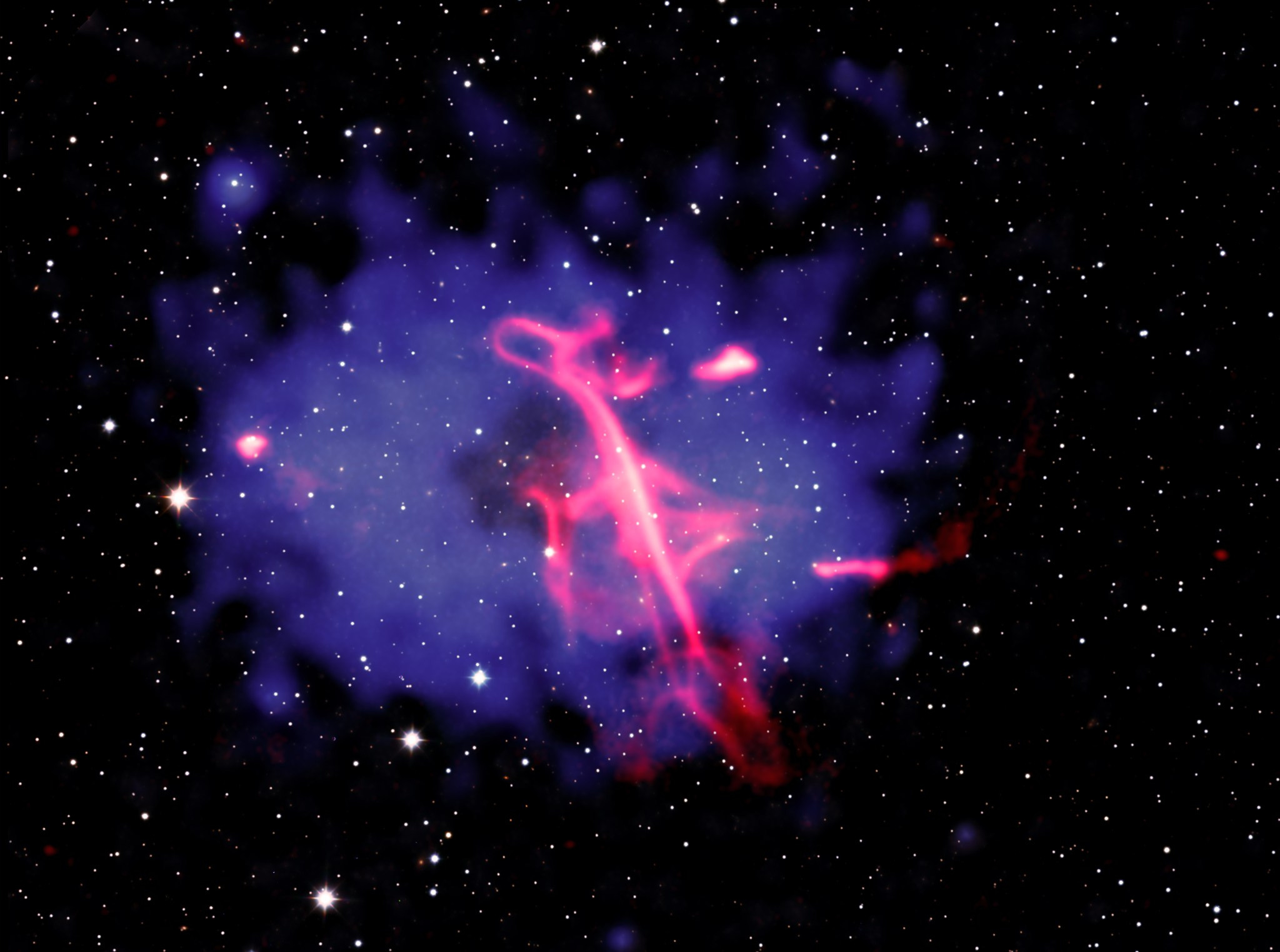
A formation of radio waves looks remarkably like a treble clef in this Oct. 14, 2026, image from NASA’s Chandra X-Ray Observatory. Researchers used Chandra to find that the Treble Clef is likely caused by an outburst from a supermassive black hole, followed by a collision of two galaxy clusters.
Read more about this discovery.
Image credit: X-ray: NASA/CXC/INAF-IRA/A. Botteon et al.; Infrared: UKIDSS-GPS ; Radio: ASTRON/LOFAR; Image processing: NASA/CXC/SAO/N. Wolk
Your Online Moment of Zen
Baby, Stop Crying
Performed and written by Bob Dylan
Released as the 4th song on the first side of the album Street Legal, June 15, 1978
A shorter version was released as a single in the USA, July 31, 1978
Most critics were baffled and appalled when Street Legal was first released–just because Bob had once again completely reinvented himself. The single of Baby, Stop Crying failed to chart in America but it reached #13 in the UK and was a top-ten song in much of Europe.
Over the next four decades the album was gradually accepted as a vital part of the Dylan canon.
When I interviewed Bob I asked him, “What's sixteen years mean at the beginning of Street Legal?”
”That's one thing I can't really say,” he replied. “That was the first line to the song, and sometimes you don't know what it means yourself.”
But now it seems quite obvious—Street Legal was released sixteen years (and three months) after his first album, Bob Dylan.
I loved Street Legal right from the start.
<iframe width=”560” height=”315” src=”
title=”YouTube video player” frameborder=”0” allow=”accelerometer; autoplay; clipboard-write; encrypted-media; gyroscope; picture-in-picture; web-share” referrerpolicy=”strict-origin-when-cross-origin” allowfullscreen></iframe>