



Huckabee Accuses Israel of Terrorism / A Russian Double Agent in Poland / Mexican Narcotraficantes Murder Social Influencers / DHS Agents Track Their Spouses / M. Gessen finds fascism in Kansas / Perseid Meteors / One Too Many Mornings is your Moment of Zen from 1963
Now Not Even Mike Huckabee Can Ignore Israel’s Horrific Acts
PBS
Charles: The latest siege of a Palestinian village by Israeli settlers was finally described accurately by the American Ambassador to Israel, Mike Huckabee.
He called it an “act of terror.”
The U.S. condemned the siege of Palestinian homes by Israeli settlers in the West Bank, where they cut off water, electricity and essential supplies to residents. U.S. Ambassador to Israel Mike Huckabee called the settlers’ actions an “act of terror,” adding to American pressure that has prompted Israeli forces to intervene.
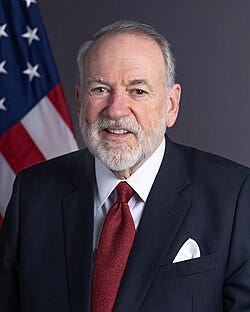
Mike Huckabee
The siege began when Israeli settlers turned a home into a prison brick by brick. They closed the only road in, cut off the water and power, and trapped nearby families. Dozens of settlers, as seen in security camera footage, swarmed a home in Qusra, built by a Palestinian-American, trapping his family inside, Qusai Ridi and his teenage son, Ahmed.
Just two and a half weeks ago, settlers set fire to the village mosques, burning the inside, and on the blackened facade left a menacing message: “The land of Israel is redeemed with blood. Revenge.”
Outside the Ridi family home, the settlers remained even overnight. Their threat forced much of the rest of the village to flee, including 28-year-old Ruqaya Hassan and her daughter.
Ruqaya Hassan, House Besieged by Settlers (through interpreter): We woke up many times at night to the sound of stones being thrown at our house, just like the sound of bullets.
Nick Schifrin:
She escaped with the kids. Her husband remained behind to try and defend their home.
Ruqaya Hassan (through interpreter):
My daughters were overcome with fear and panic because we were trapped in the house. My daughter kind of became scared. She doesn’t go to the toilet by herself for fear that settlers might come.
Nick Schifrin:
The U.N. says attacks by Israeli settlers have reached unprecedented levels, more than 1,400 incidents in 260 communities just this year, displacing more than 3,800 Palestinians and killing more than 75.
A bungled bomb plot in Poland exposed a spy – but whose spy was he?
The Guardian
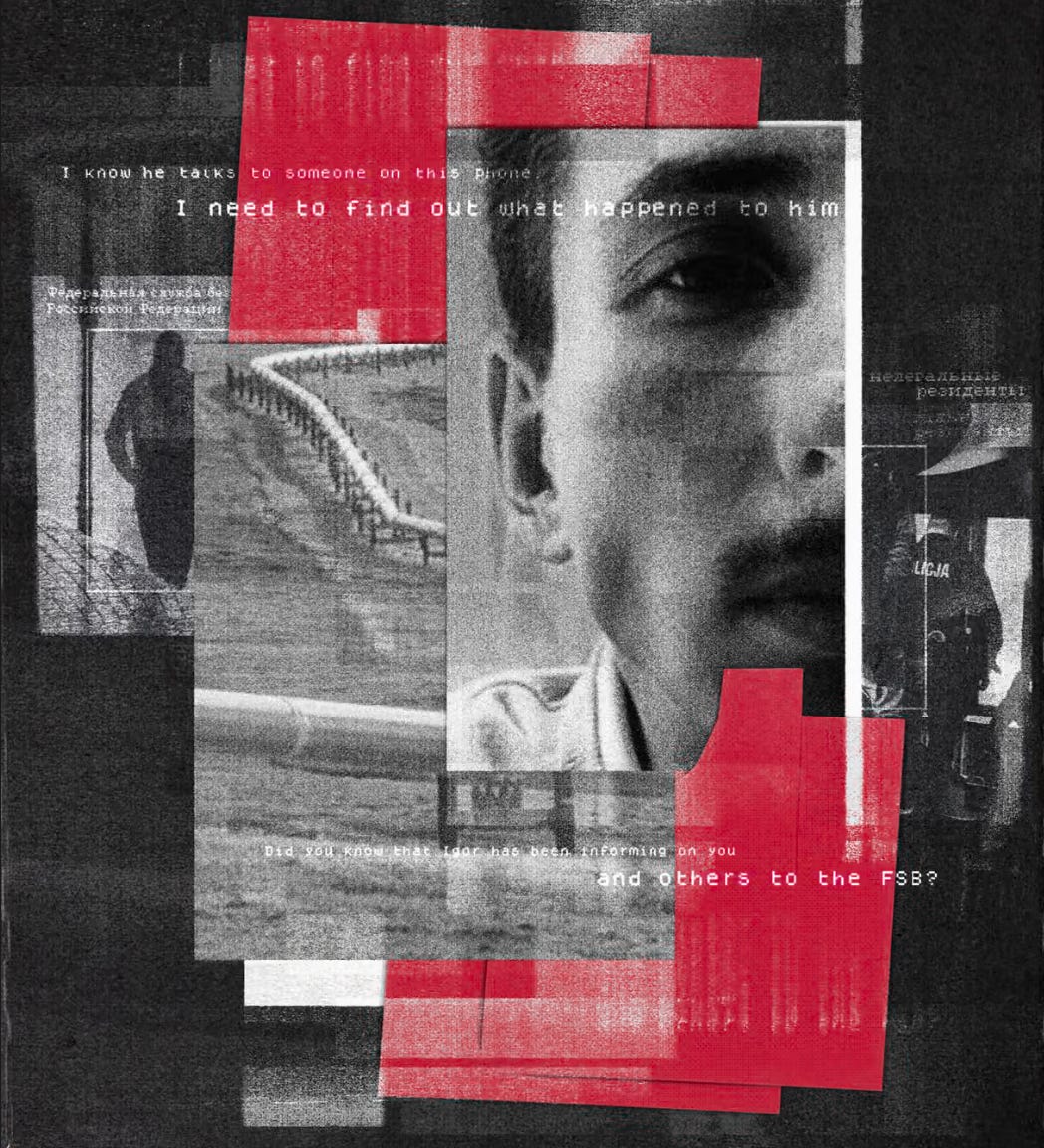
Scott: In the fake-history obsessed world of Vladimir Putin, Russia lives on today within the boundaries of the Russian Empire from 1914. That means that Finland, the Baltics, about two-thirds of Poland and a nice slice of Romania belong to Russia, of course. And it helps us understand the massive outlay of resources to the Russian intelligence services to attempt to influence (more properly, destabilize) many countries on its frontier, prominently including Poland. In this amazing feature report, Shaun Walker takes us through the recent life of Igor Rogov, self-proclaimed Russian dissident who most likely was up to something very different. It’s filled with dramatic twists and turns that make it ripe for development as a major motion picture, but for the moment it’s a brilliant long read.
The police came for Igor Rogov because someone had mailed him a bomb-making kit. The eclectic mix of items – a chrome vacuum flask, a pair of marker pens, a power bank and a bottle of antifreeze fluid – might have seemed innocuous to an untrained eye, but Poland was on high alert in July 2024. Two months previously, a shopping mall in Warsaw had burned down in an arson attack; an Ikea in neighbouring Lithuania was also set on fire. Authorities believed it was a sabotage campaign masterminded by Russia’s intelligence services, intended to sow panic and undermine support for Ukraine. They feared it was only a matter of time before the Kremlin escalated further.
A security officer at the parcel company’s warehouse was suspicious enough about the package to call in the authorities, who arrived with sniffer dogs and special equipment. X-rays of the marker pens showed they had 1980s Soviet-produced detonators concealed inside, while the flask had a false bottom containing a sachet of metallic powder. The power bank appeared to have been tampered with in some way, and a probe of the bottled liquid showed it contained a highly volatile nitroglycerine solution. With the right expertise, the items could be turned into a powerful bomb.
Police ascertained that Rogov, the parcel’s addressee, was a 27-year-old Russian political activist, who in the past had campaigned for the opposition leader Alexei Navalny and other anti-Kremlin groups. He had fled Russia two years previously, fearing arrest for his activities, and been granted asylum in Poland. He won a scholarship to attend university in Sosnowiec, an industrial city in the south-west of the country. His wife, Irina Rogova, followed him to Poland and also enrolled at the university; the couple lived in a student dormitory. It was there that authorities arrested him.
Rogov’s phone, when searched, contained photographs of urban scenes in the vicinity of Sosnowiec overlaid with red arrows, apparently indicating places to hide or retrieve items. One photo was of a gas pipeline on the outskirts of town, an appealing potential target for a Russian bomb attack. The chance discovery of the package, it seemed, had led authorities to a participant, perhaps even a coordinator, of Russia’s sabotage campaign against Poland, living under deep cover as a brave opponent to the Kremlin.
More than a year later, in October 2025, Polish authorities revealed they were also accusing Rogov of longstanding collaboration with the FSB, Russia’s feared security service. This suggested that his whole career as an anti-Kremlin activist might have been a cover story for his FSB work. When the case came to court, however, the judge closed proceedings to the public and press on national security grounds, fuelling further speculation and rumours about what exactly Rogov had done – especially among Russia’s exiled political opposition, where infighting, suspicions and accusations are commonplace…
In the two years since Rogov’s arrest, his old roommate Buzanov has been conflicted over what to think about his former friend. At the start, he felt sorry for Rogov and wrote him letters in prison. Then he was angry that Rogov’s treachery had led to Irina also being jailed, simply for carrying the USB stick into Russia. He also fears the story could prompt unfounded doubts, among Polish authorities or his friends, about his own loyalties. “Our biographies are so similar, and that’s uncomfortable,” he said, as we chatted in a cafe in a city not far from Sosnowiec. Many of Rogov’s friends rejected my interview requests, saying they did not want to be linked publicly to a convicted spy, but Buzanov was happy to talk for hours, keen to show he had nothing to hide.
This is one of the most damaging consequences of Rogov’s collaboration: it has intensified suspicions about Kremlin infiltration among the thousands of Russian opposition and civil society activists who have fled the country in recent years. These suspicions further corrode the effectiveness of the exiled opposition, already weak and divided, as they struggle to remain relevant from their new homes in Warsaw, Berlin or Vilnius.
Rogov was certainly not the only one among their ranks to have been recruited. “I am convinced there were hundreds of us,” a former FSB informant in Navalny’s organisation told the Guardian in 2022. Increasing the sense of paranoia among the opposition is likely part of the FSB strategy in making these recruits in the first place. Kashapova, Rogov’s former campaign manager, told me she used to brush off concerns about infiltration but had become “suspicious of everything and everyone” since Rogov’s arrest.
If the FSB’s goals are clear, Rogov’s motivations remain more elusive. From the testimony I saw, it is hard to say for sure just how reluctant his cooperation was, where his real loyalties lay or whether the information he passed on caused anyone real harm. His friends, without access even to that testimony, have drawn a range of conclusions: some refuse to believe the charges, others accept he may have been an informant but presume he was subjected to unbearable pressure by the FSB, while a third group are furious at him and believe there can be no excuses for collaboration. None can quite square the idea of Rogov as a long-term FSB plant with the young man they thought they knew.
Buzanov, who testified as a witness at the trial, imagines Rogov’s collaboration was likely down to his trademark poor decision-making, which had always got him into scrapes. He is convinced that Rogov was genuinely against Putin, but suspects he was so weak-willed that he was co-opted into working for the FSB, thinking he could make some money without doing anyone much harm. In the same vein, he assumes, Rogov agreed to receive the suspicious package without asking too many questions. “I don’t think he’s some superspy, sent on a special mission to Poland,” he said. “I think he’s just a fool.”
